The 56 Minor Arcana
The Minor Arcana combine four suits with fourteen ranks each: Ace through Ten, followed by Page, Knight, Queen, and King. They often connect a reading to practical patterns and daily experience.
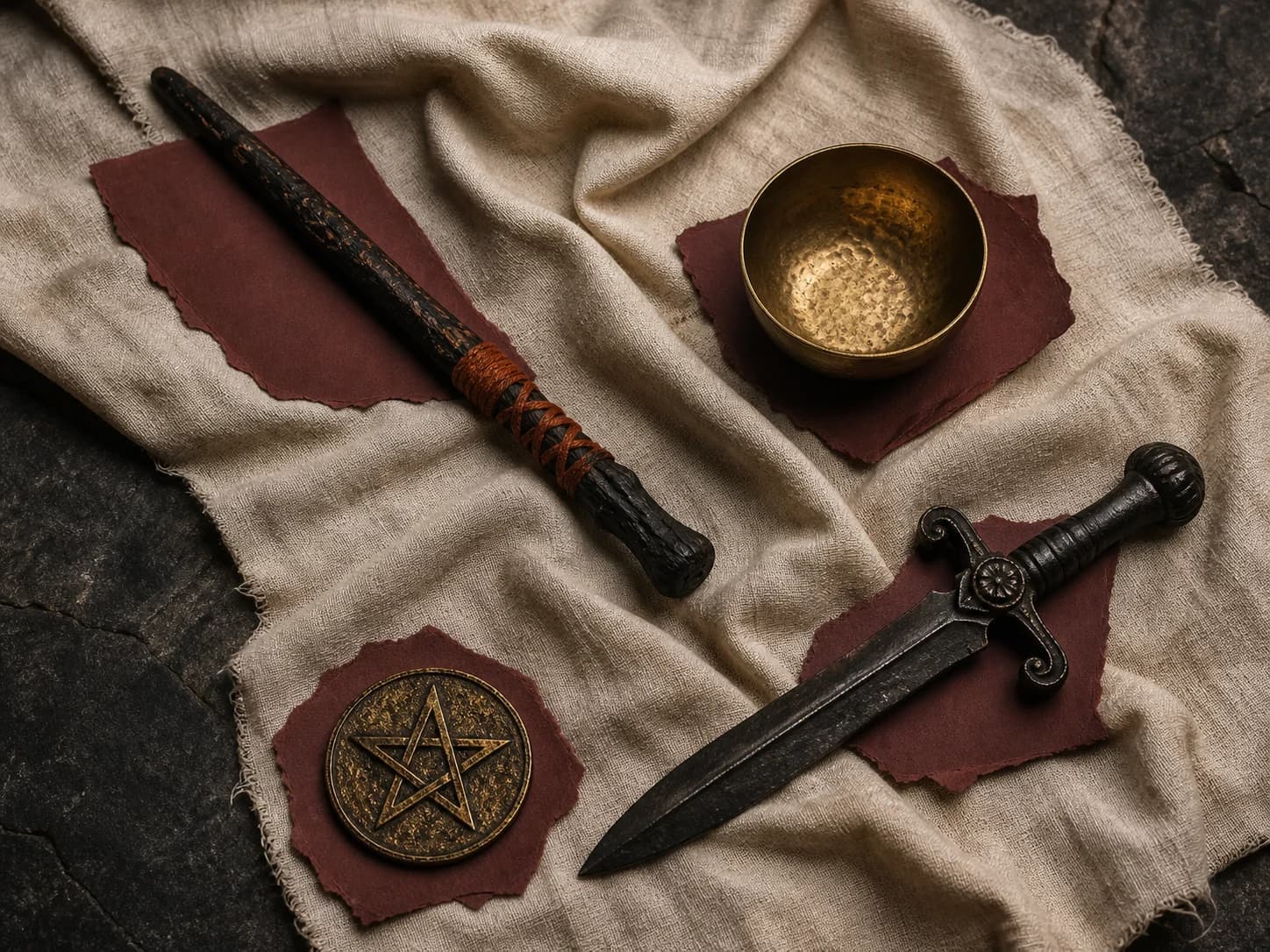
Wands
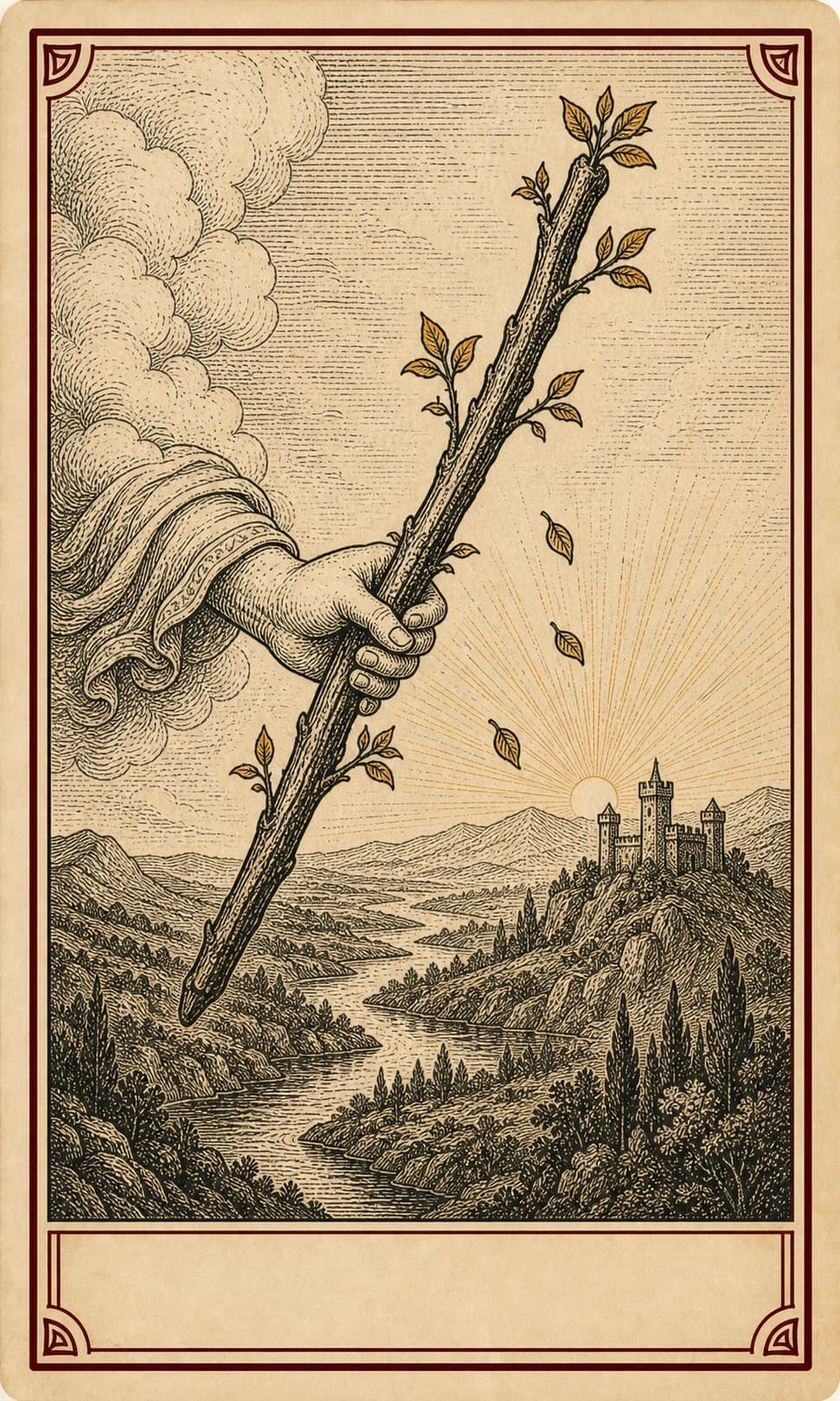
- The Ace of Wands brings a fresh impulse to create, explore, or begin purposeful action.
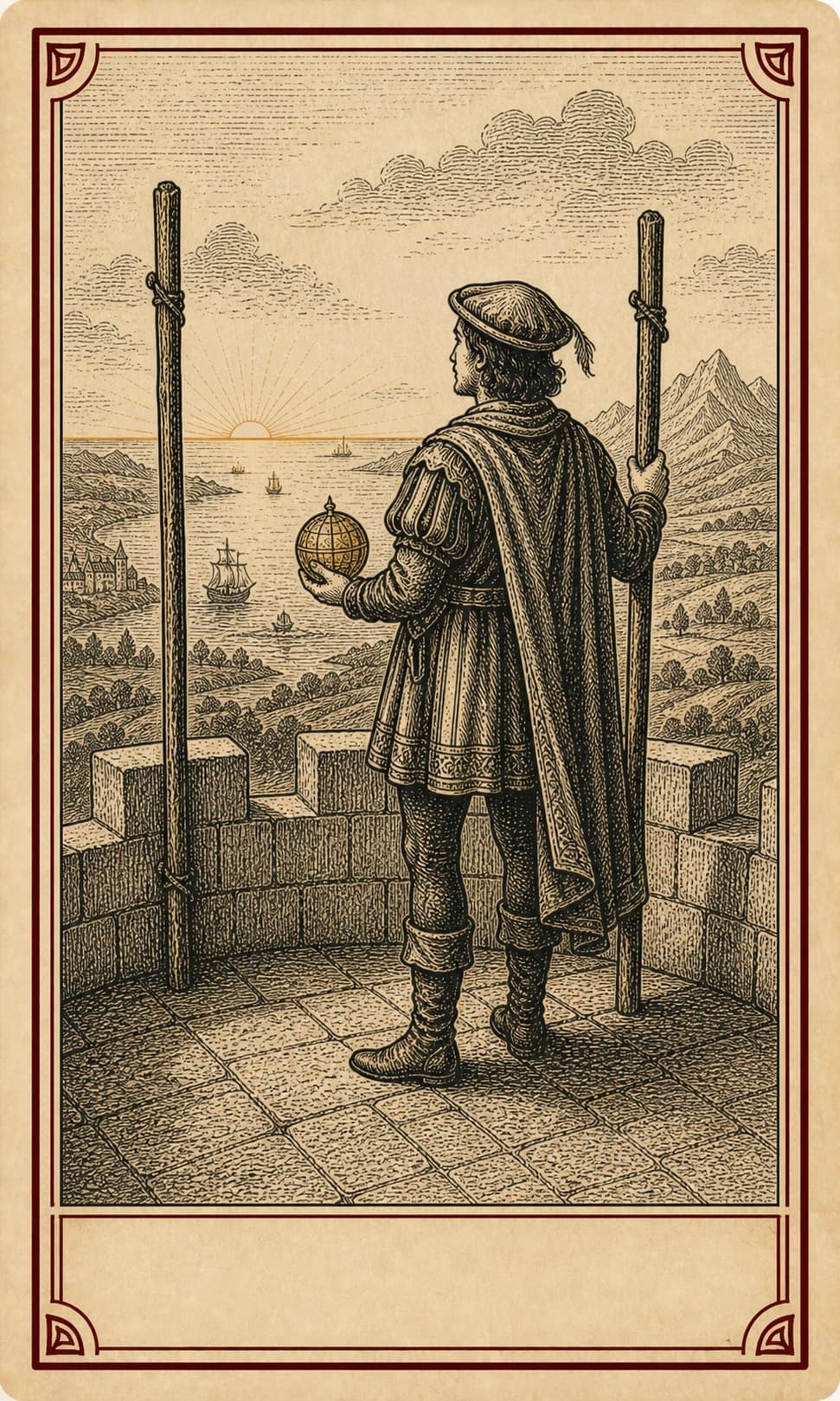
- The Two of Wands concerns choosing a direction after the first spark has revealed more than one possibility.
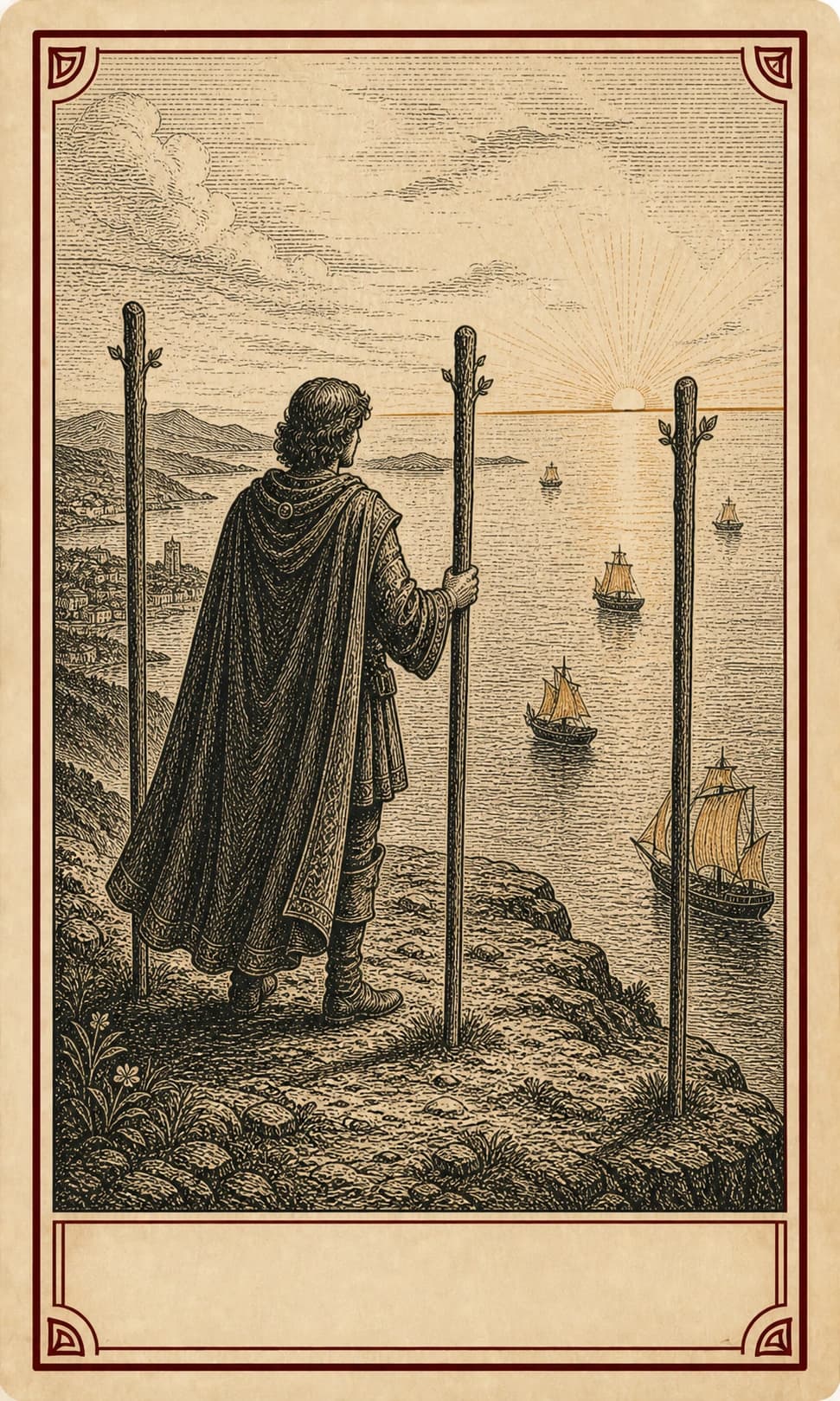
- The Three of Wands shows effort moving beyond preparation as results, partners, or wider possibilities come into view.
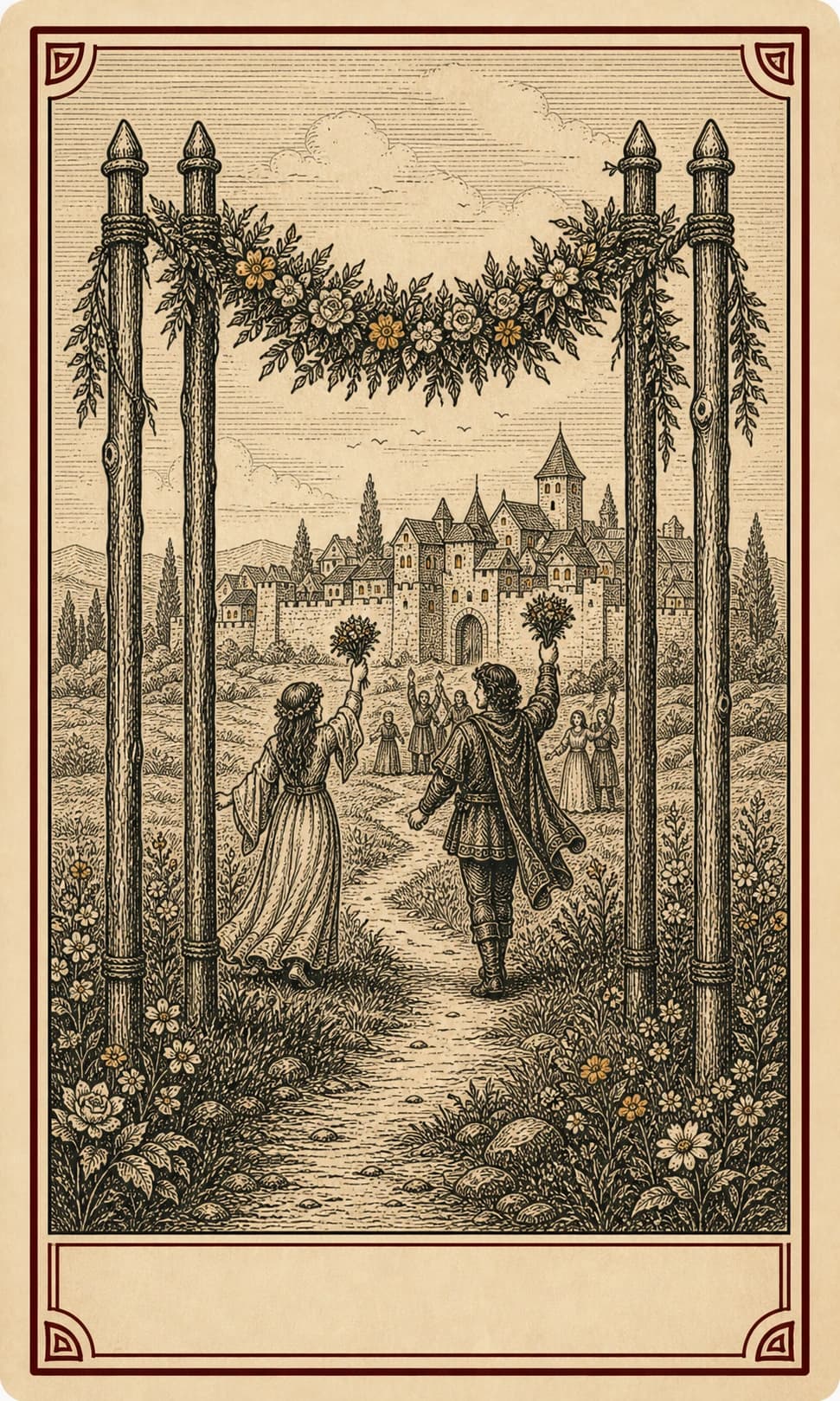
- The Four of Wands marks a milestone supported by community, welcome, or a dependable shared foundation.
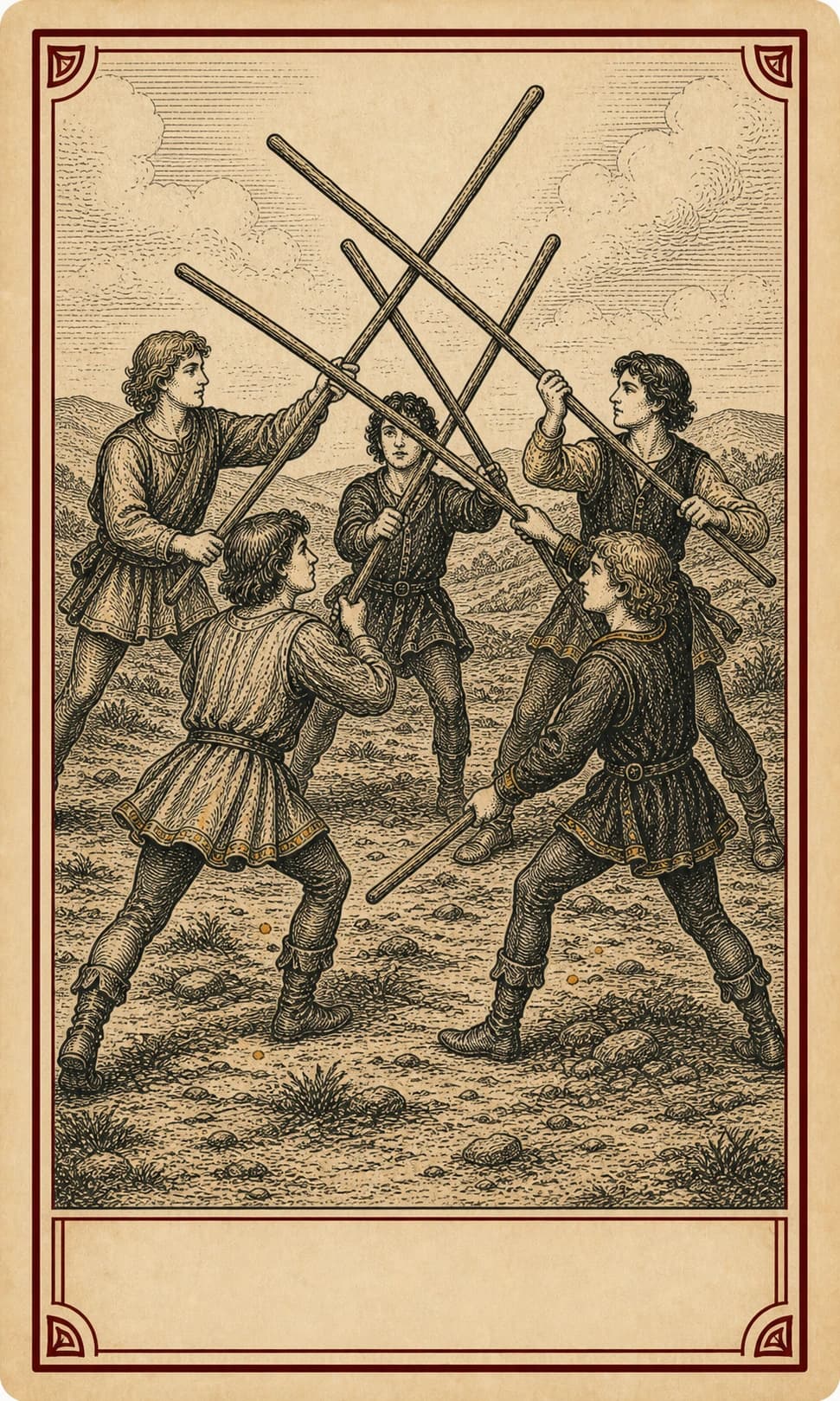
- The Five of Wands depicts multiple efforts colliding without a shared method, producing competition or noisy conflict.
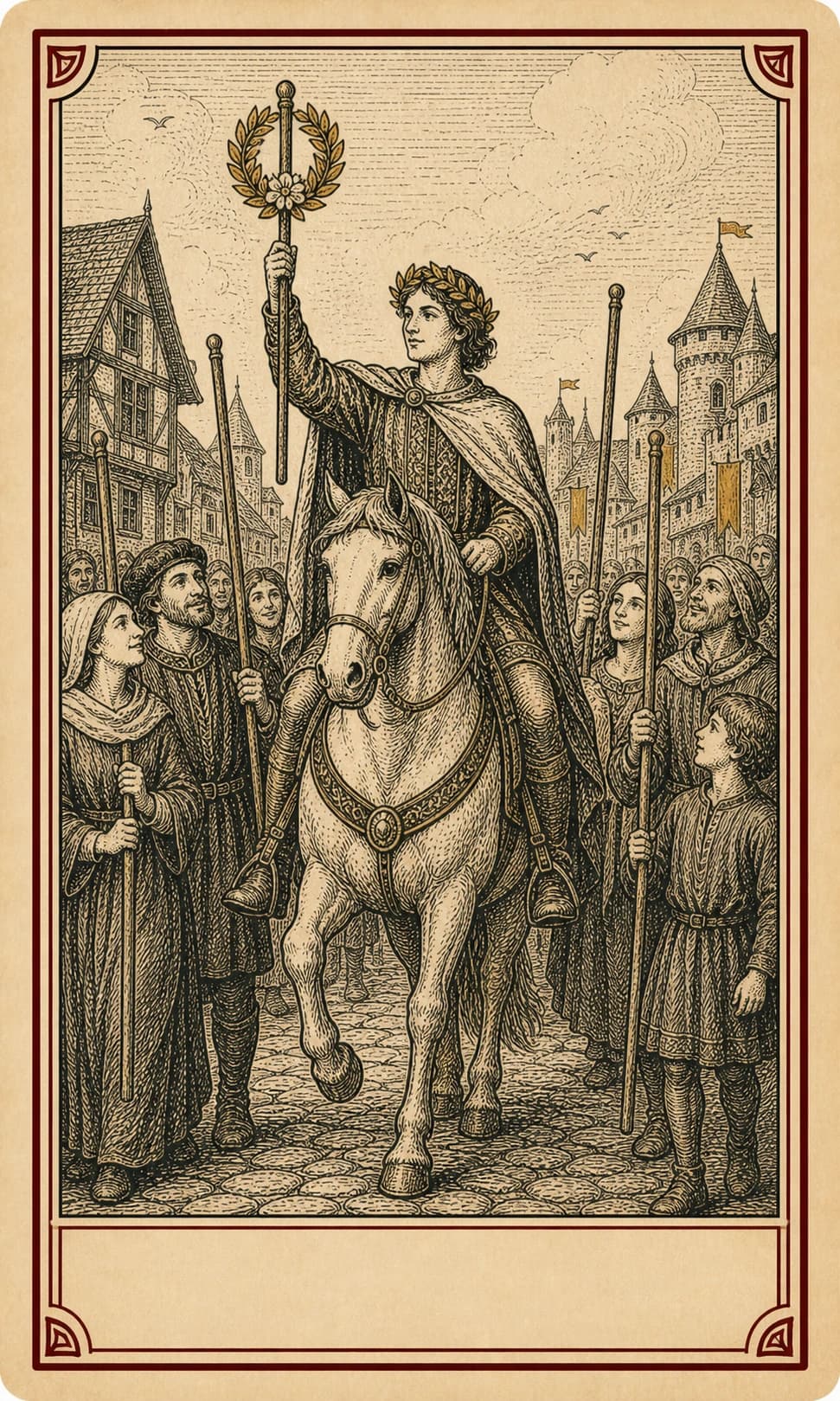
- The Six of Wands represents progress that is visible and acknowledged by others.
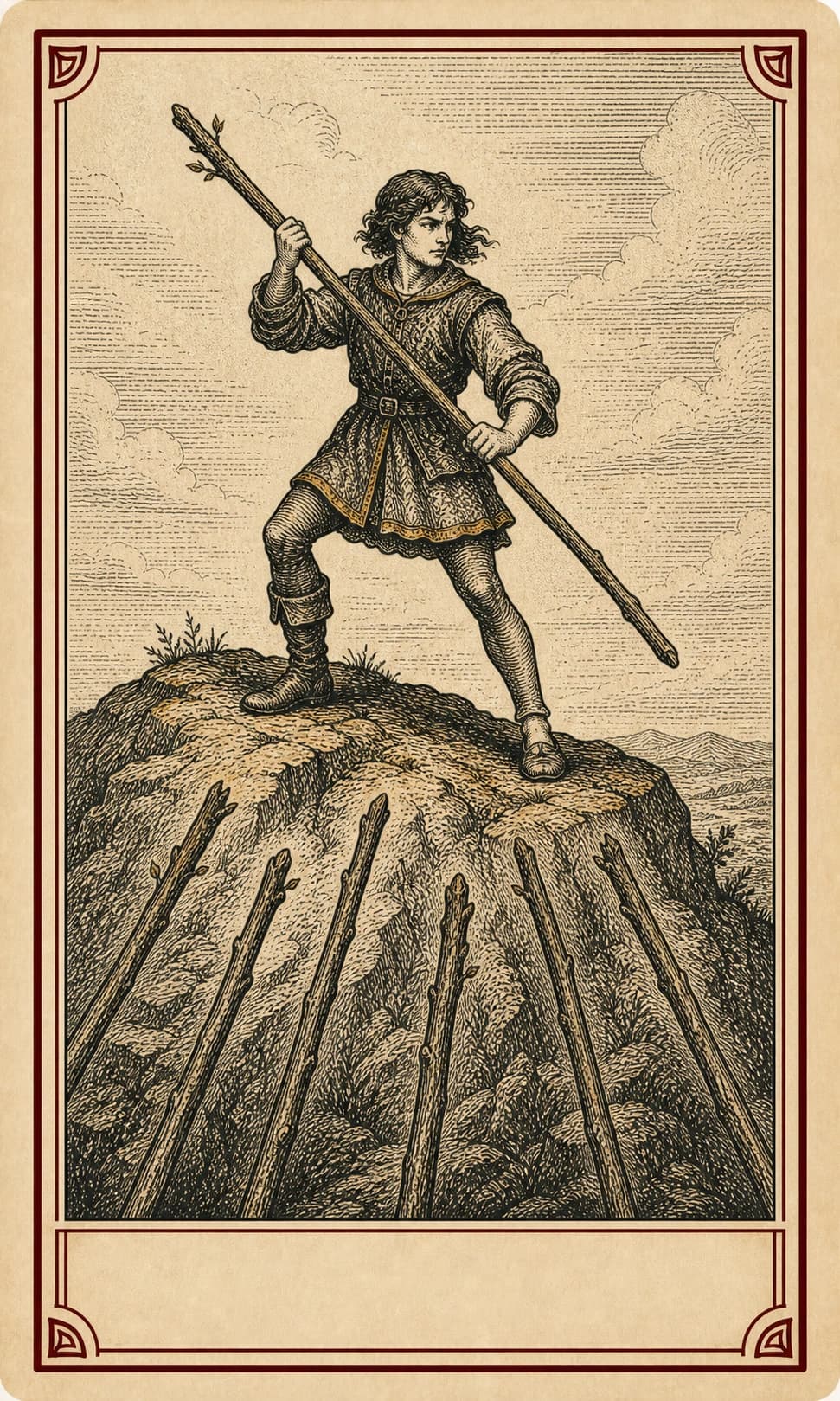
- The Seven of Wands asks for a clear defence of a position under pressure or competition.
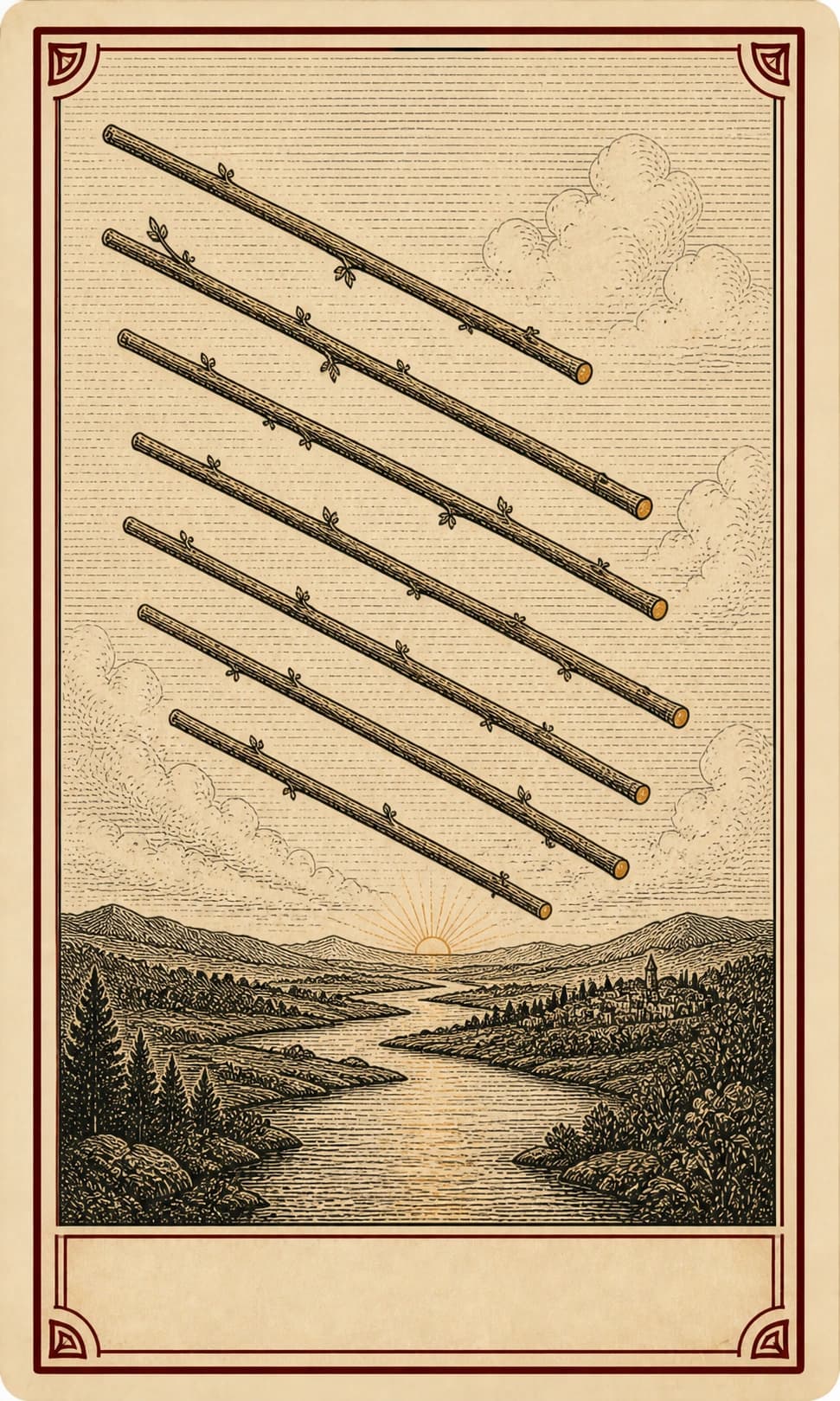
- The Eight of Wands indicates several moving parts aligning so that information or action can travel quickly.
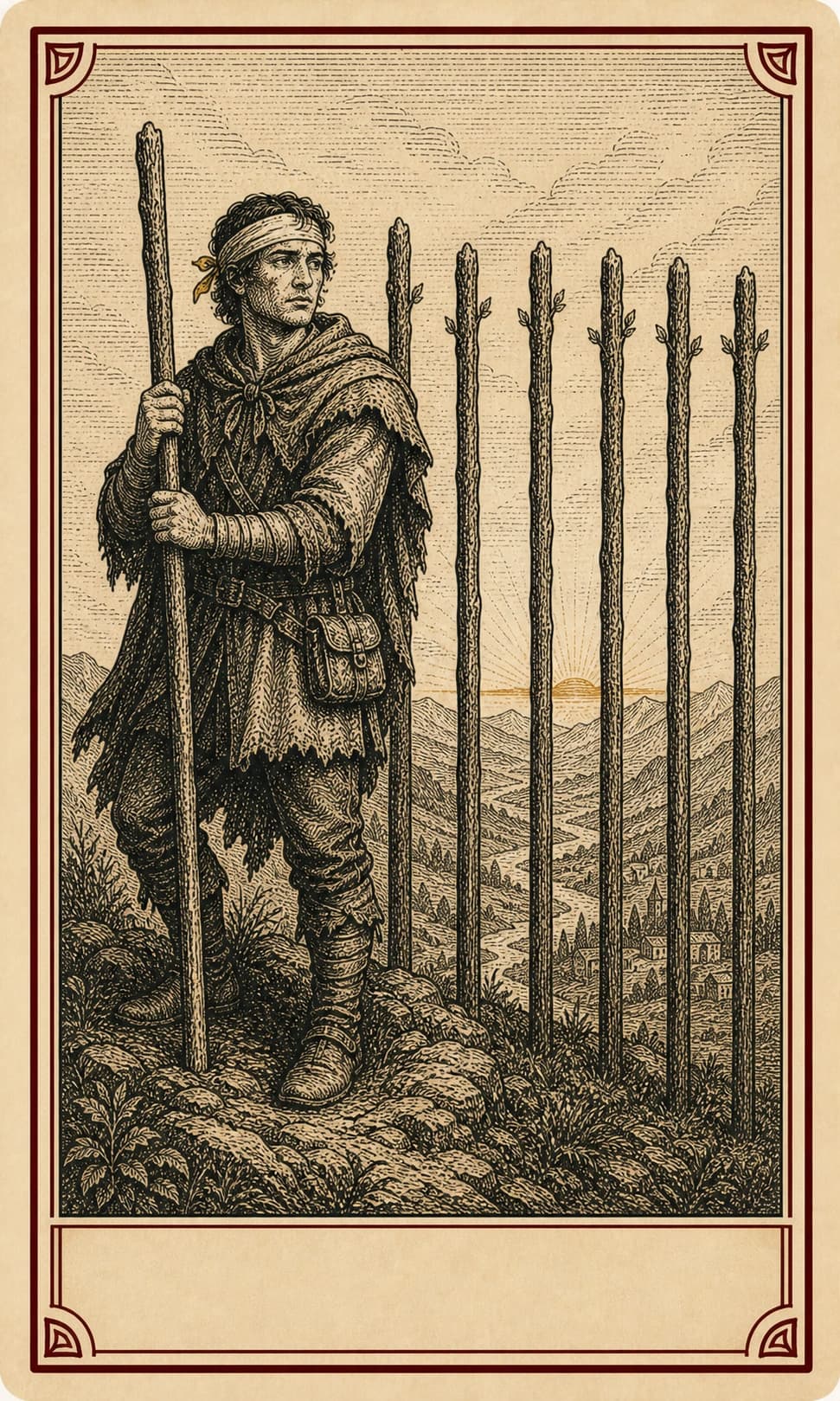
- The Nine of Wands reflects experience gained through difficulty and readiness to protect what remains important.
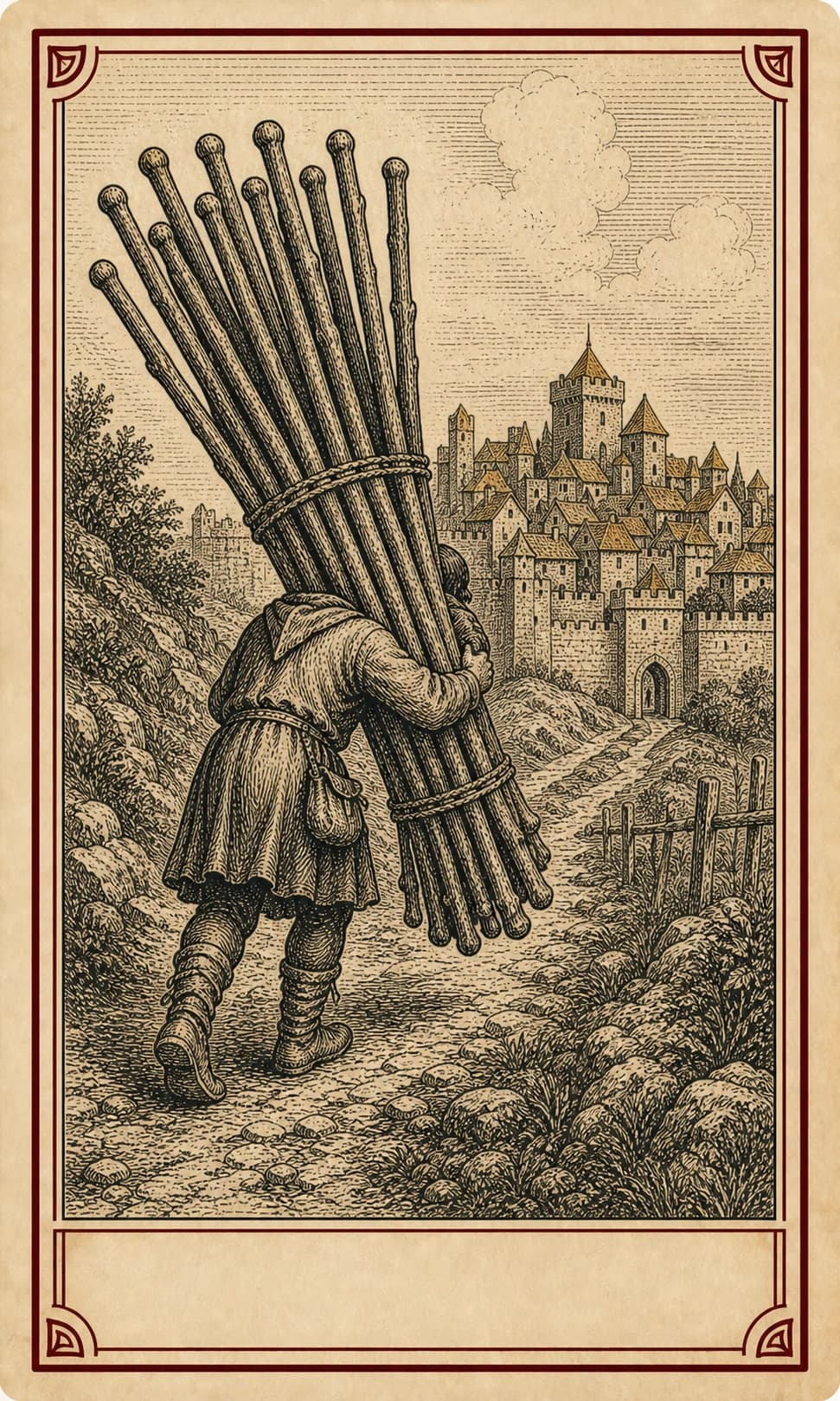
- The Ten of Wands shows a goal carried forward under the weight of too many responsibilities.
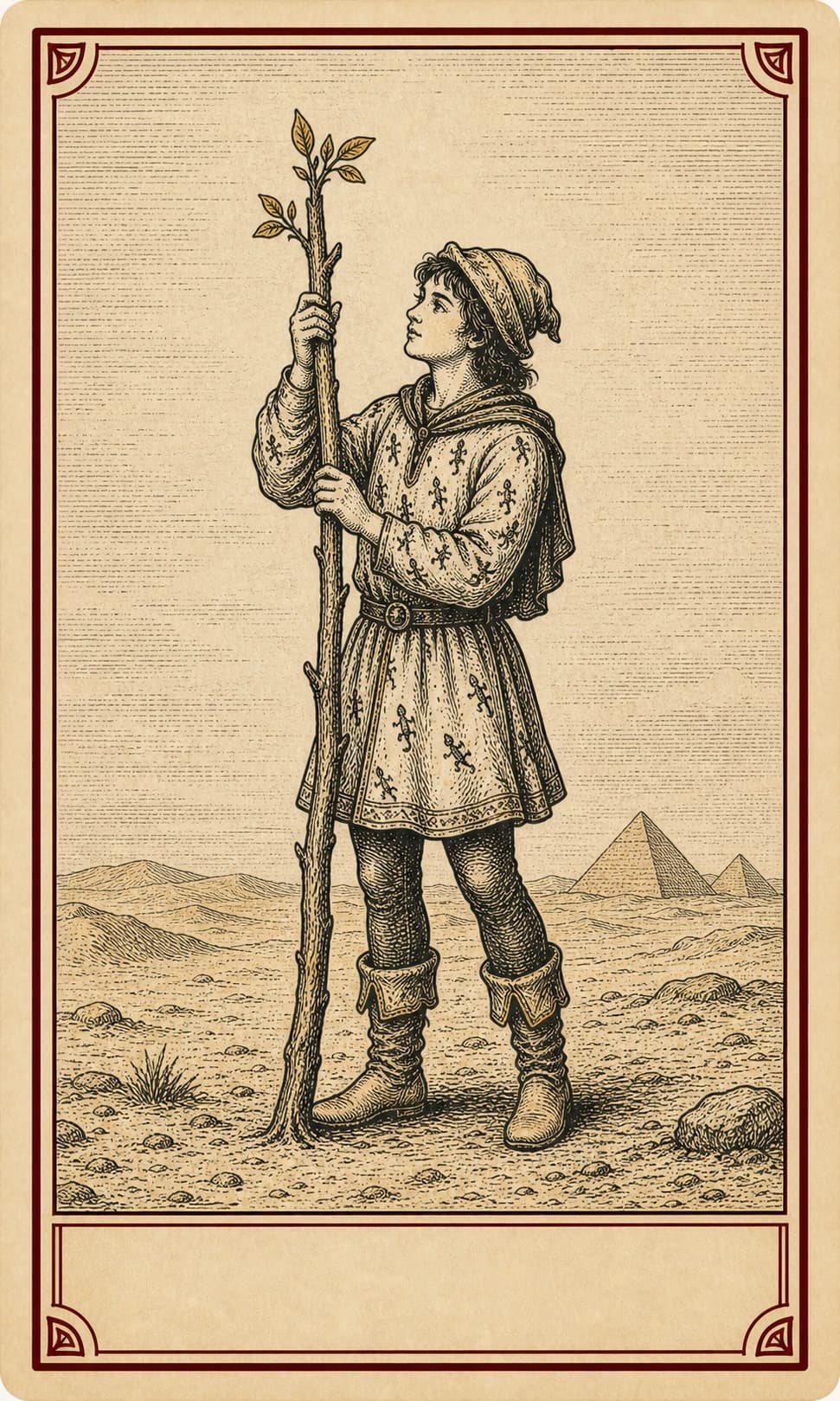
- The Page of Wands approaches a new interest with curiosity, enthusiasm, and willingness to experiment.
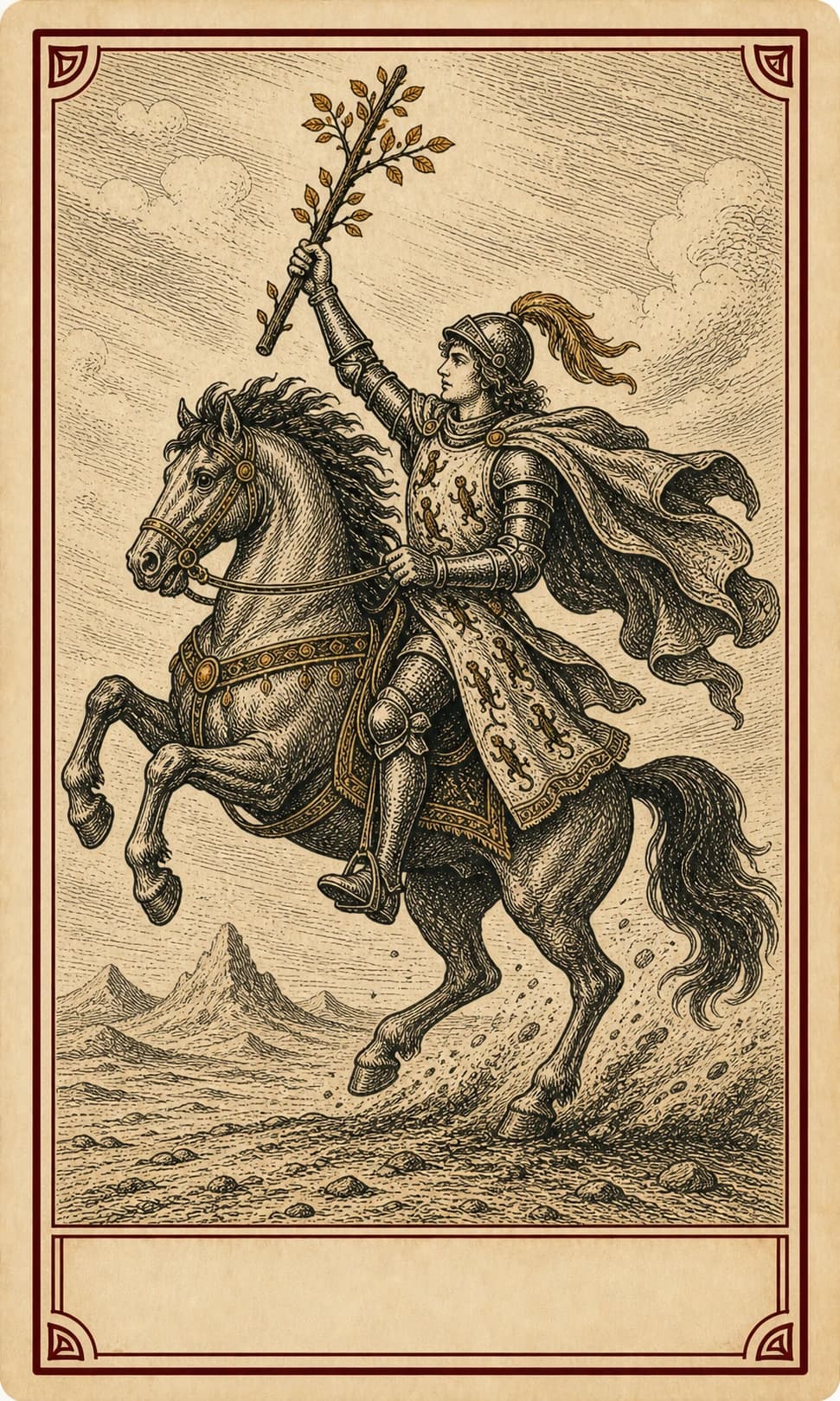
- The Knight of Wands brings bold movement, appetite for experience, and readiness to pursue a compelling goal.
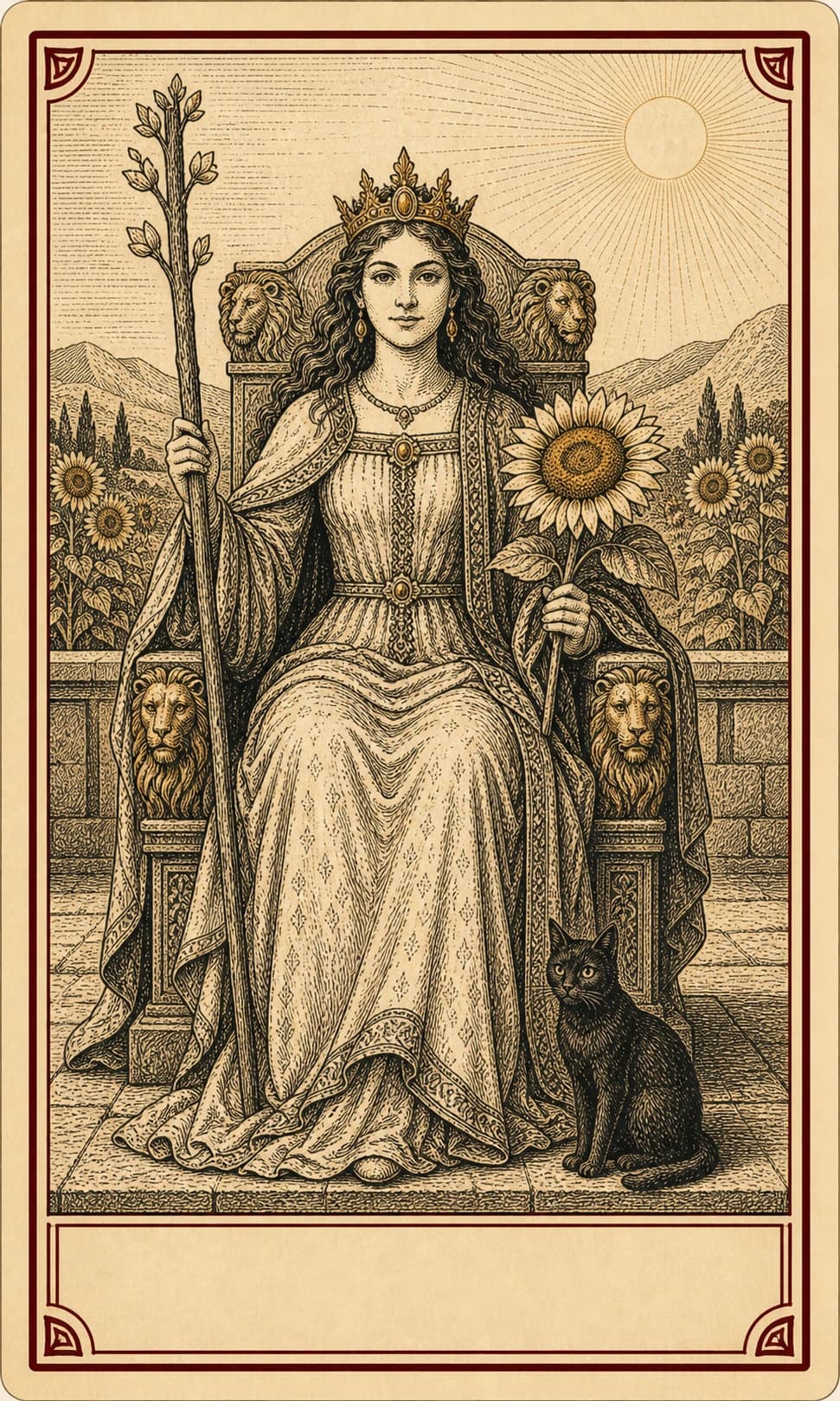
- The Queen of Wands combines visible confidence with warmth, independence, and an ability to encourage others.
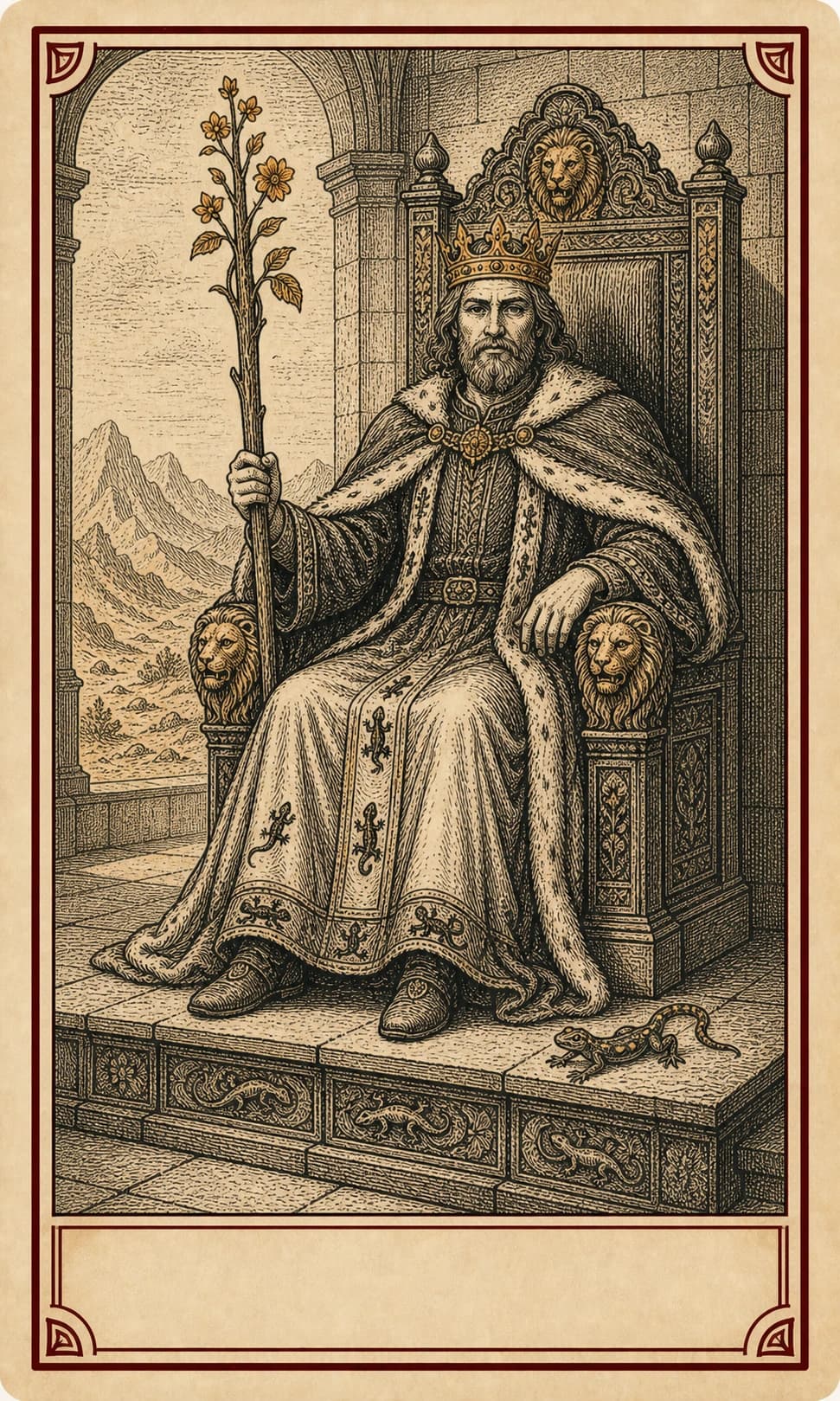
- The King of Wands turns a broad vision into direction that others can understand and act upon.
Cups
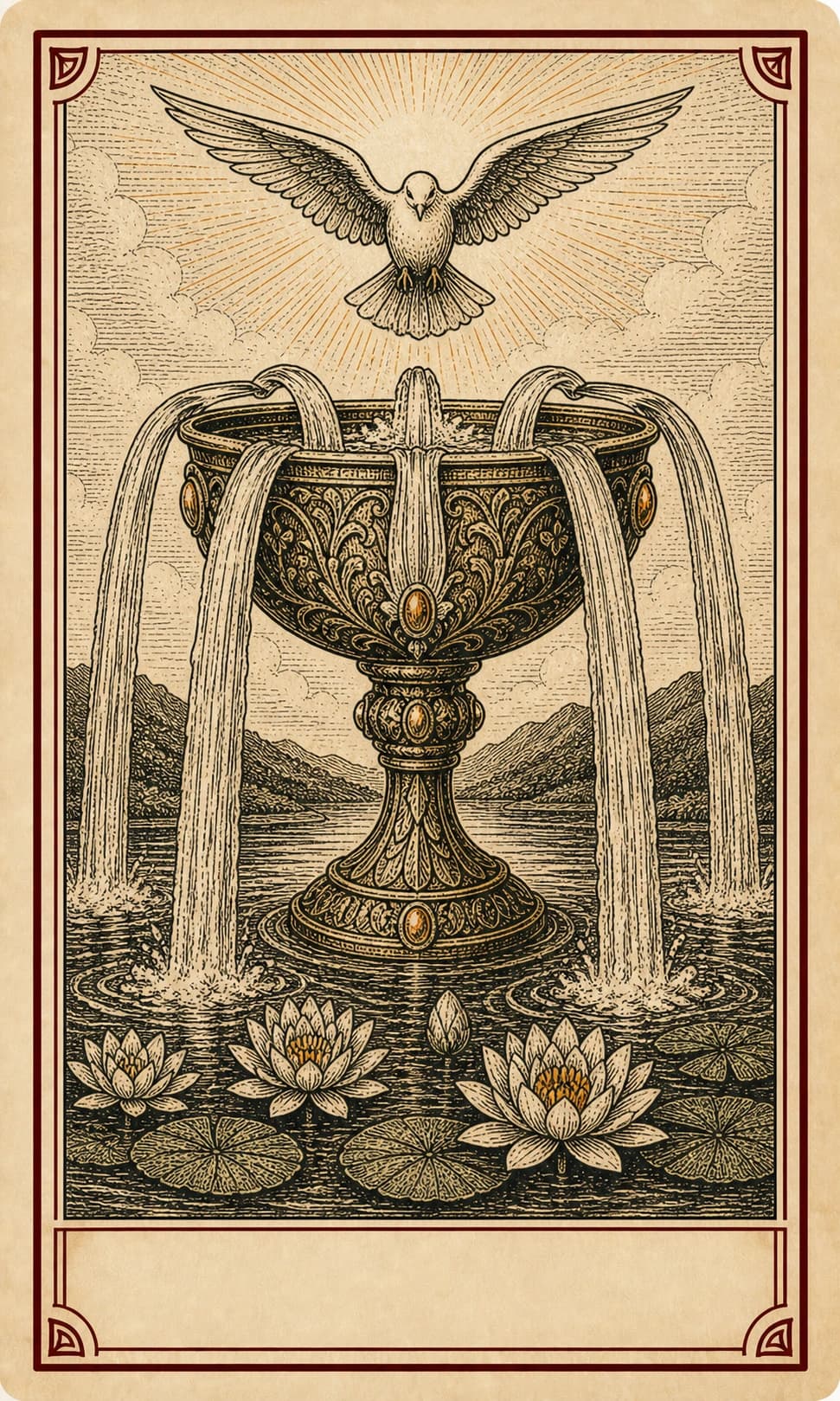
- The Ace of Cups marks an opening for feeling, care, creativity, or renewed emotional presence.
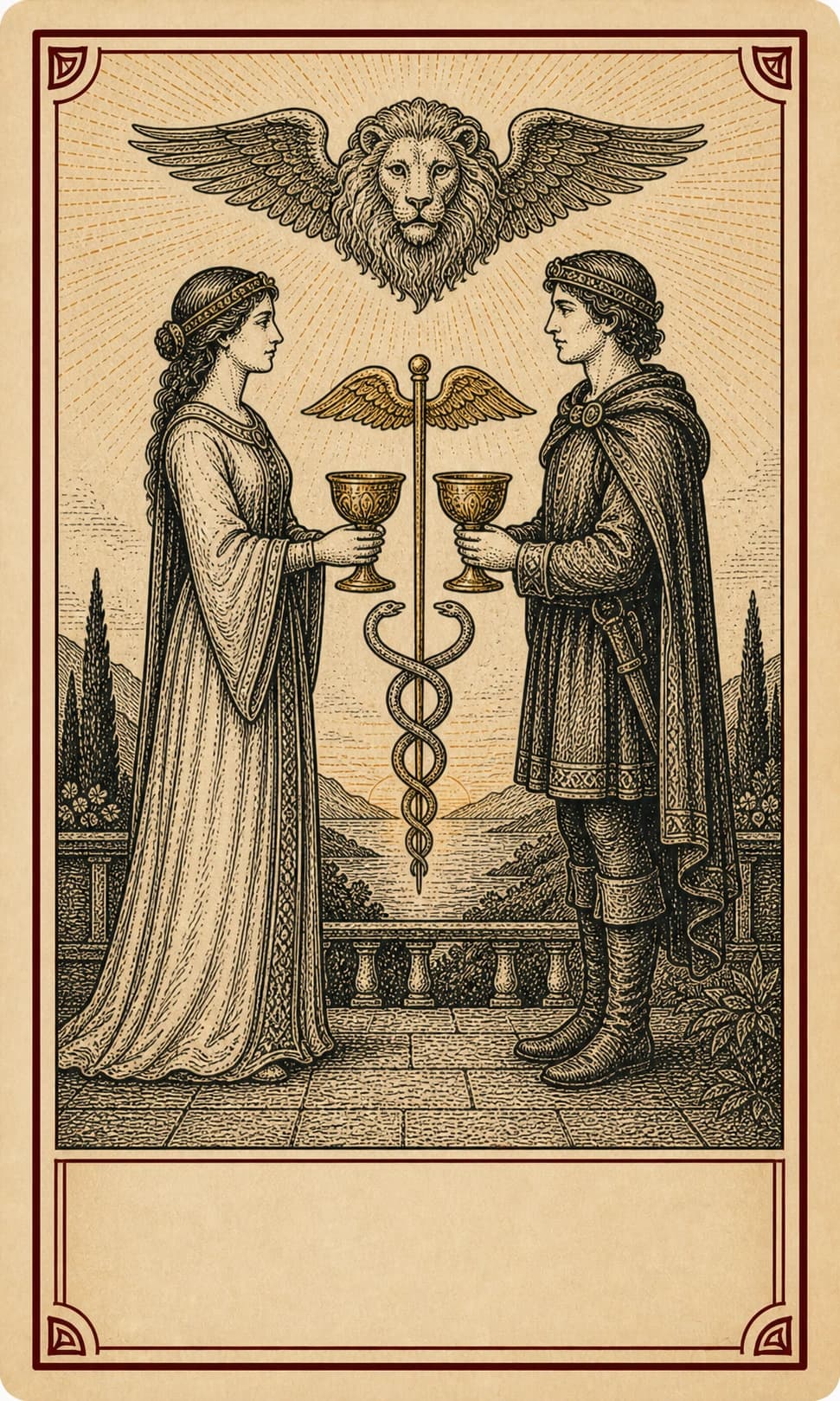
- The Two of Cups represents an exchange in which recognition, interest, or agreement moves both ways.
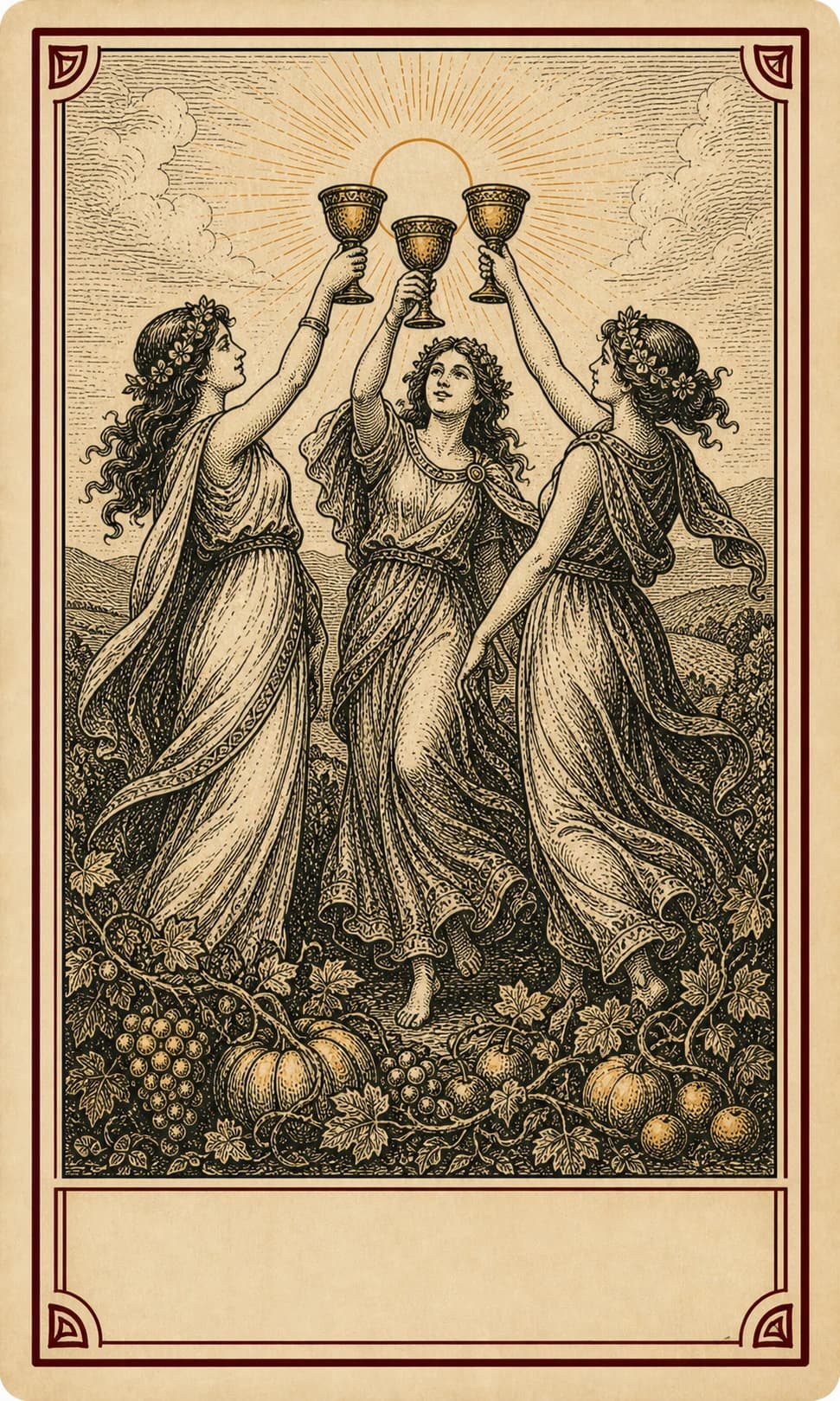
- The Three of Cups celebrates friendship, shared joy, and support that exists beyond one-to-one partnership.
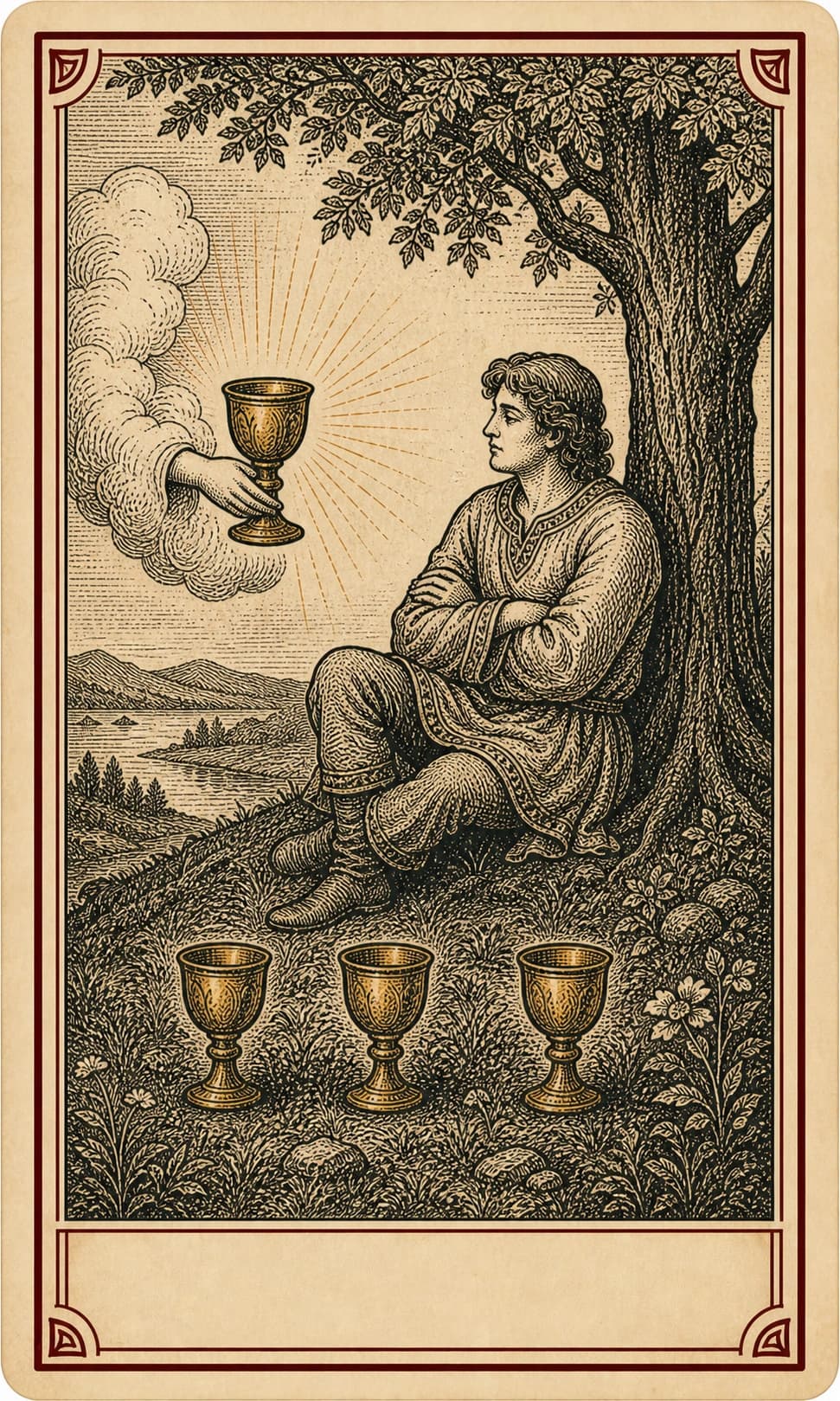
- The Four of Cups shows attention turned inward so strongly that available options may feel uninteresting or go unnoticed.
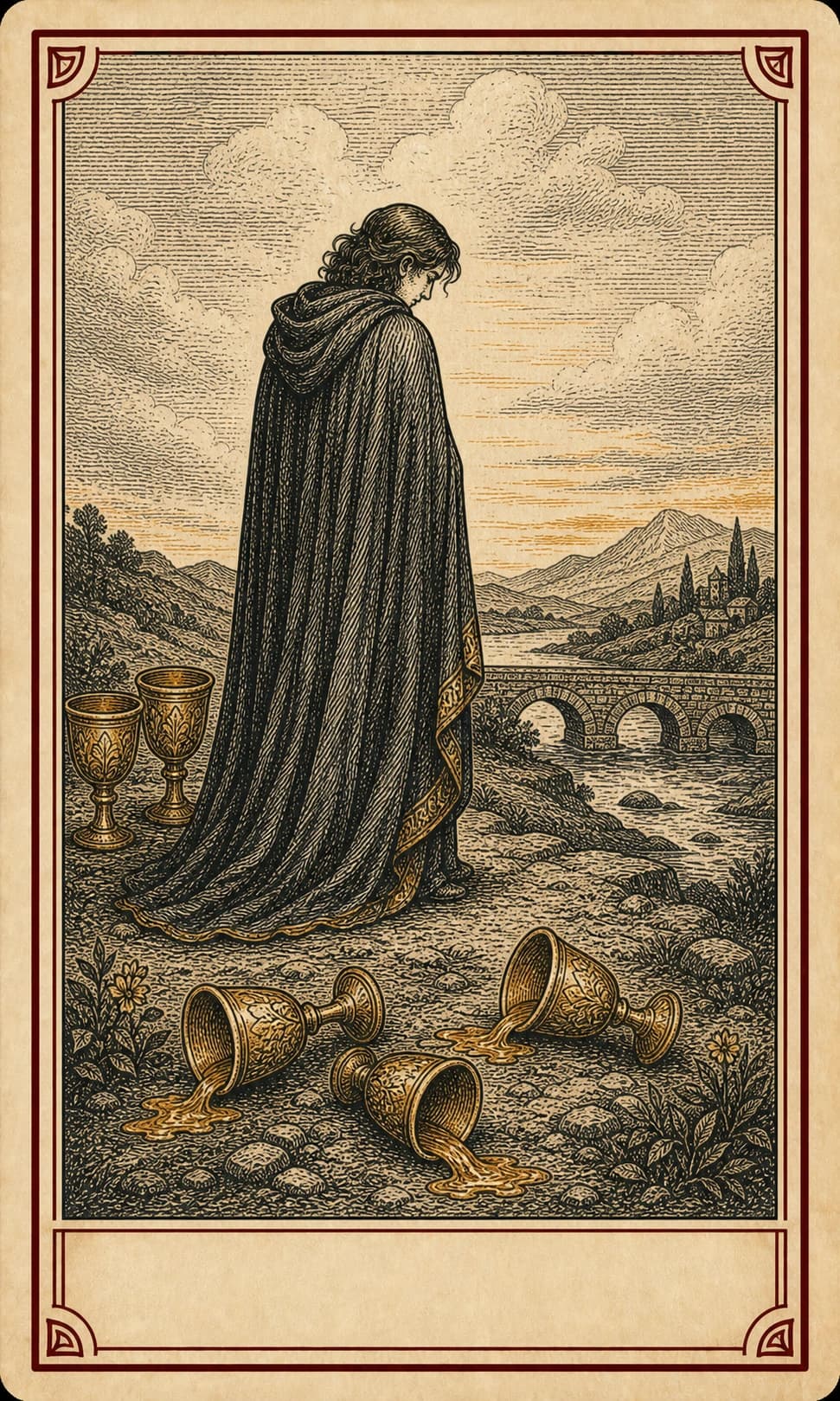
- The Five of Cups acknowledges real loss while showing that grief can narrow attention to what is gone.
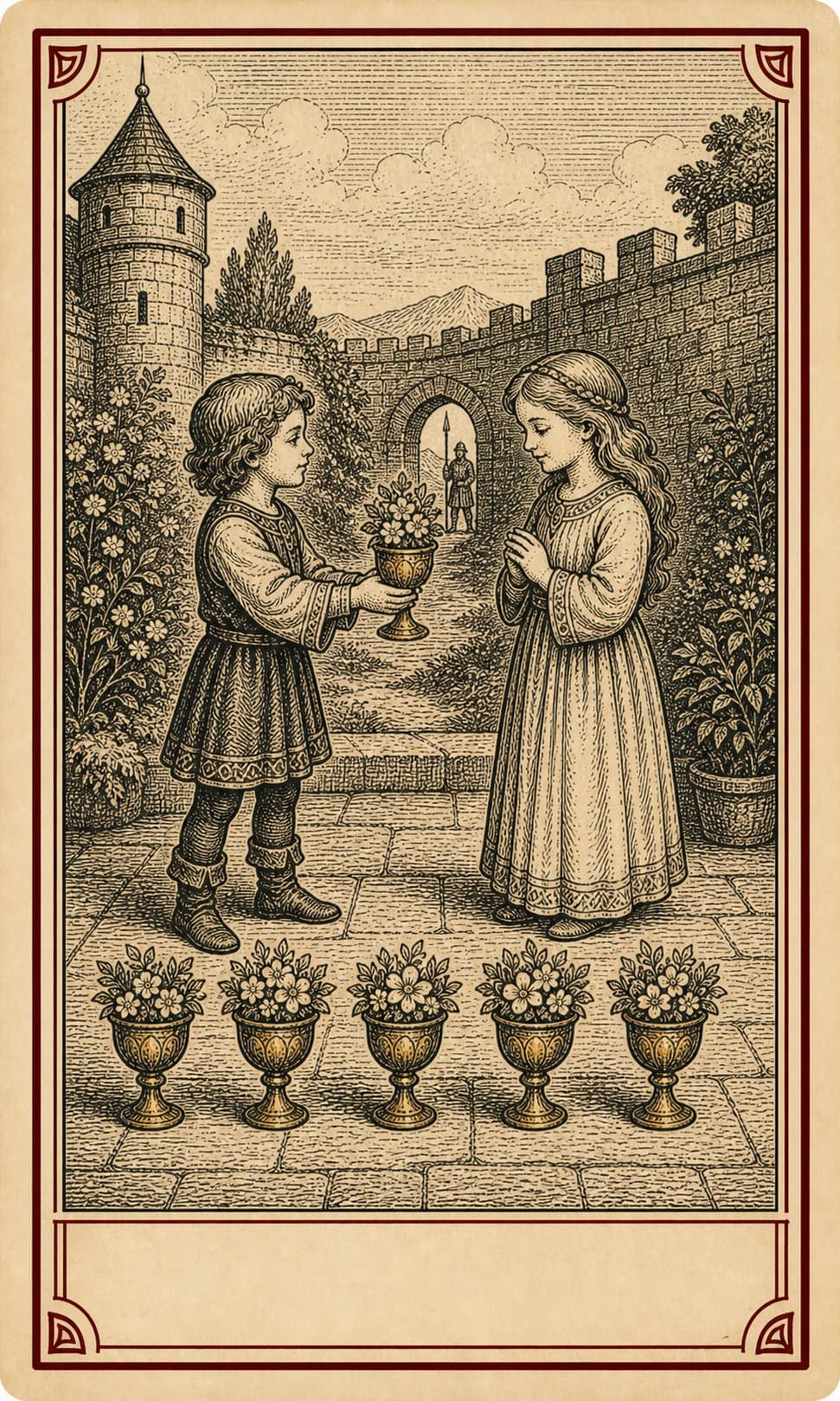
- The Six of Cups connects present feeling with memory, earlier innocence, or simple acts of generosity.
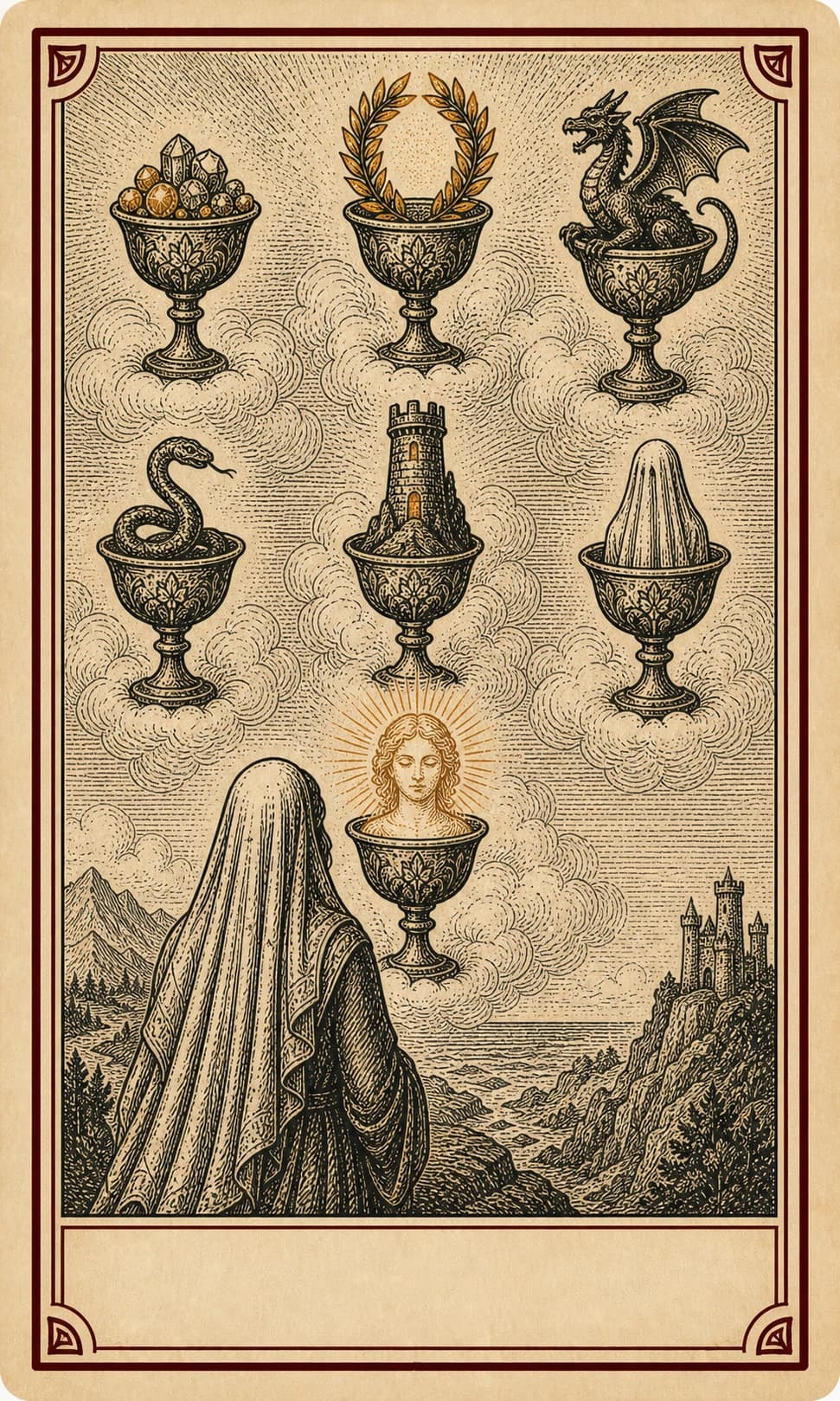
- The Seven of Cups presents many attractive possibilities, some substantial and some shaped mainly by projection.
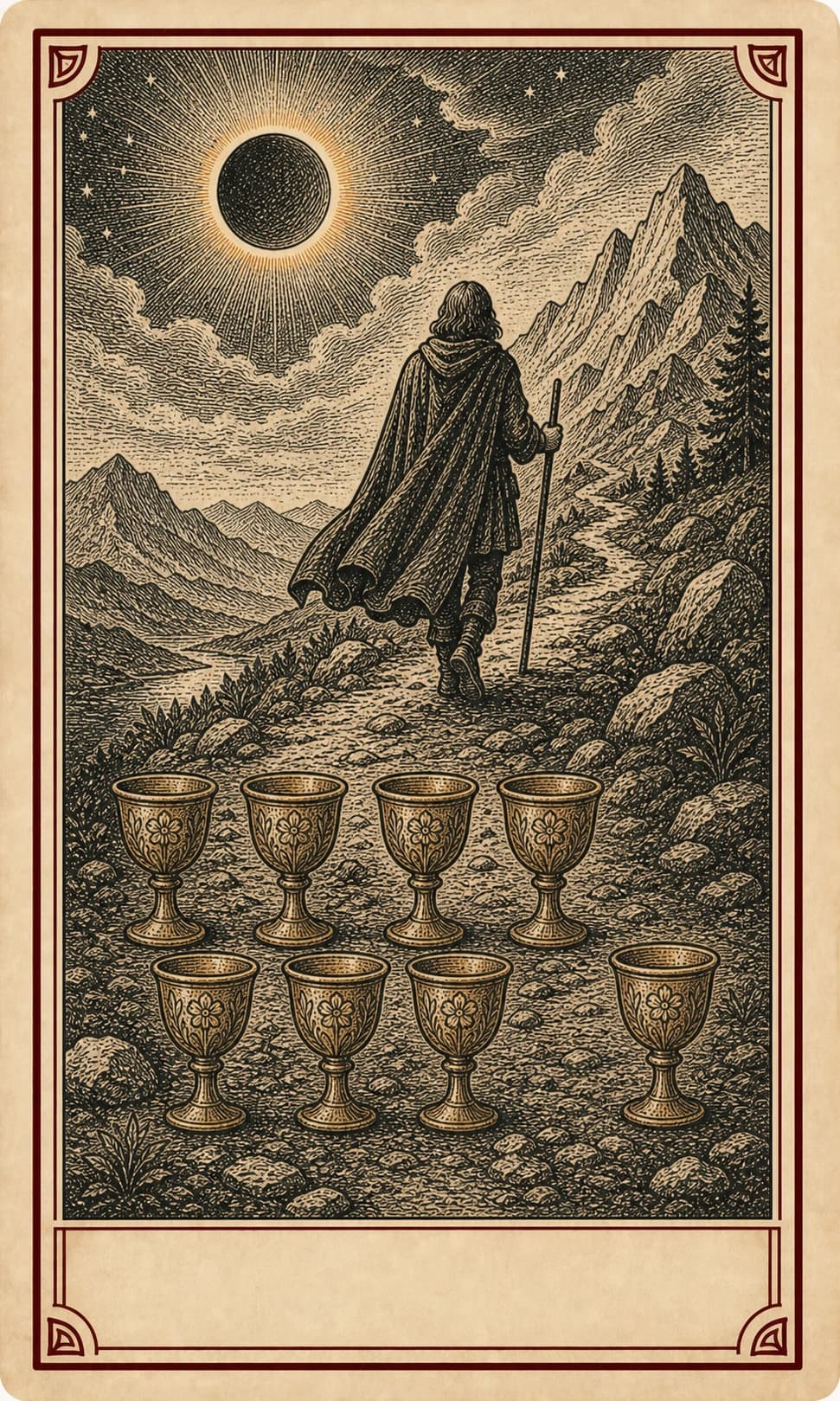
- The Eight of Cups shows a decision to leave something that remains outwardly intact but no longer meets a deeper need.
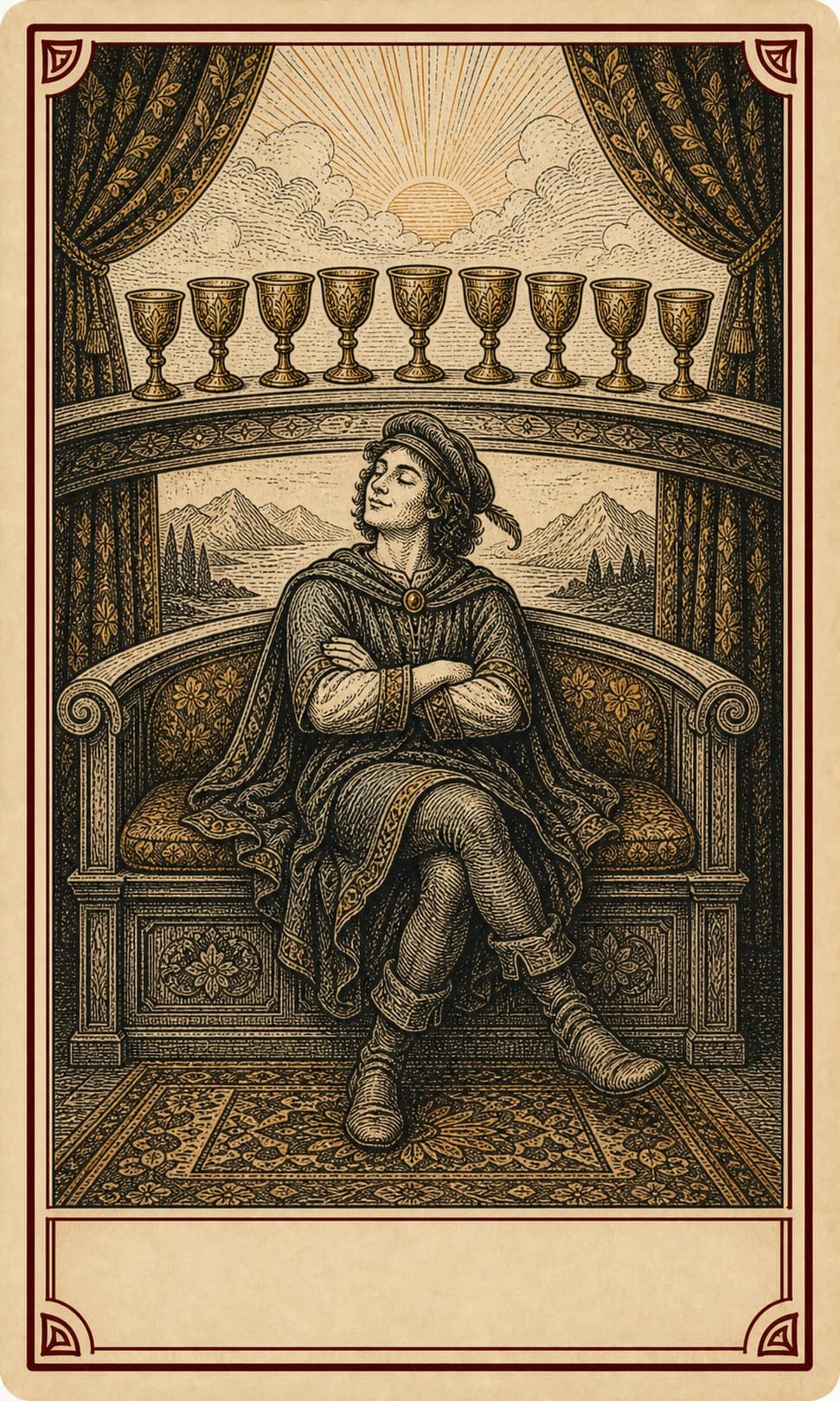
- The Nine of Cups represents satisfaction and the ability to appreciate something desired that is now present.
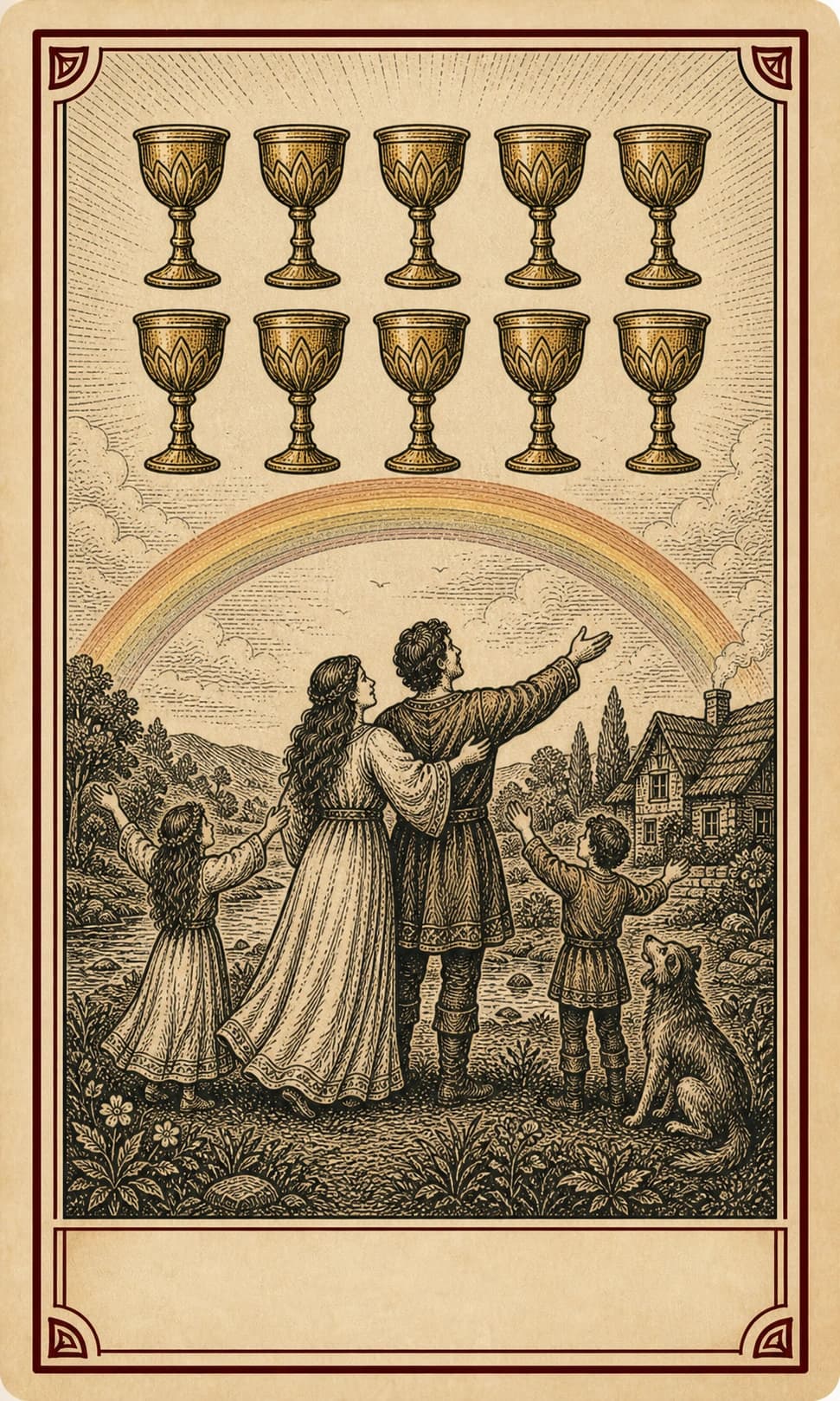
- The Ten of Cups describes emotional wellbeing supported by belonging, shared values, and dependable connection.
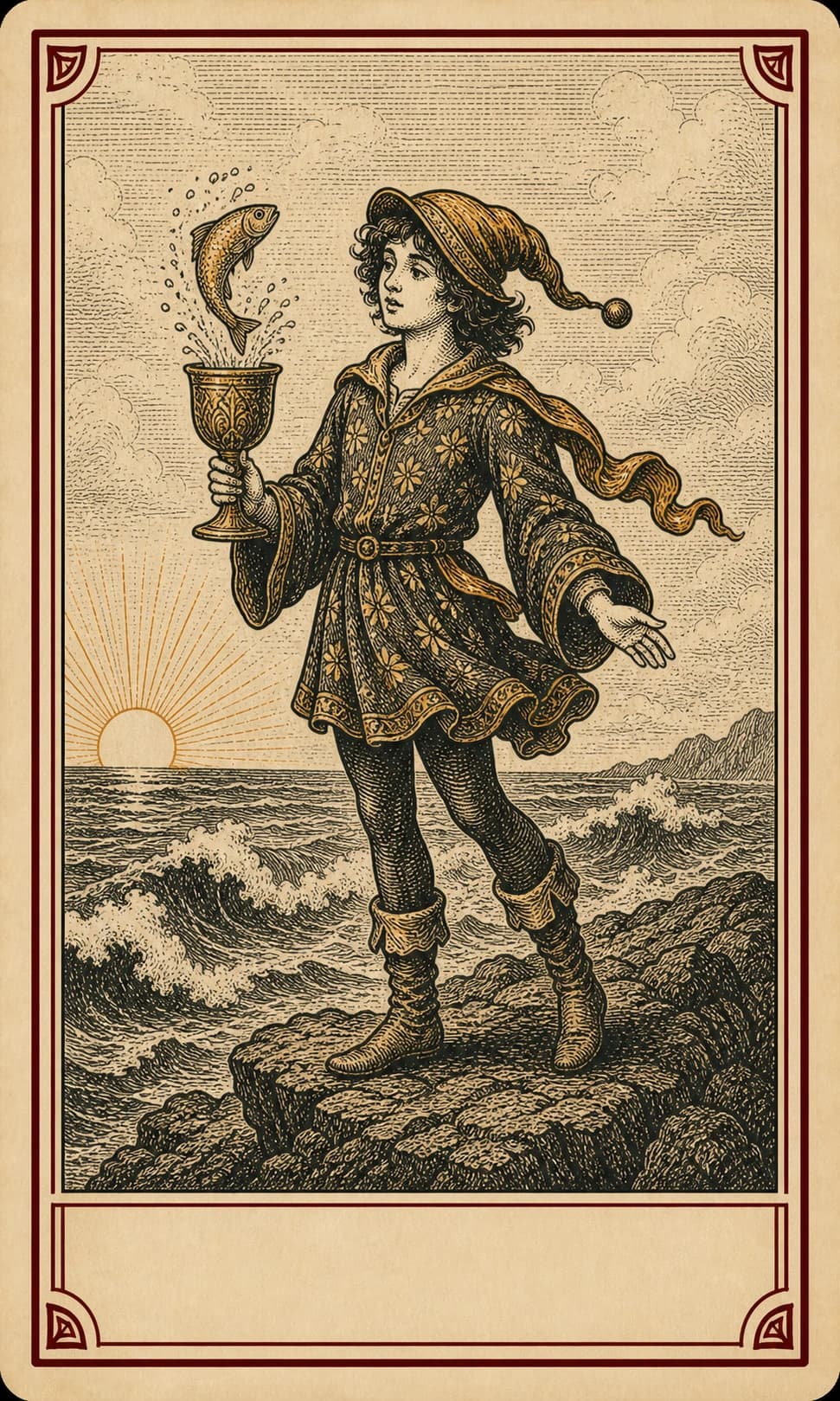
- The Page of Cups brings a feeling, imaginative idea, or unexpected message that deserves curious attention.
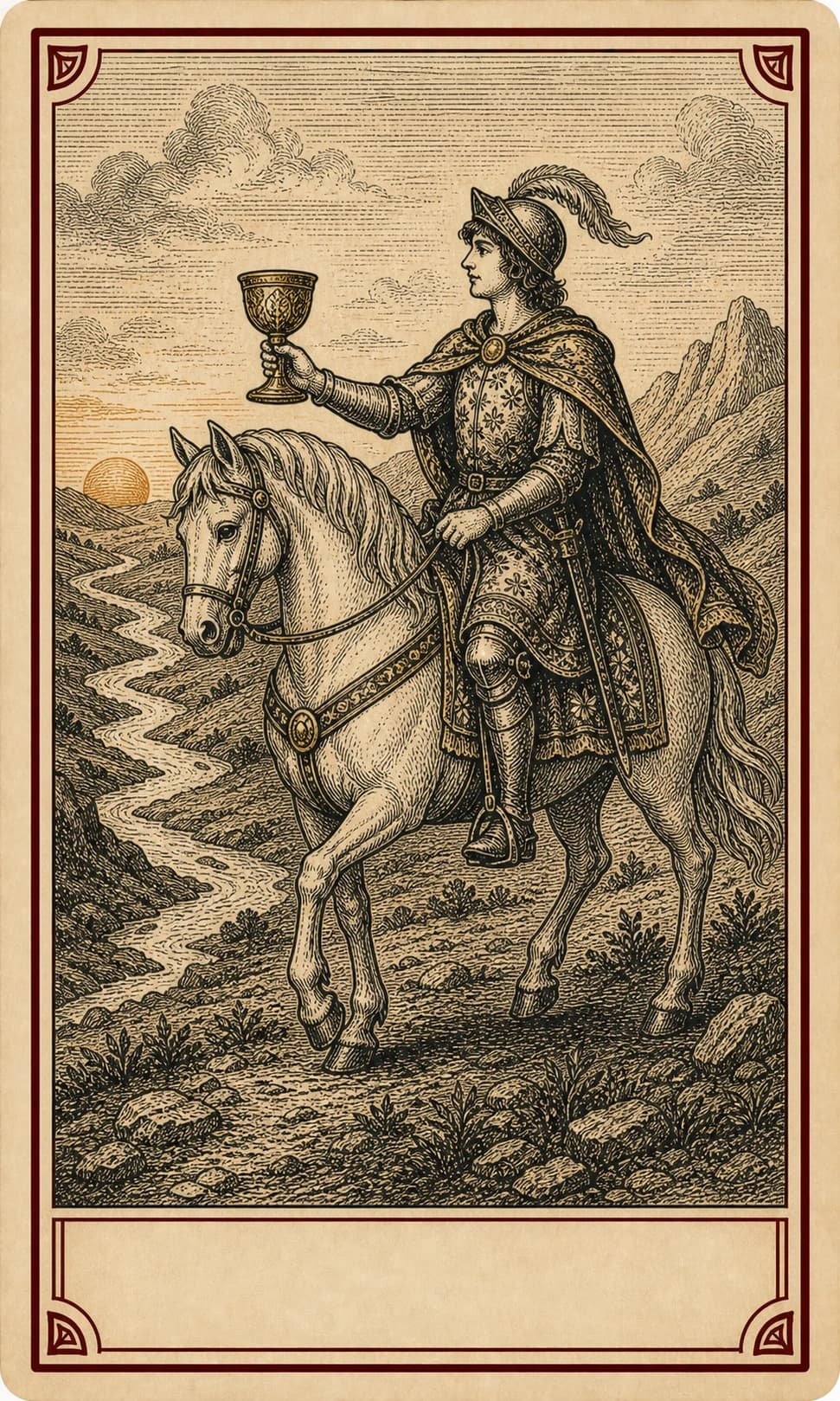
- The Knight of Cups carries an invitation, creative proposal, or ideal pursued through emotional expression.
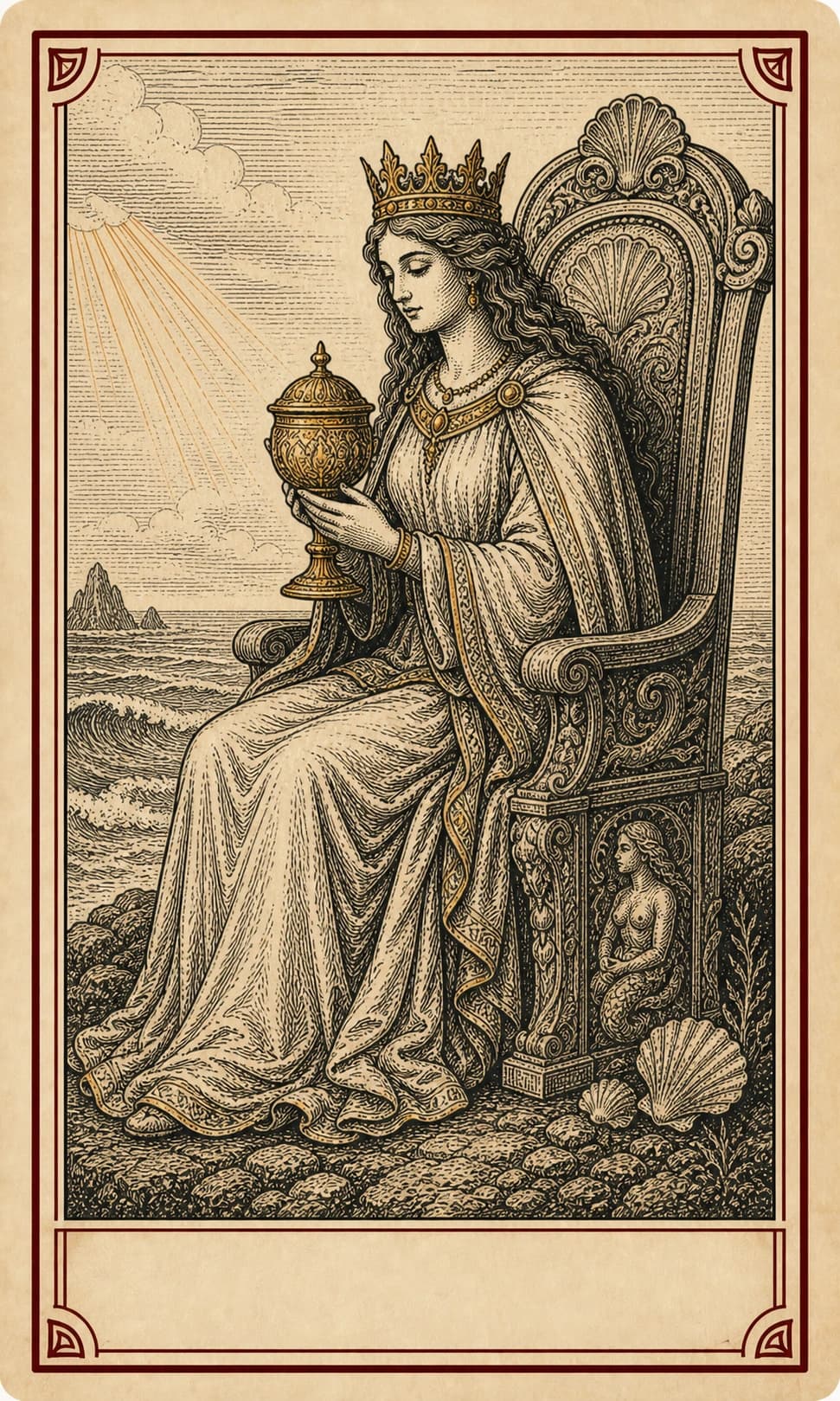
- The Queen of Cups combines empathy with the discernment needed to hold feeling without being consumed by it.
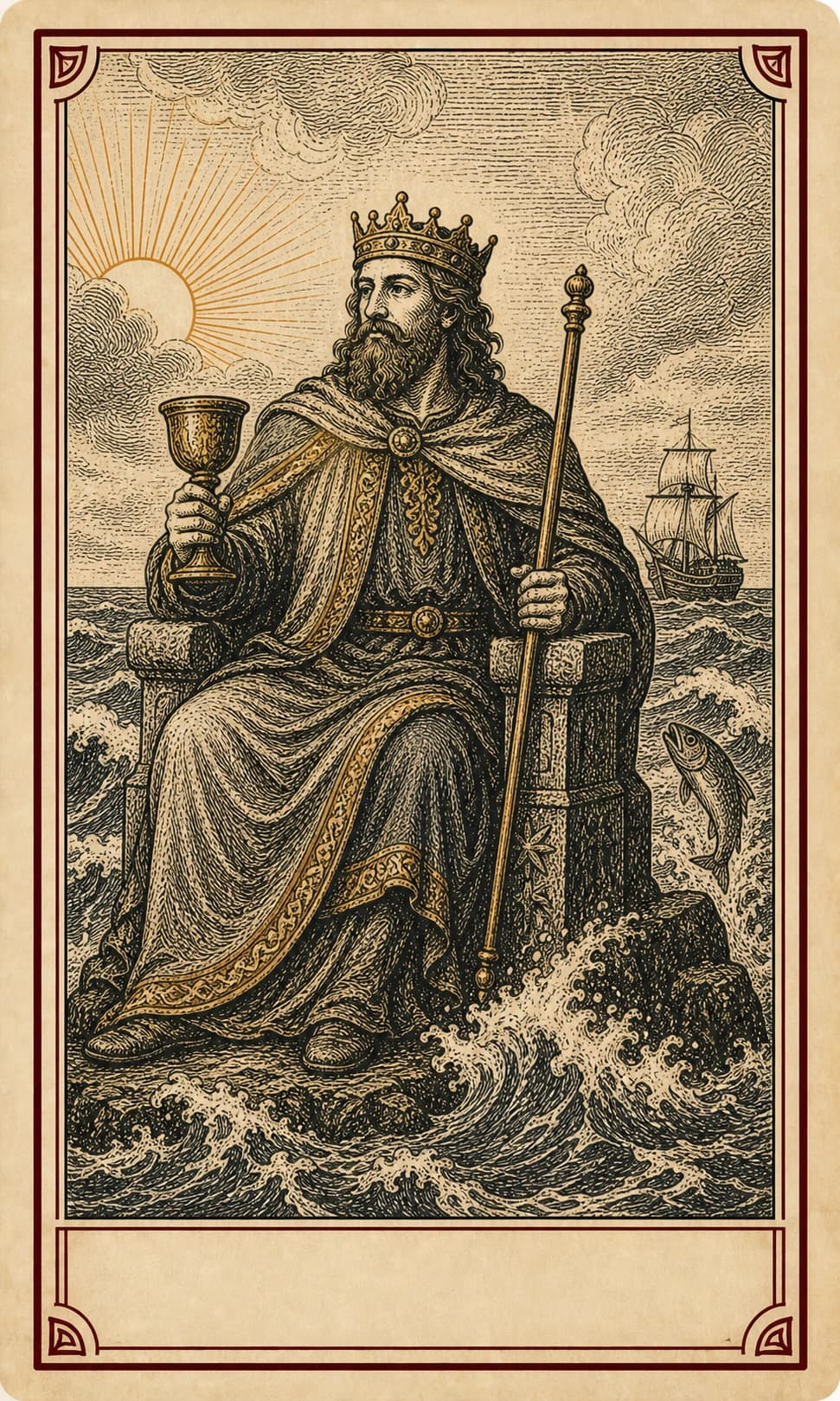
- The King of Cups remains emotionally present while making measured decisions amid changing conditions.
Swords
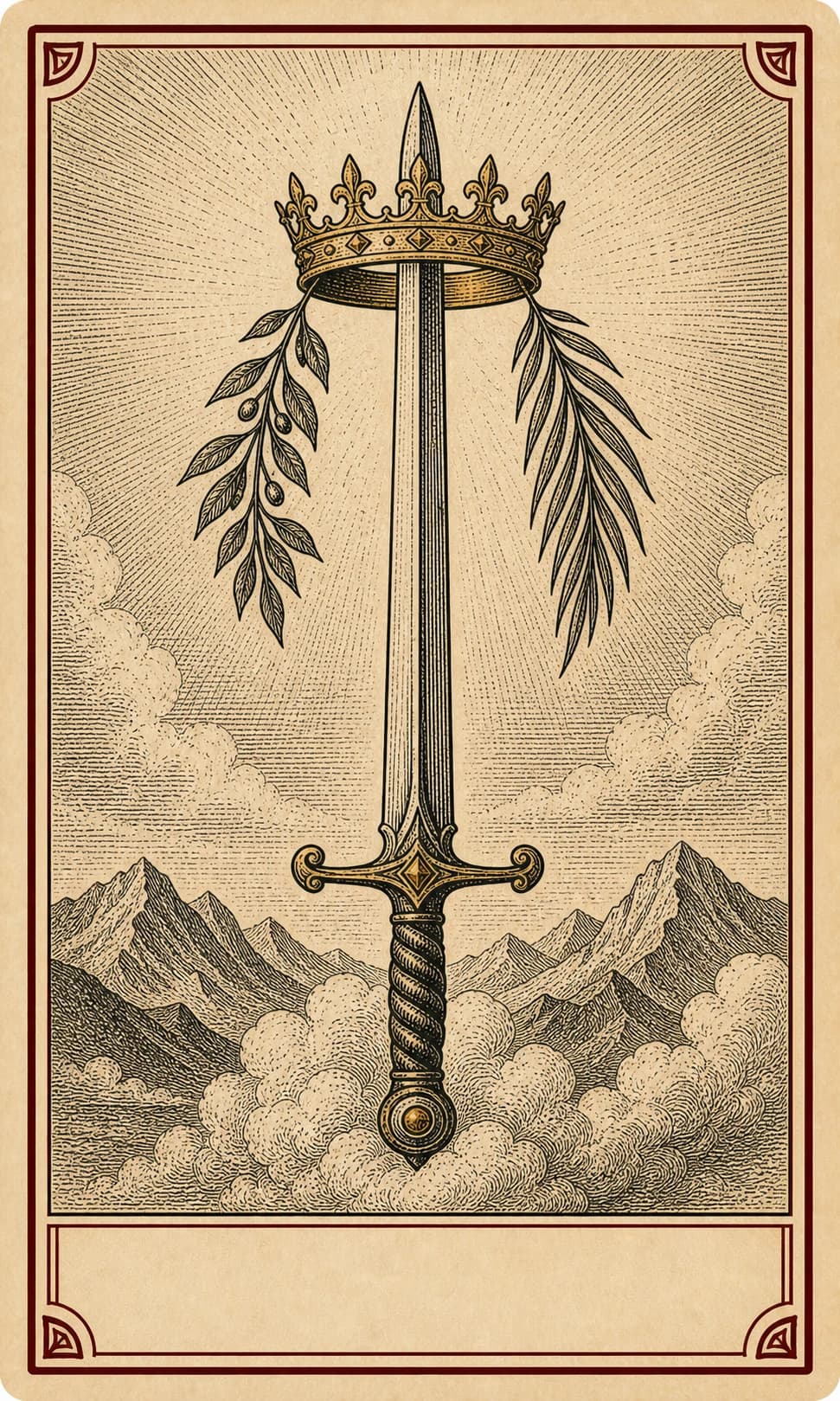
- The Ace of Swords cuts through confusion with a fact, insight, or decision that can be stated plainly.
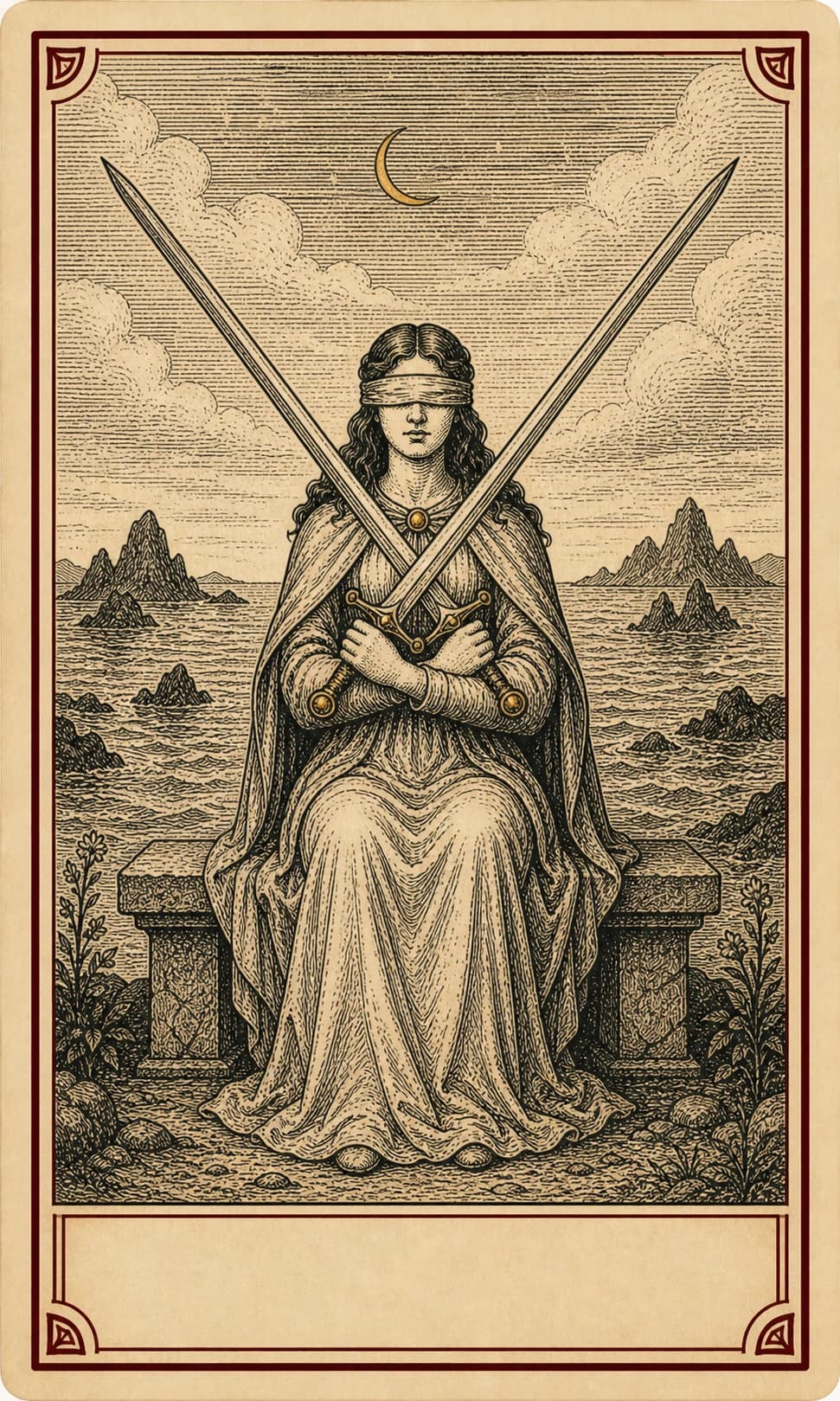
- The Two of Swords holds two incompatible options in suspension while avoiding information or emotion that would force a choice.
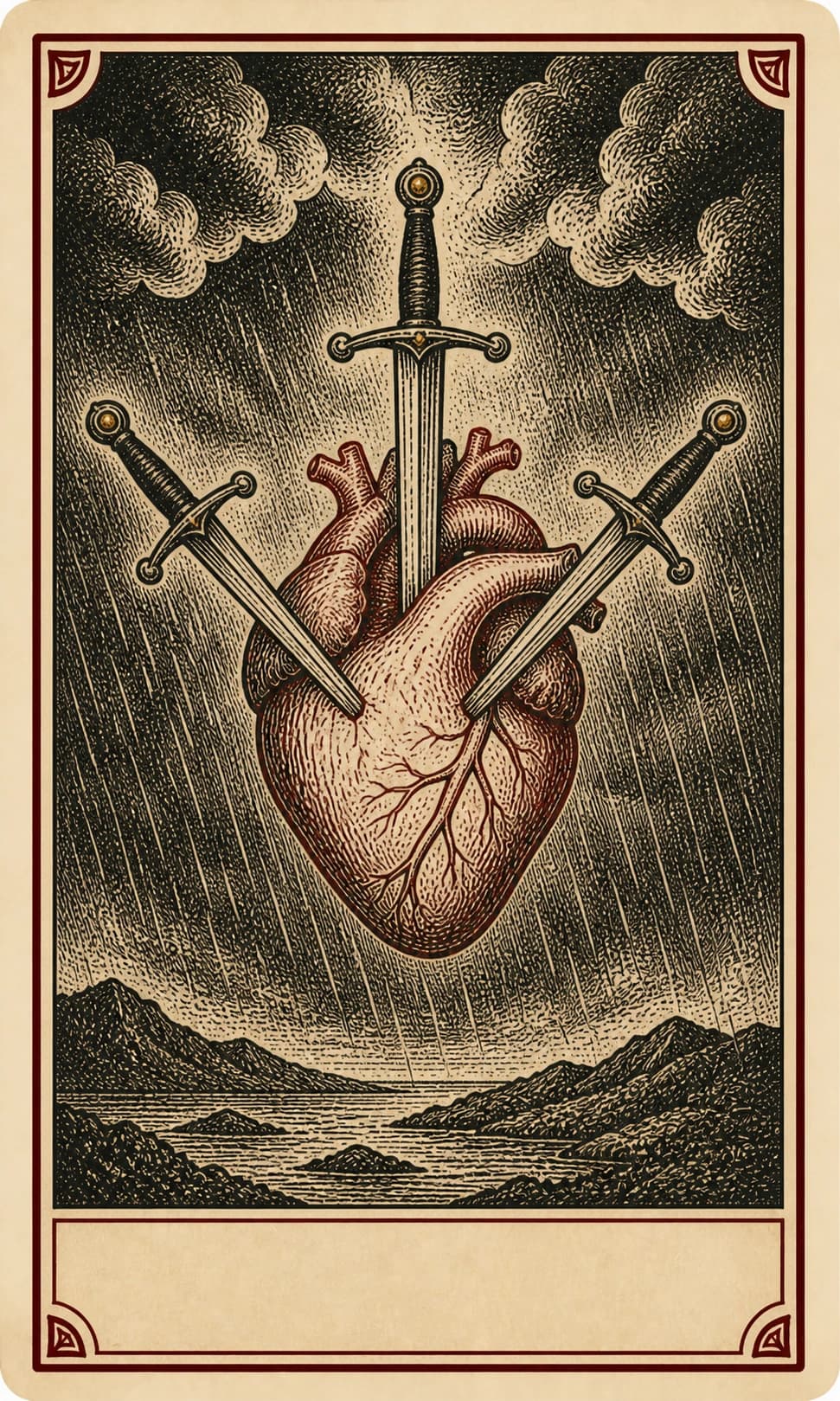
- The Three of Swords names emotional pain, separation, or a truth that hurts precisely because it matters.
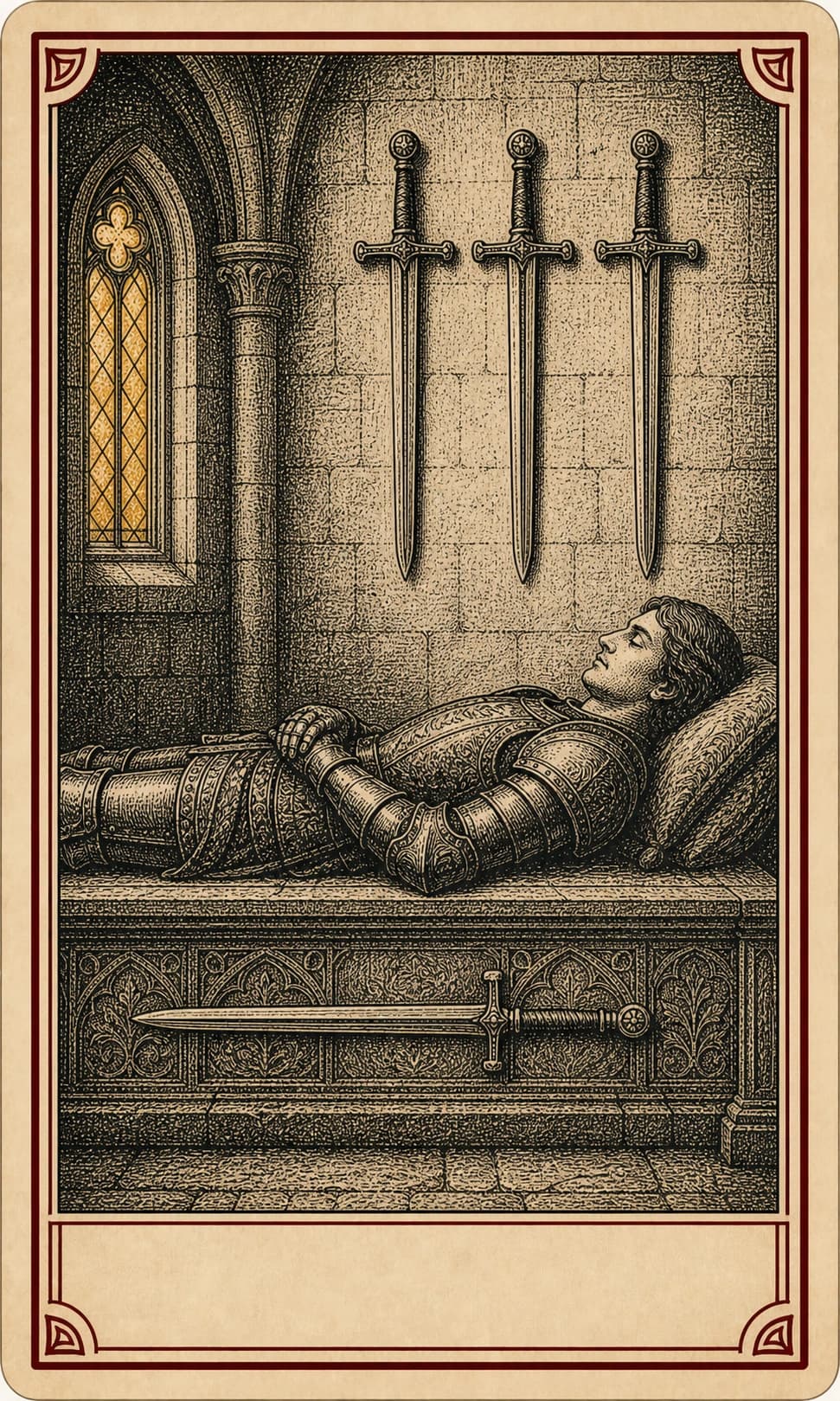
- The Four of Swords calls for deliberate recovery after sustained effort, conflict, or mental strain.
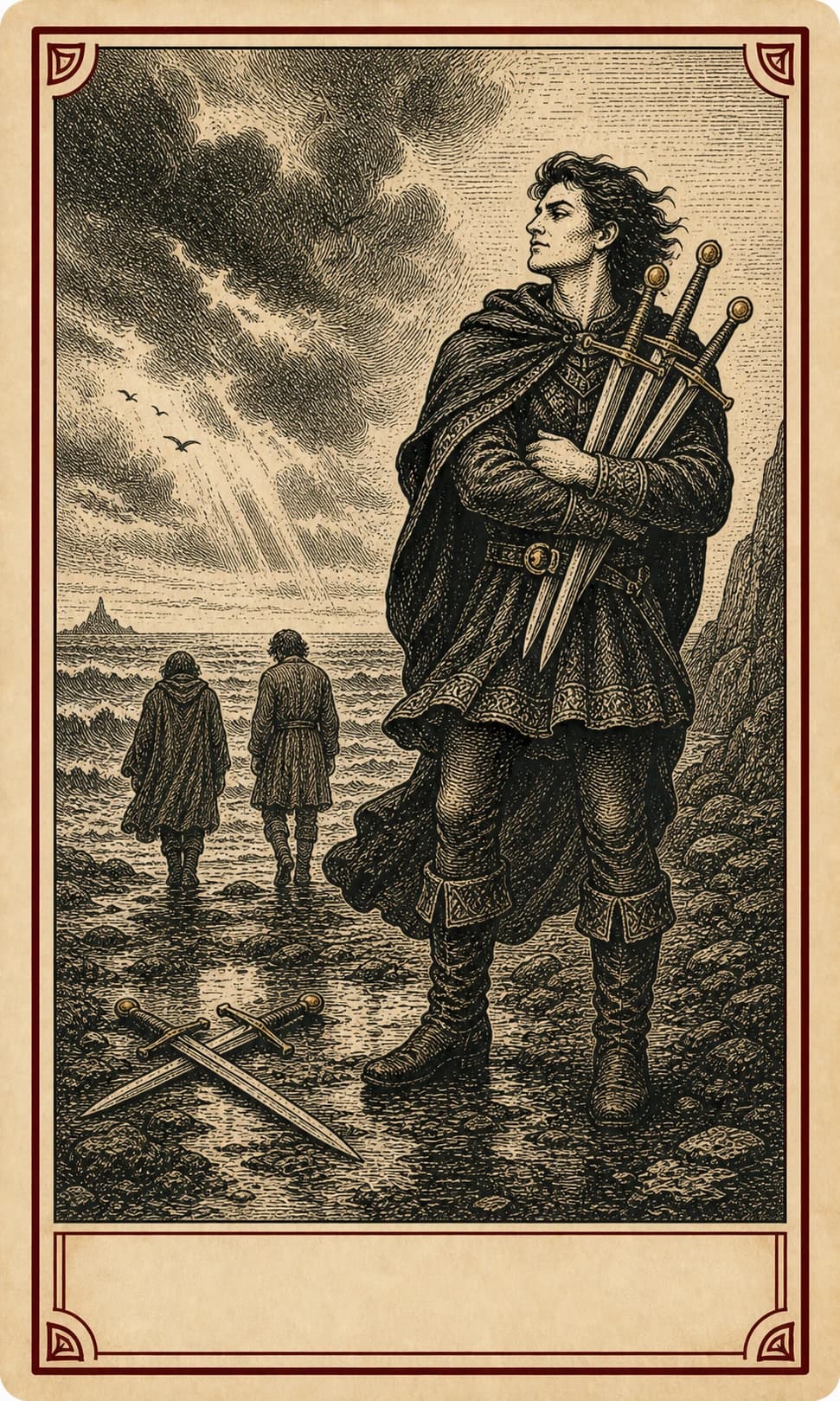
- The Five of Swords depicts a conflict that can be won tactically while damaging trust, dignity, or the larger purpose.
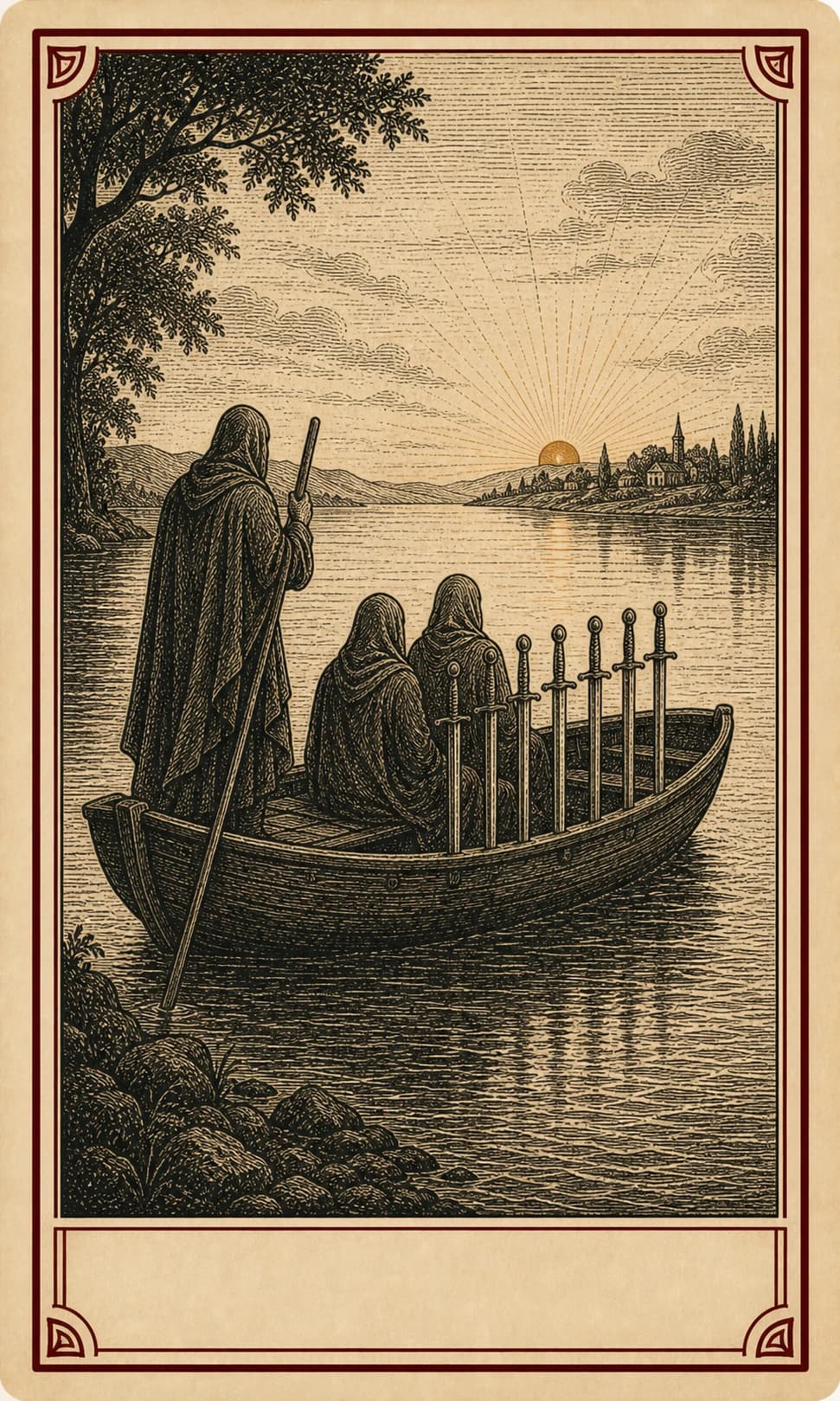
- The Six of Swords represents movement away from a difficult condition, even while its memories and consequences travel with you.
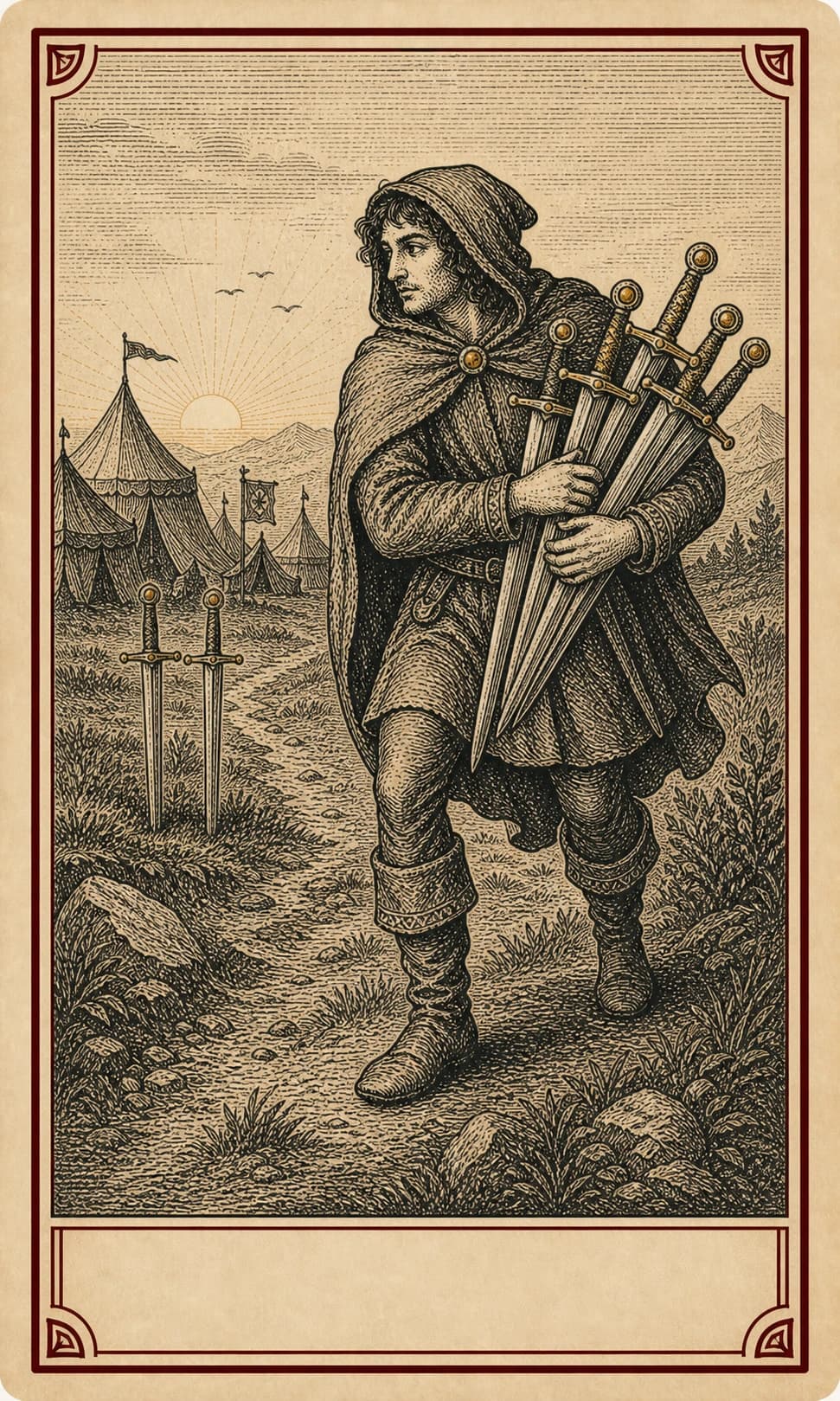
- The Seven of Swords concerns strategy used outside direct view, ranging from necessary discretion to deception and avoidance.
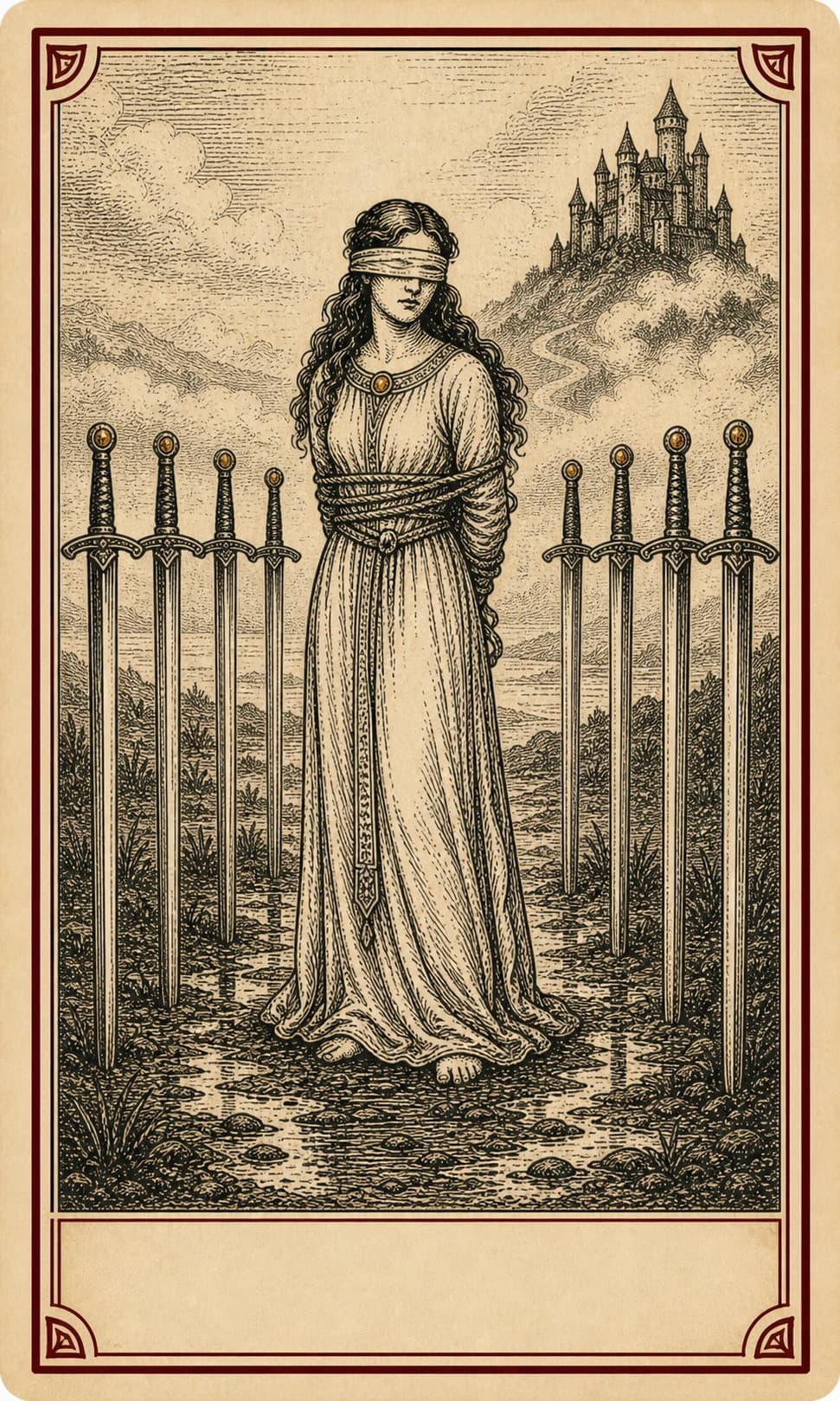
- The Eight of Swords shows real constraints intensified by a perspective that makes available choices difficult to see.
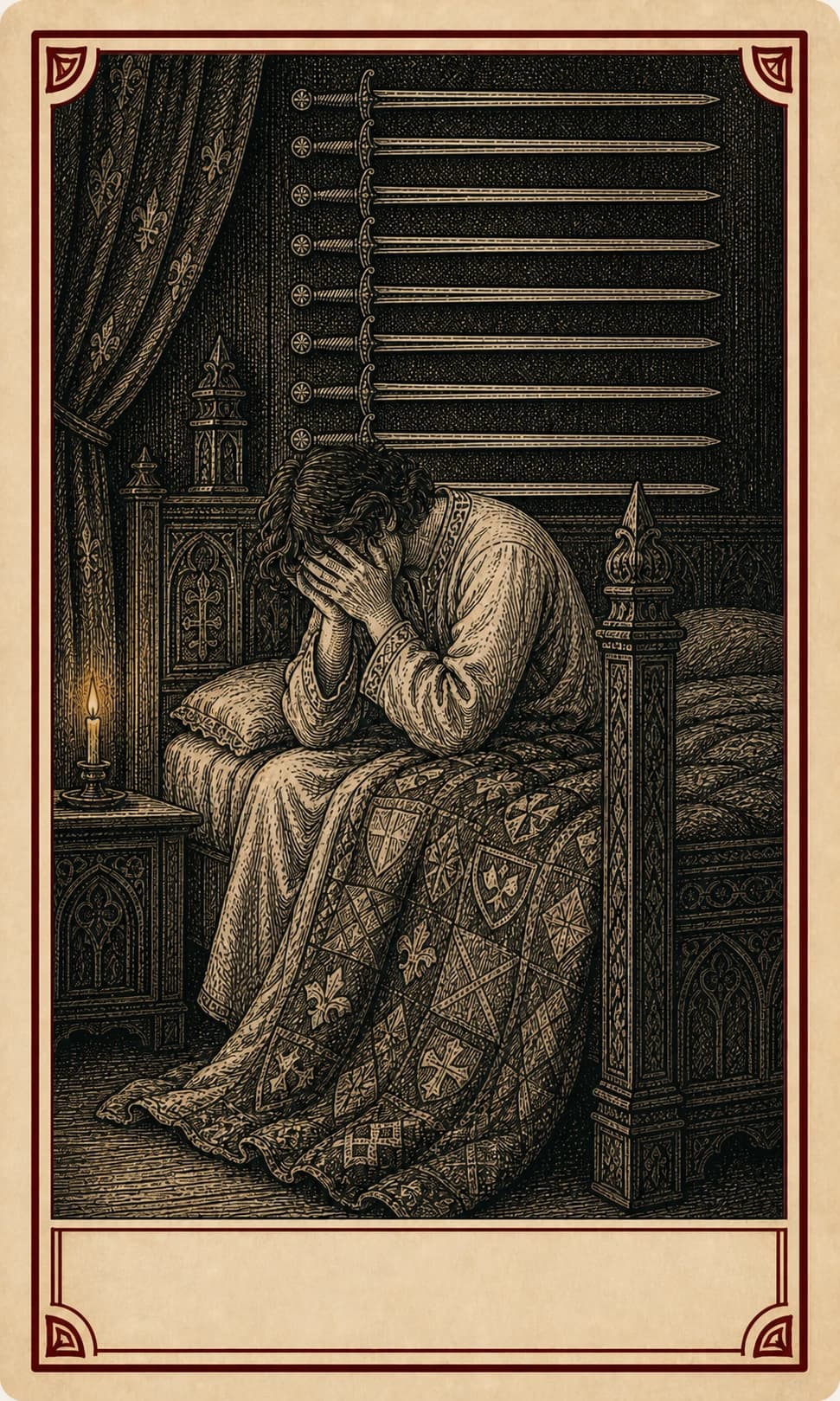
- The Nine of Swords depicts distress amplified in isolation, especially when the mind repeatedly rehearses feared outcomes.
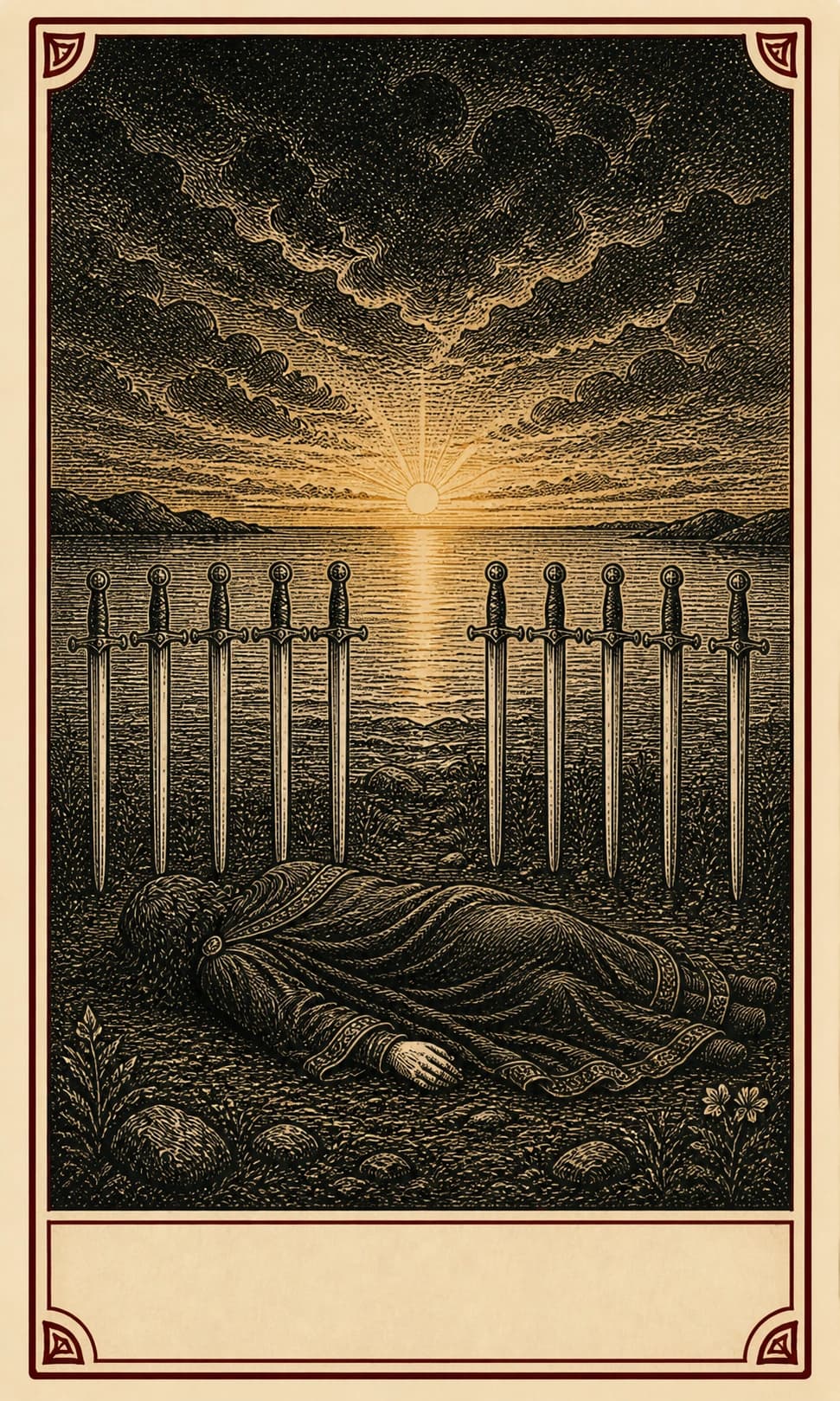
- The Ten of Swords portrays an ending that cannot be improved by continuing the same struggle.
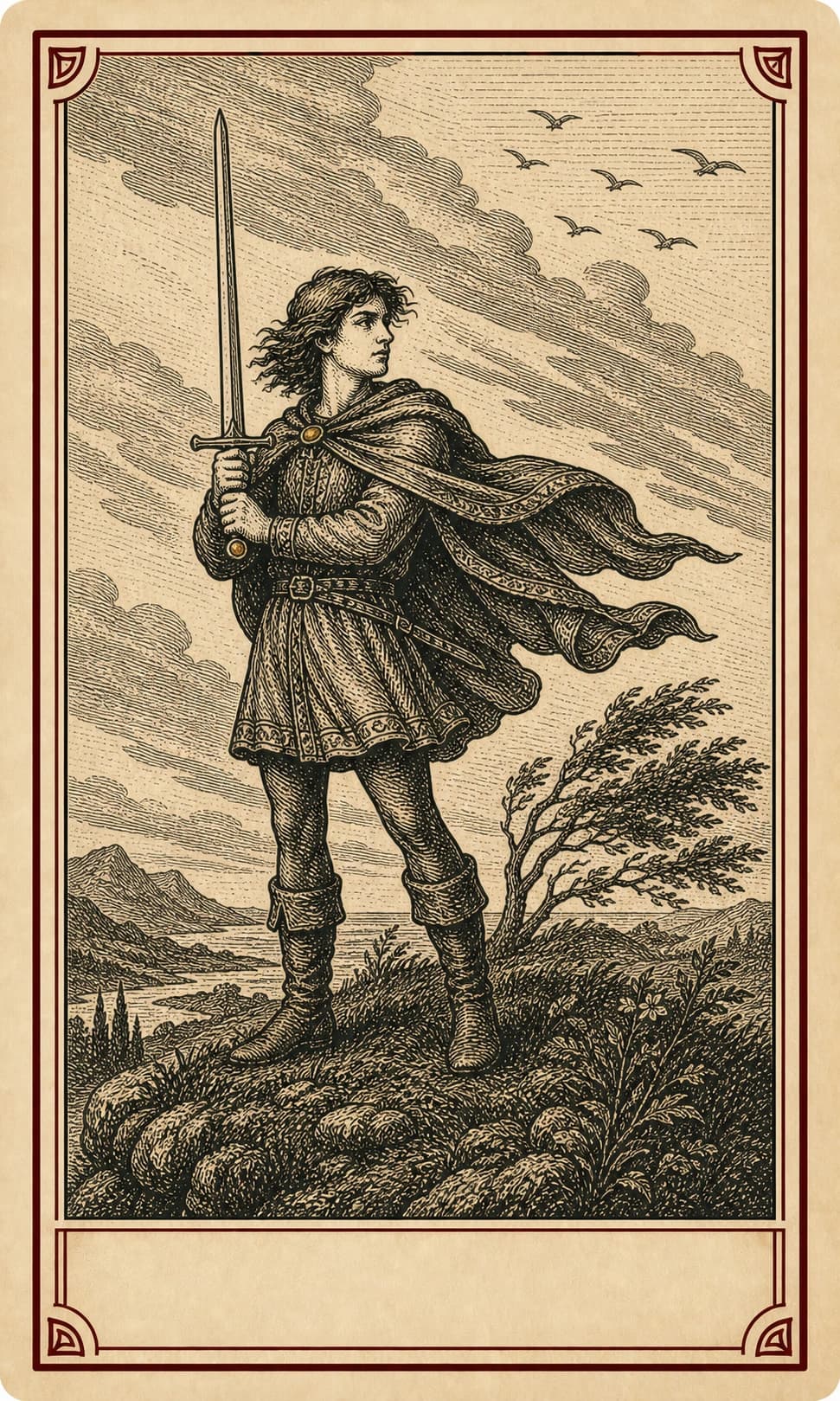
- The Page of Swords is alert, questioning, and eager to understand a new idea or changing situation.
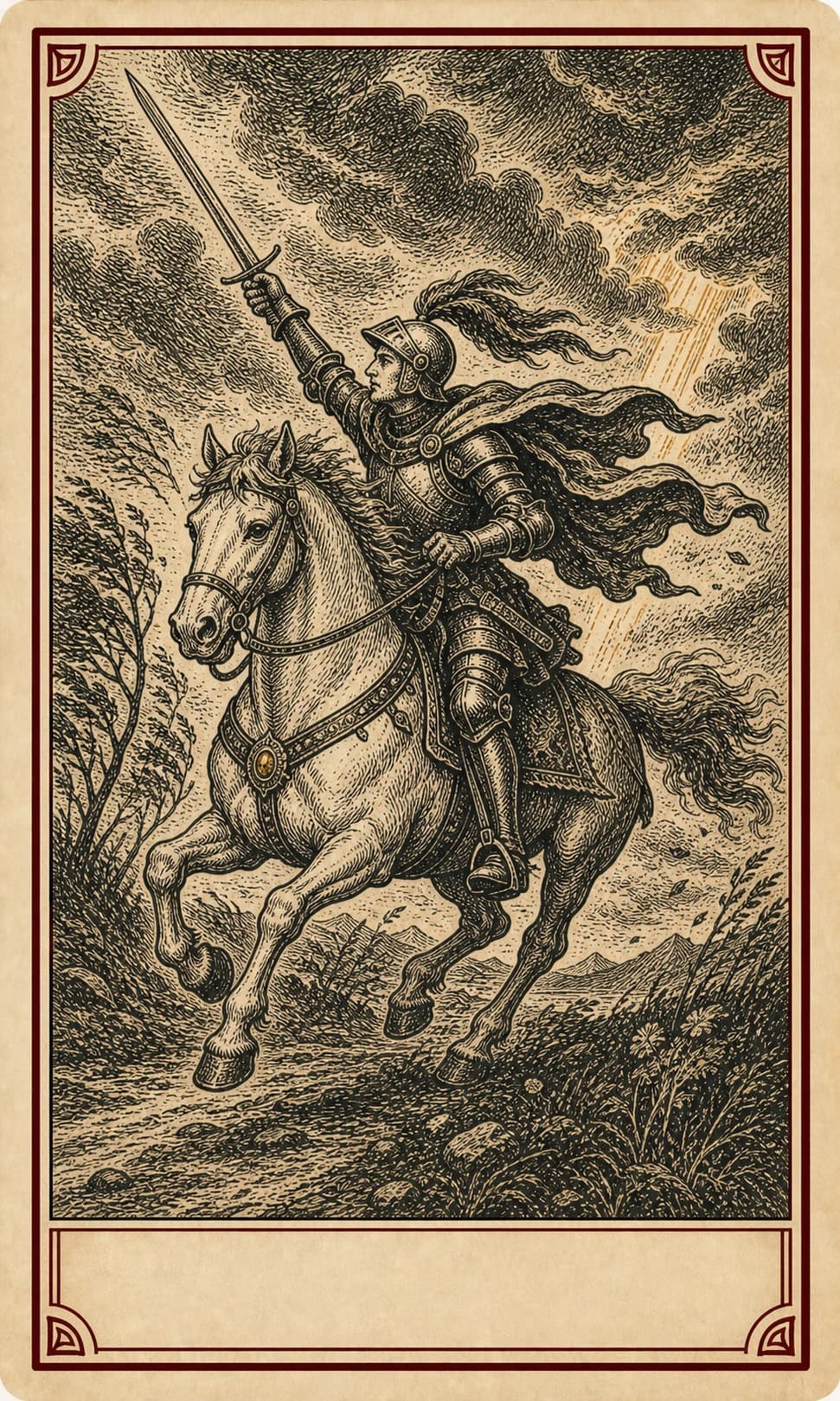
- The Knight of Swords moves quickly toward a conclusion or cause with confidence and force.
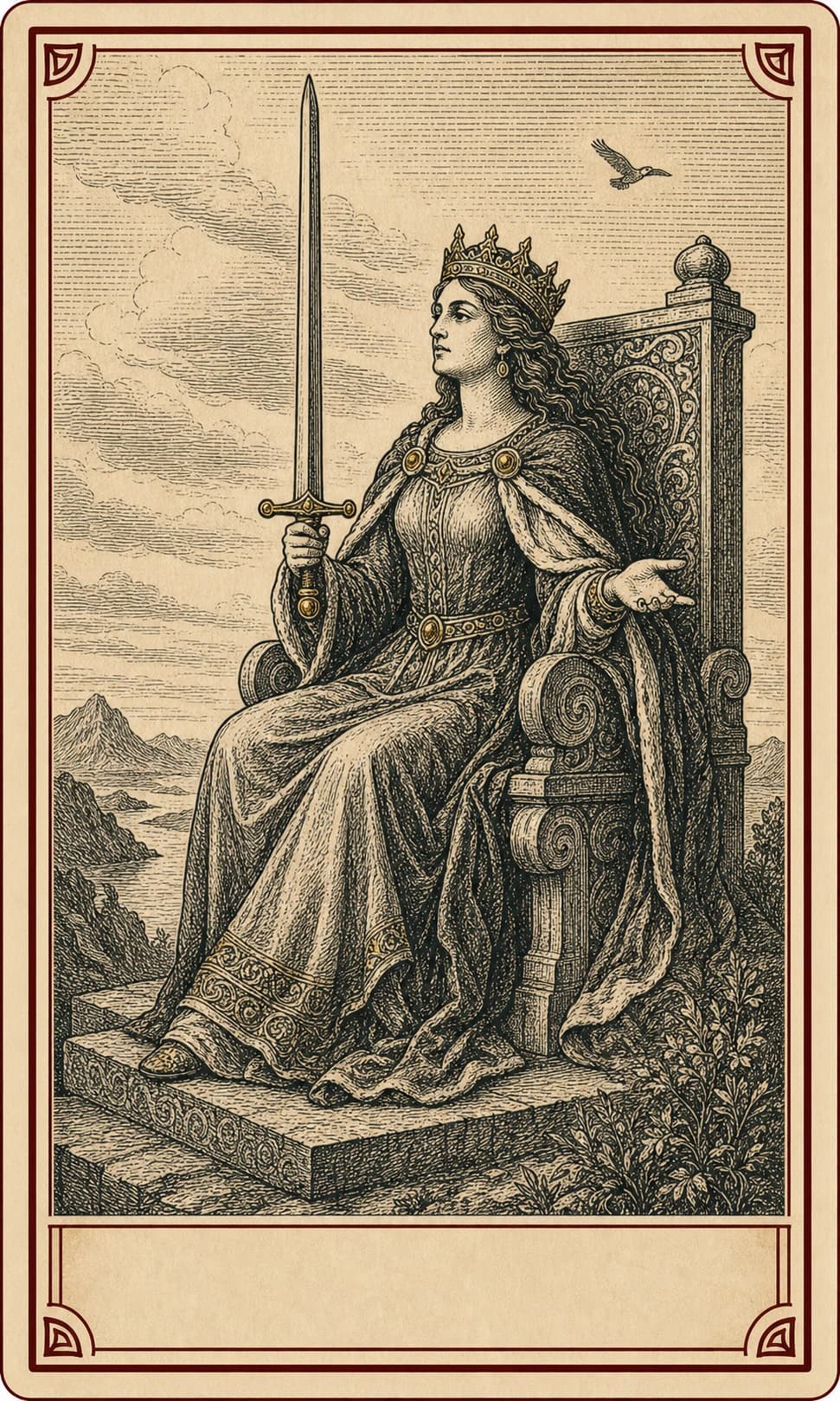
- The Queen of Swords combines hard-won perception with the ability to state a clear boundary without unnecessary ornament.
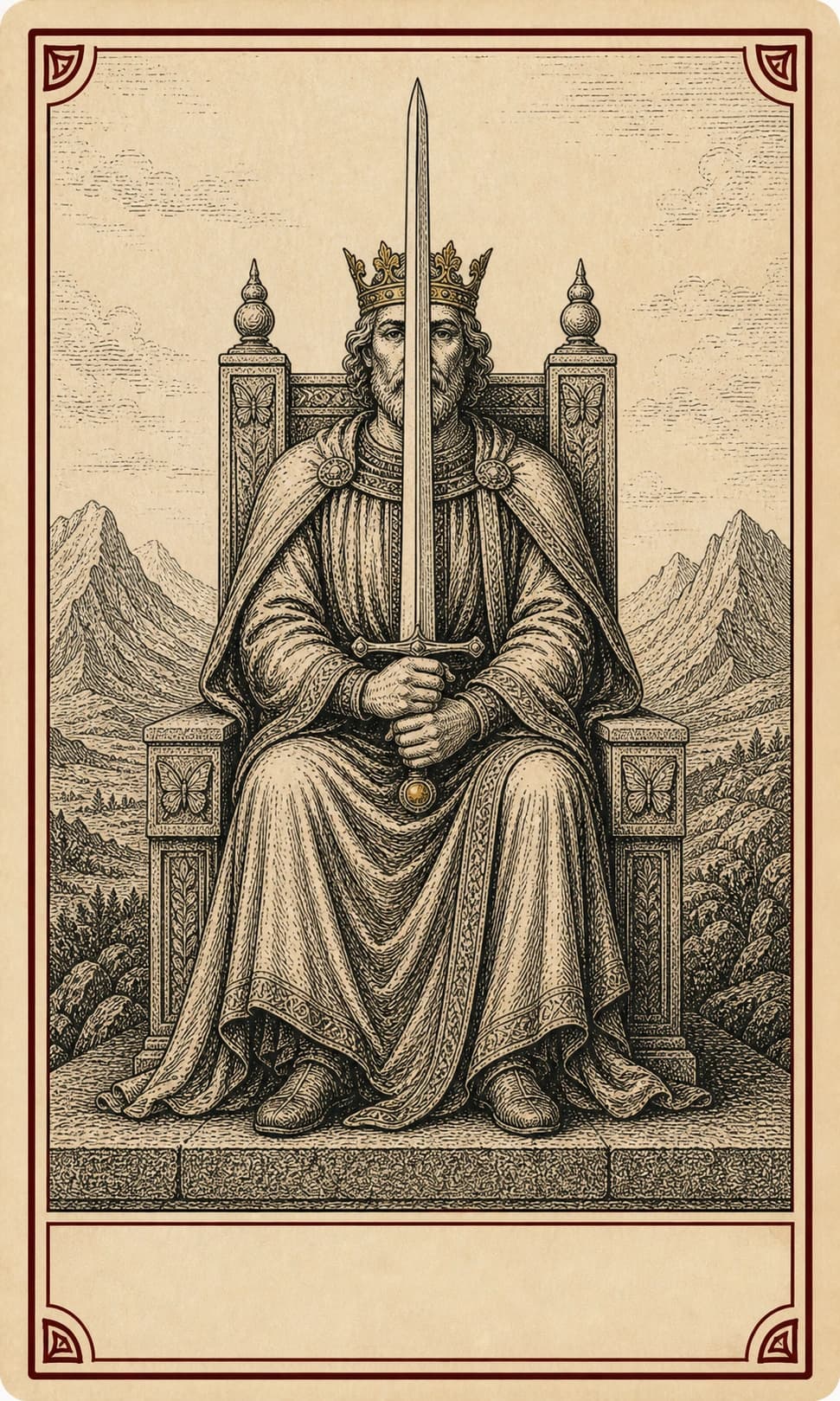
- The King of Swords applies knowledge through consistent standards, strategic judgement, and responsibility for the decision.
Pentacles
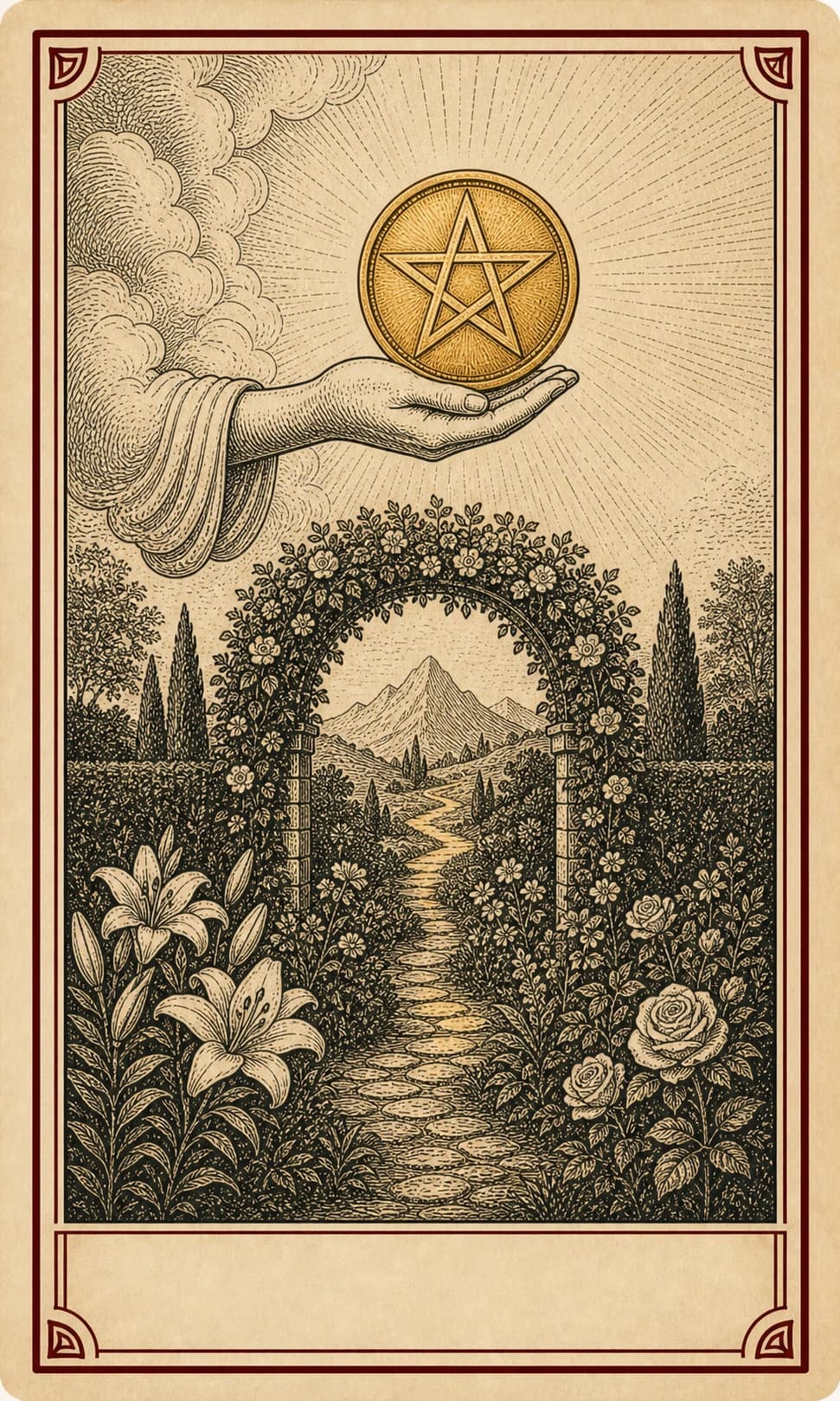
- The Ace of Pentacles offers a practical opening that can become stable through care, resources, and repeated work.
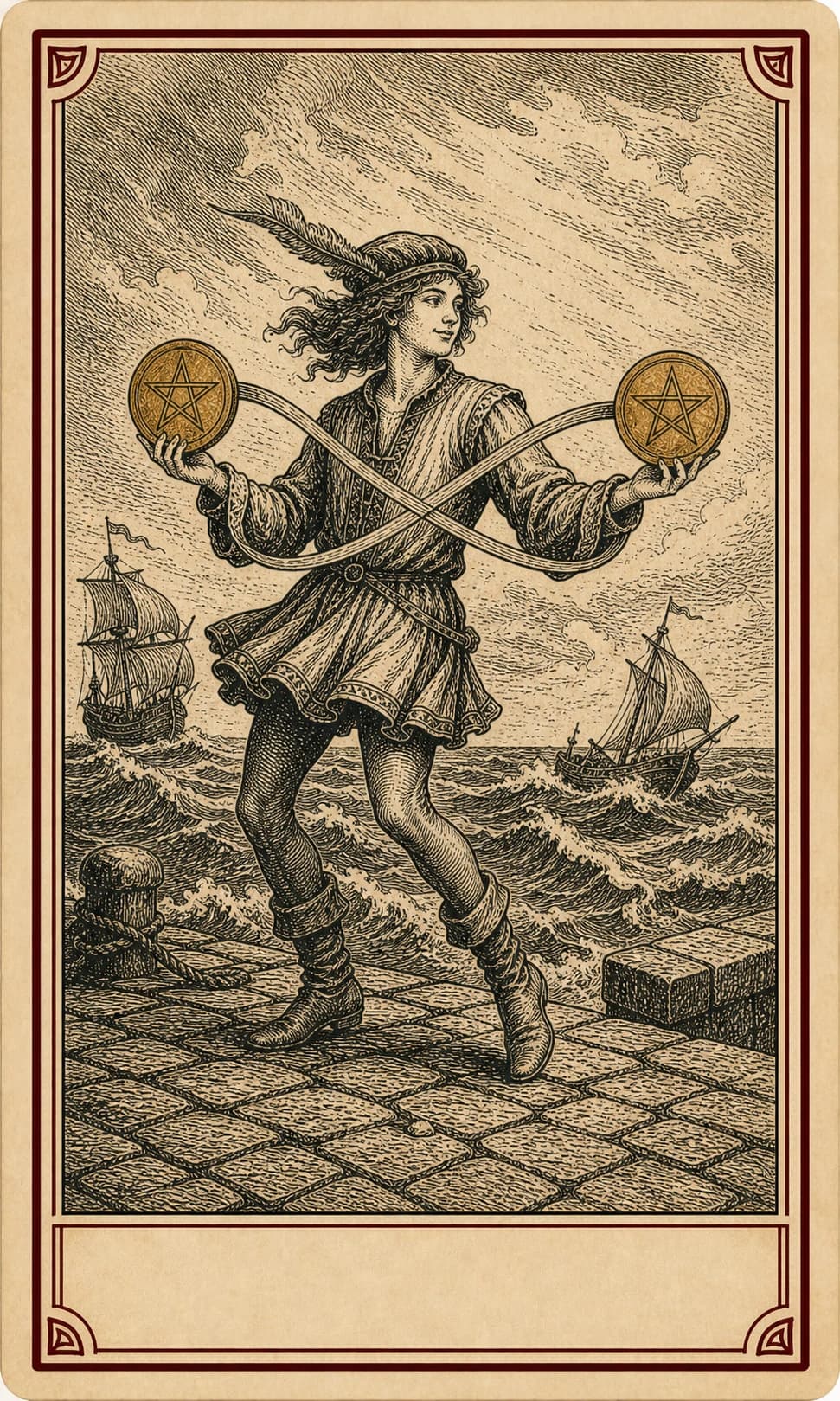
- The Two of Pentacles manages changing practical demands through flexibility, timing, and constant reprioritization.
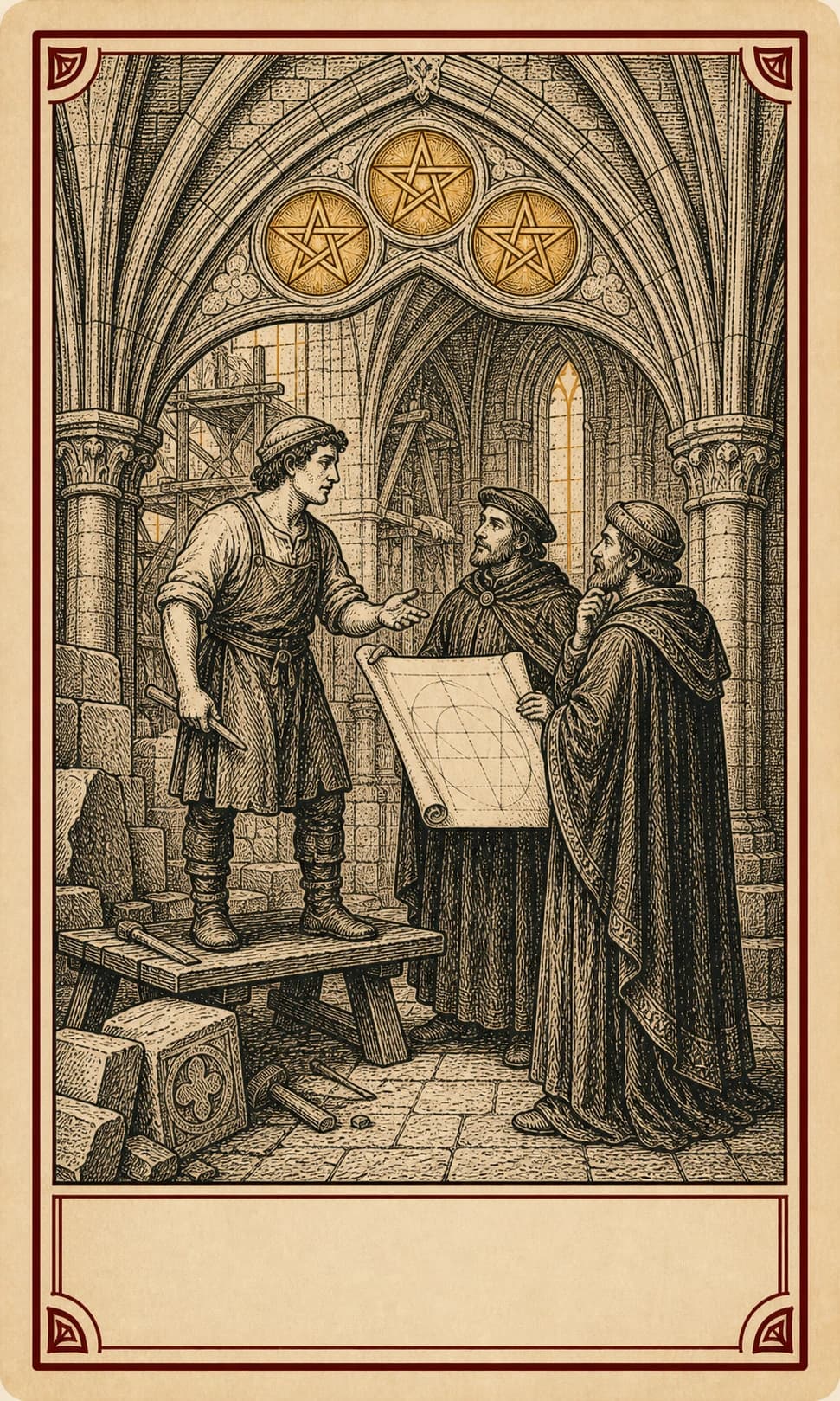
- The Three of Pentacles combines different skills around a shared standard of useful work.
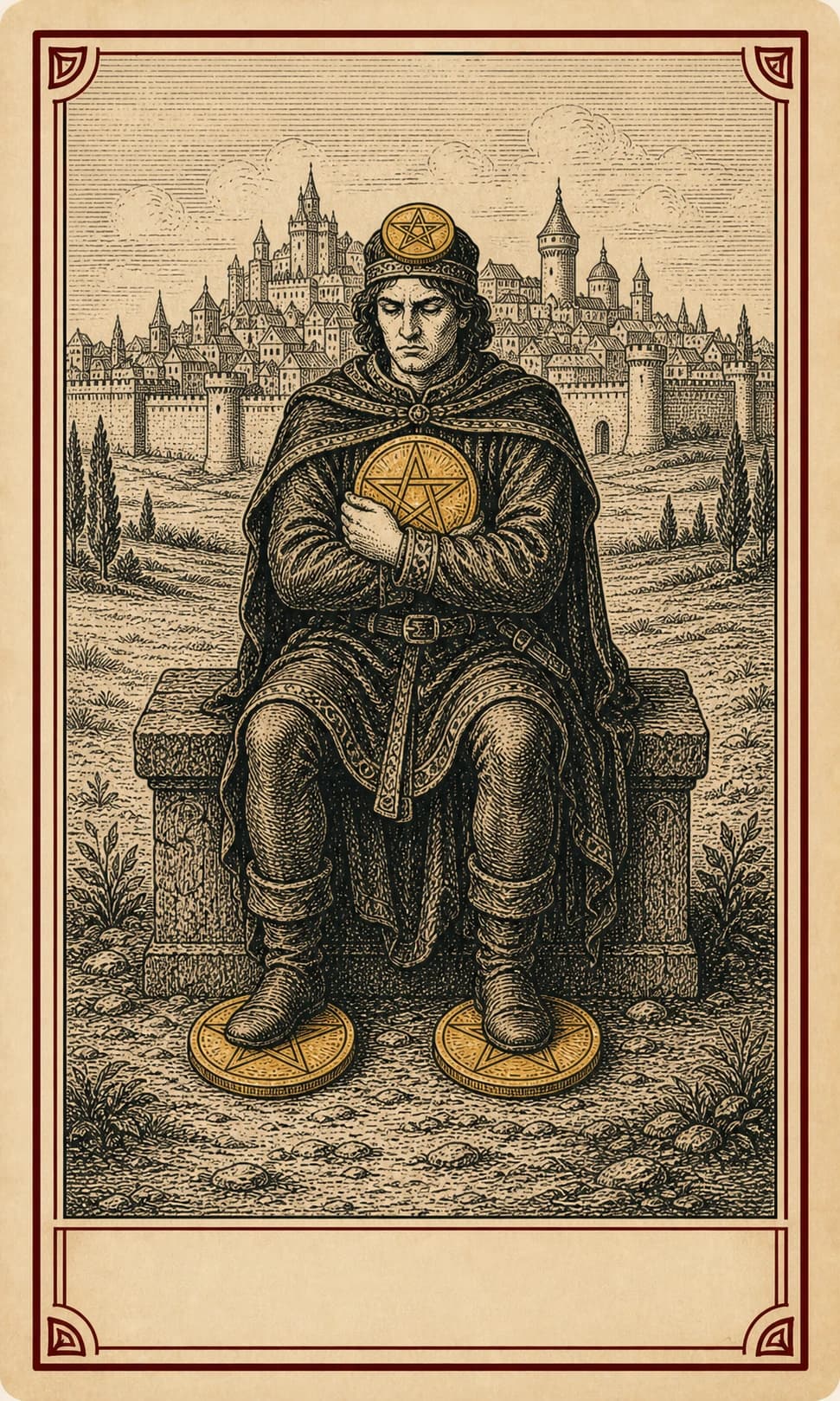
- The Four of Pentacles protects resources and stability, while asking when protection becomes fear-driven control.
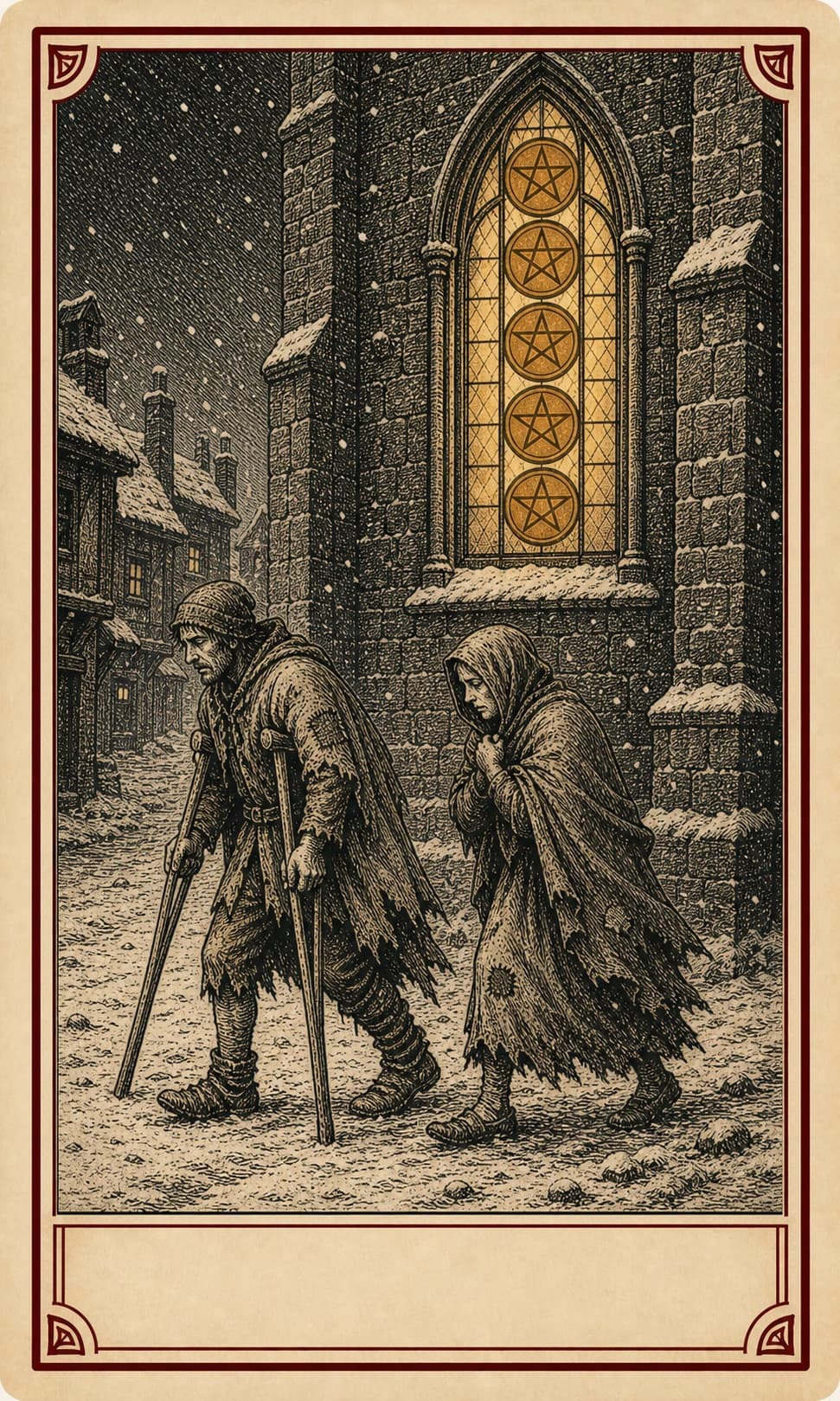
- The Five of Pentacles names material hardship, illness-related strain, exclusion, or the isolating belief that support is unavailable.
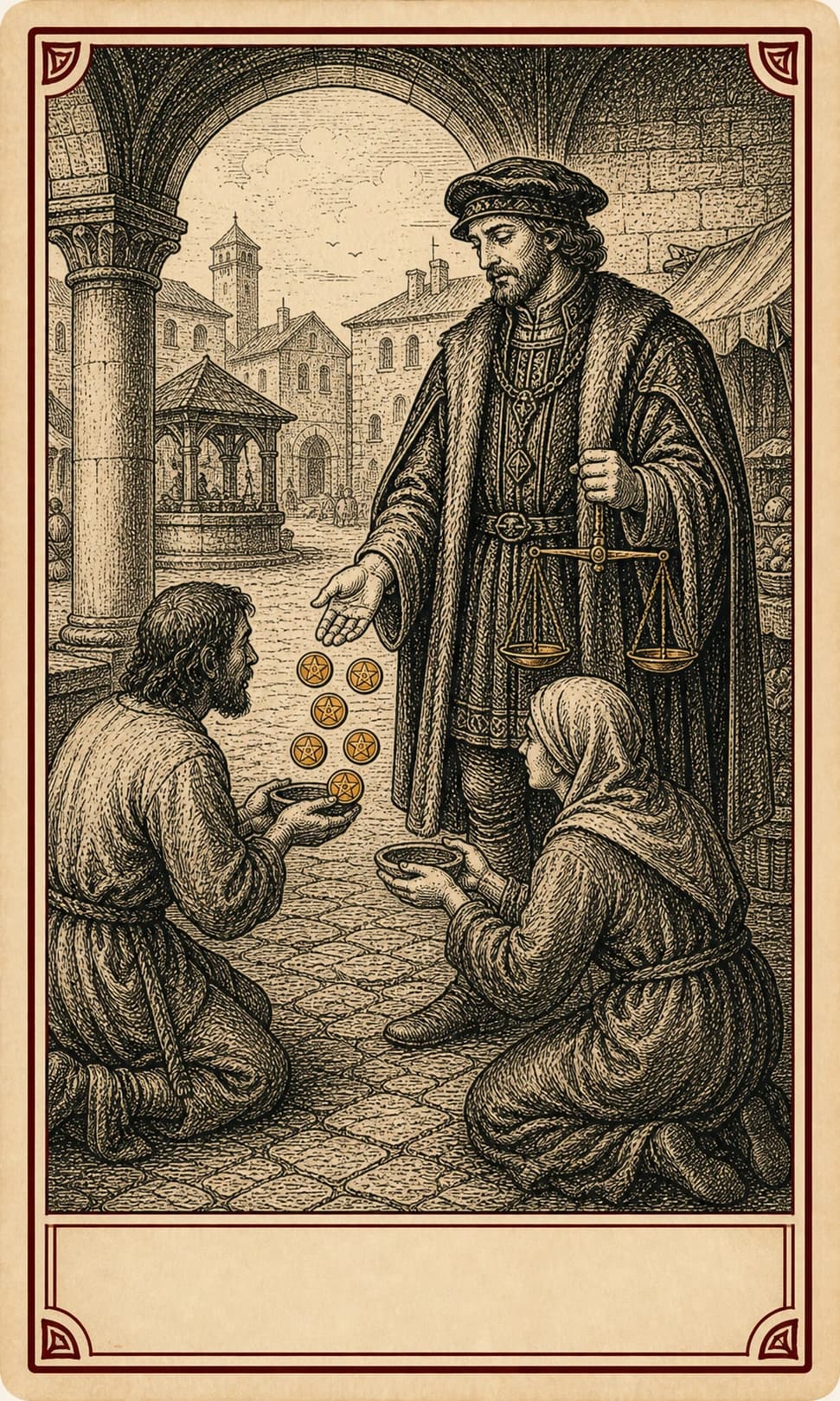
- The Six of Pentacles concerns the distribution of resources and the power relationship between giving and receiving.
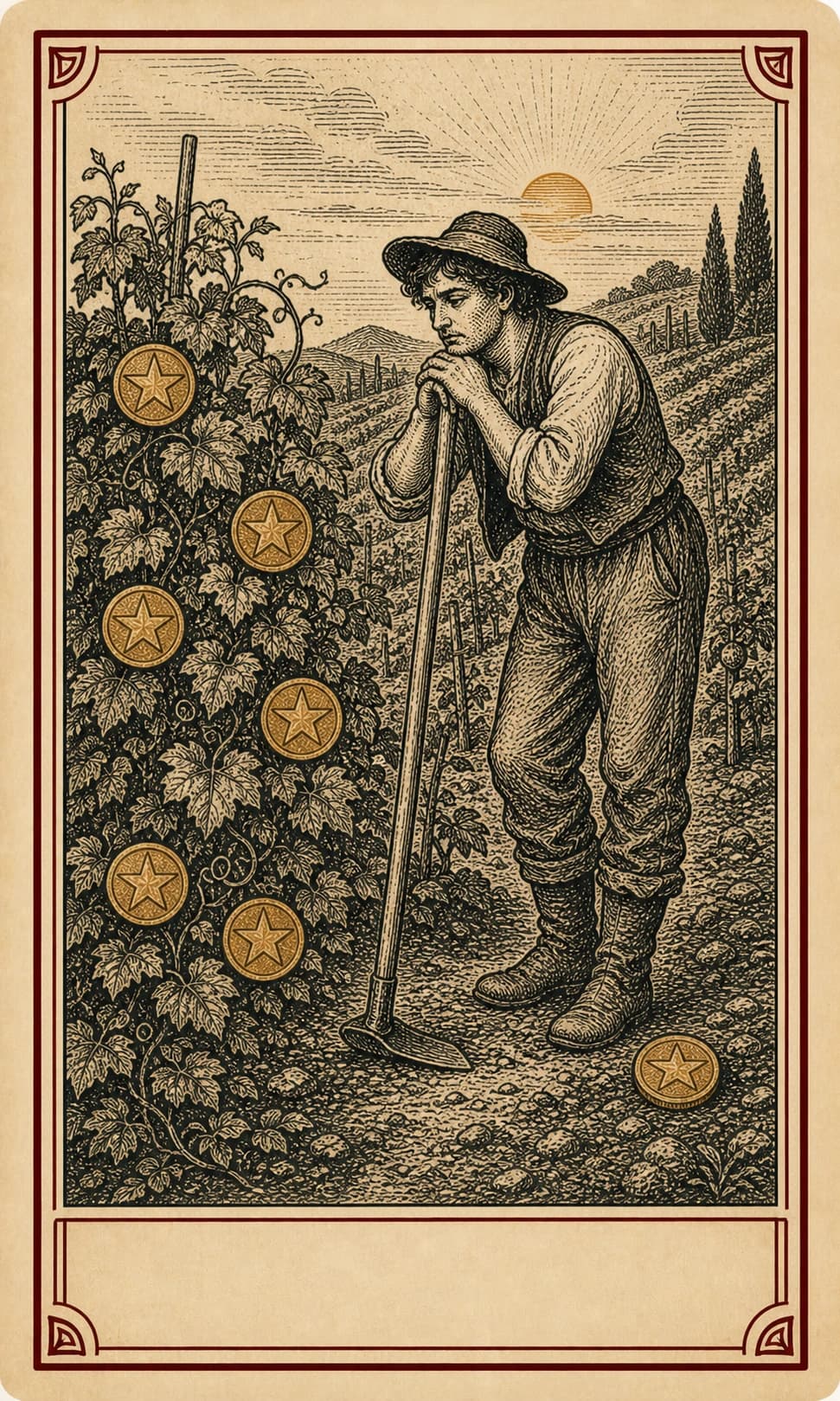
- The Seven of Pentacles pauses during long work to assess whether the investment is producing the right kind of growth.
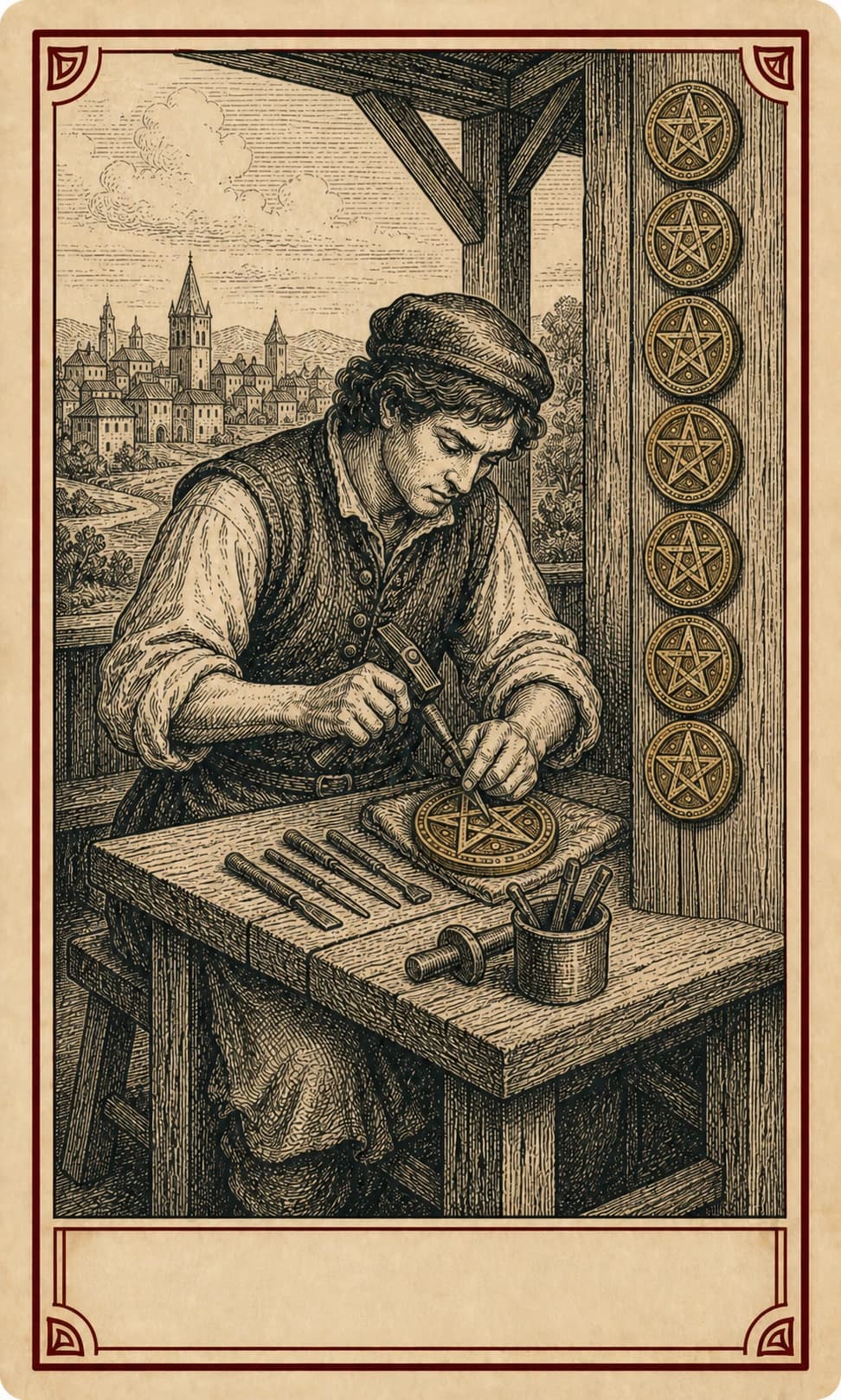
- The Eight of Pentacles develops competence through repetition, attention to detail, and willingness to correct small errors.
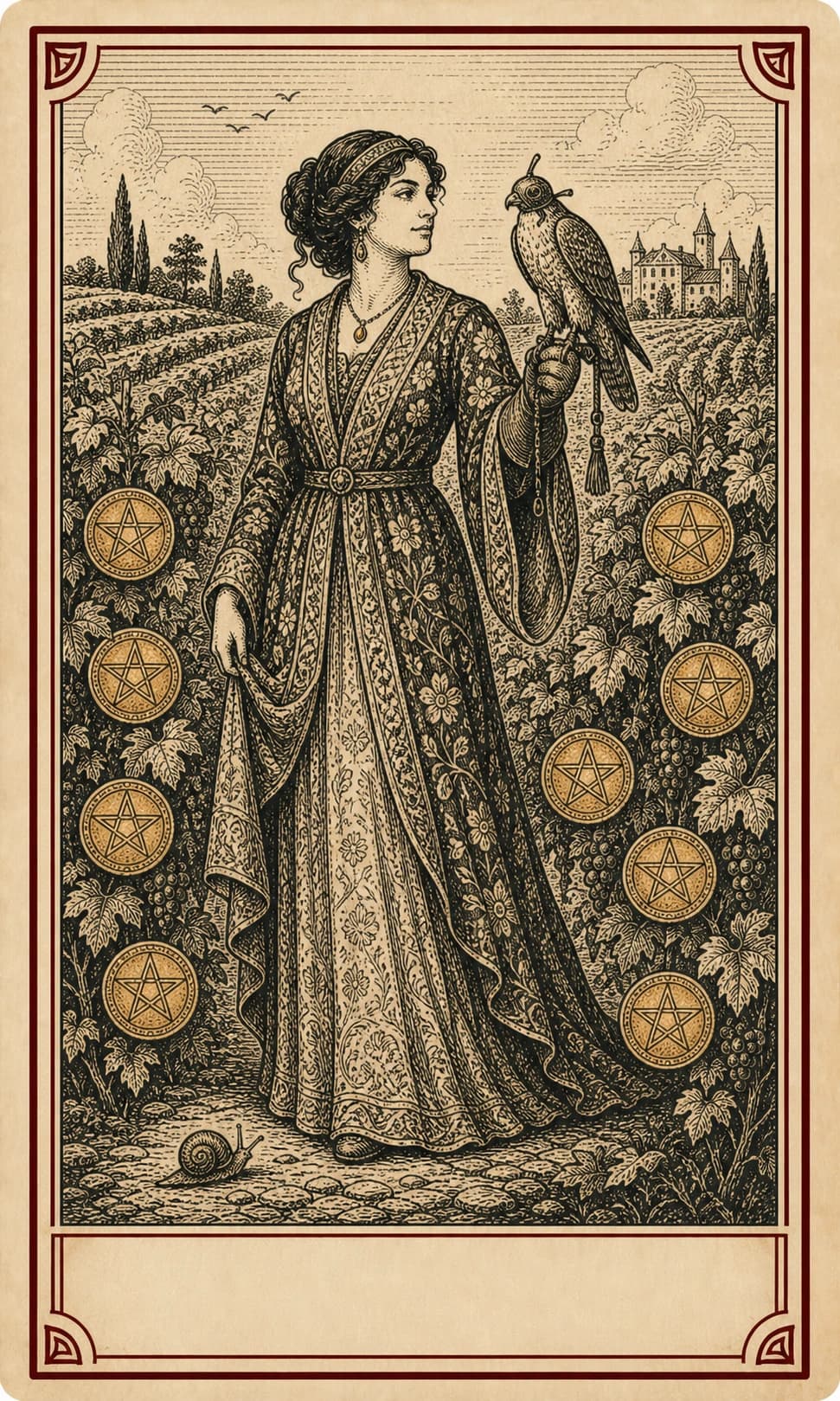
- The Nine of Pentacles represents independence and comfort built through sustained choices, skill, and stewardship.
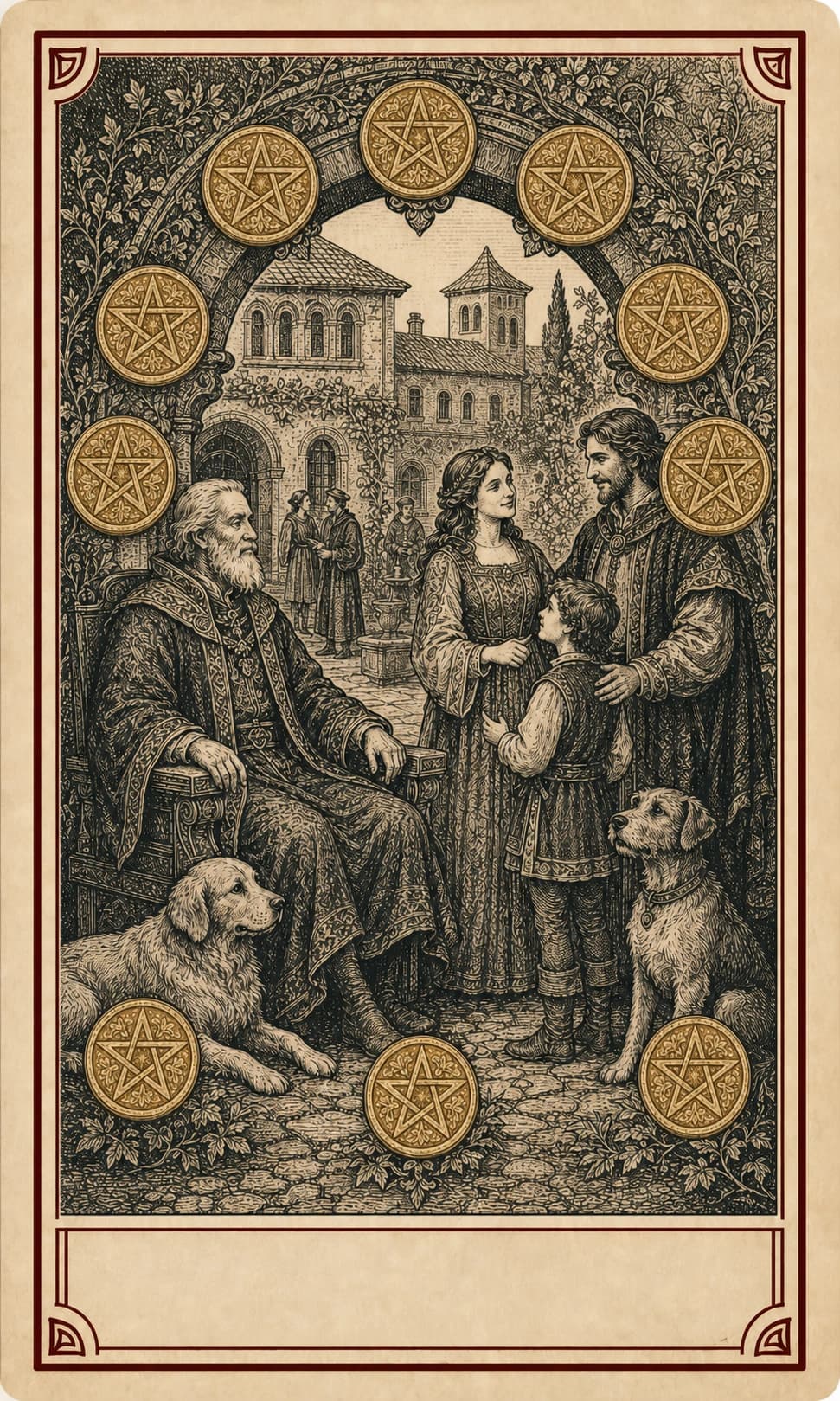
- The Ten of Pentacles places present resources inside a longer structure of family, community, inheritance, and legacy.
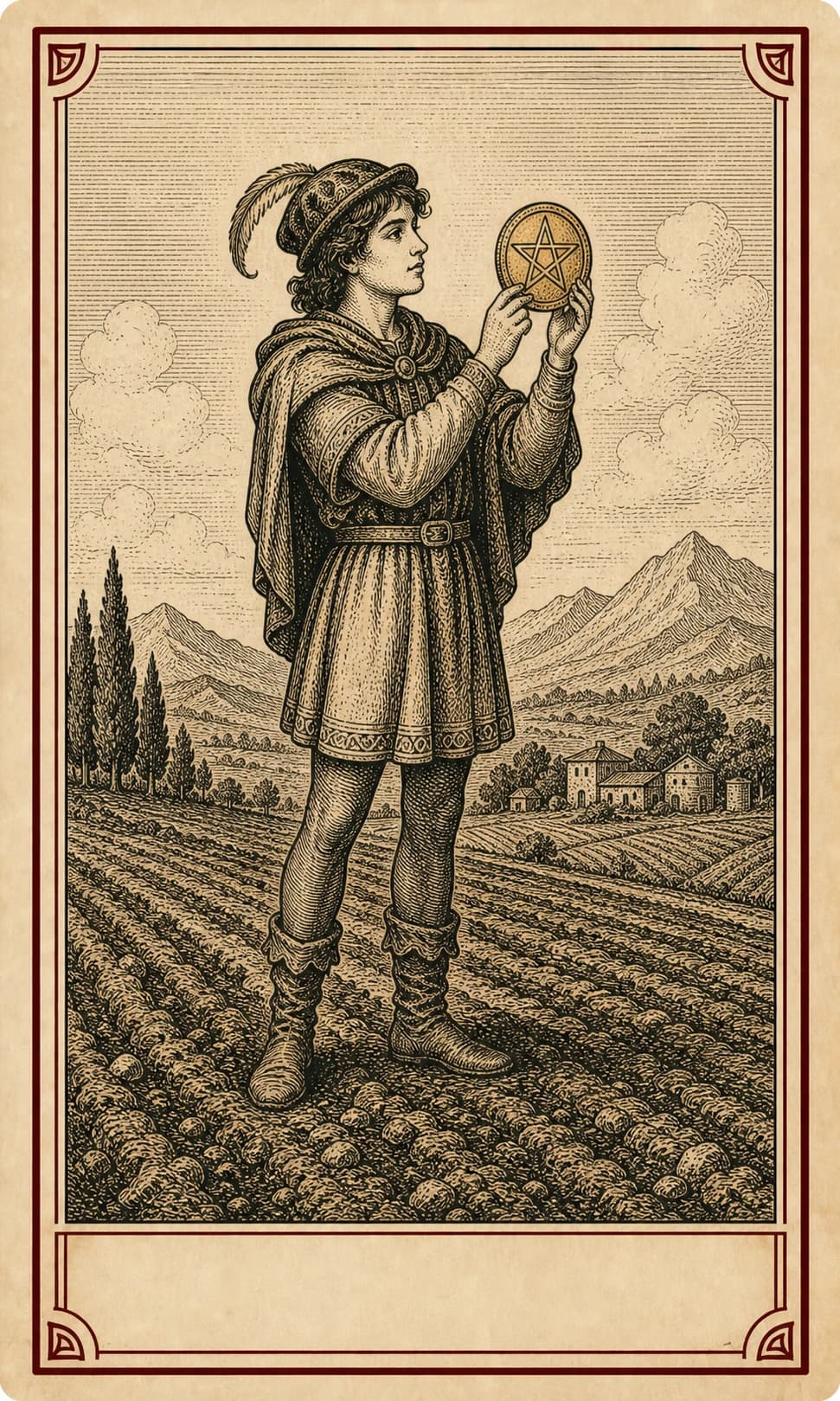
- The Page of Pentacles approaches a practical opportunity as a learner willing to study, plan, and build competence.
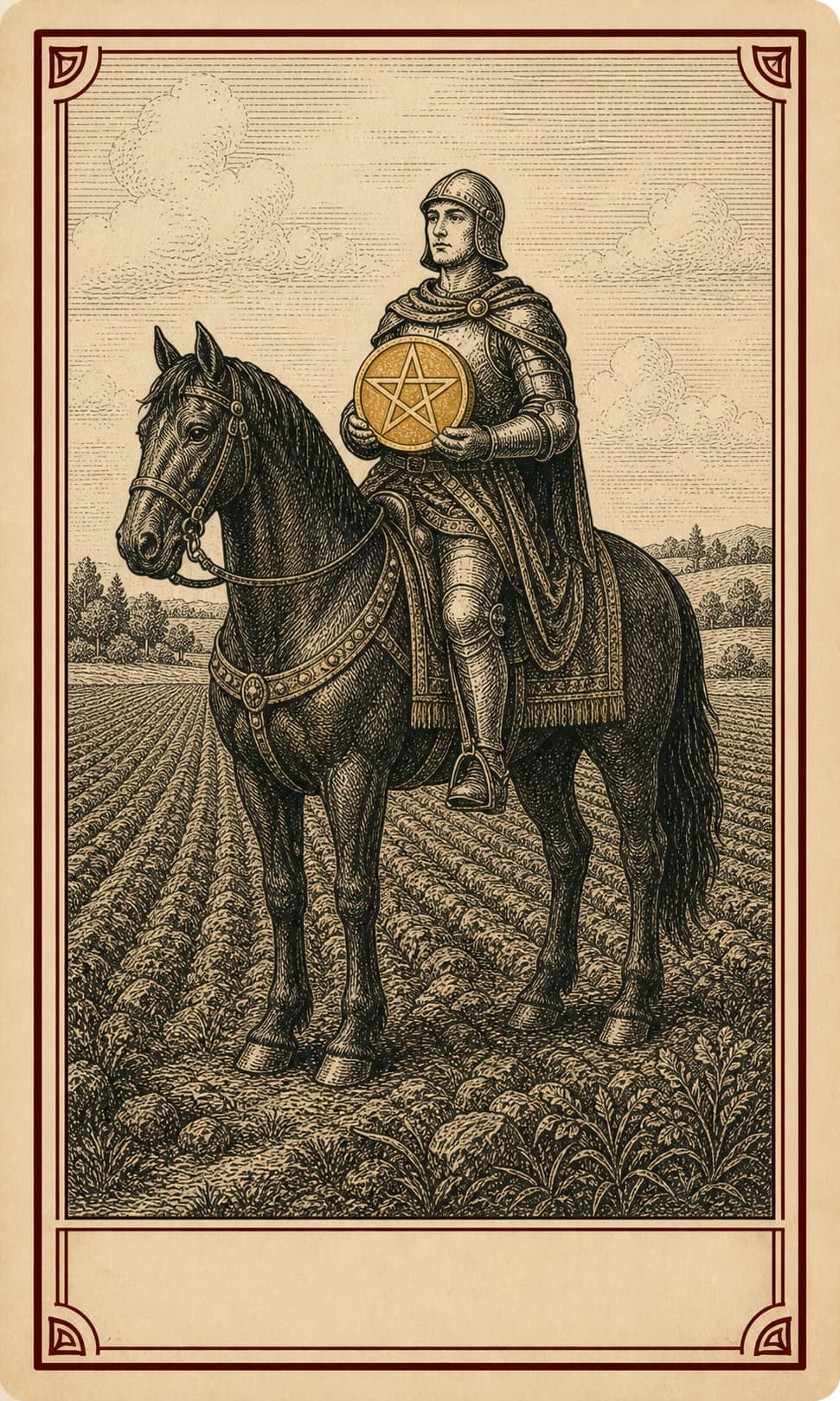
- The Knight of Pentacles advances through methodical work, consistency, and respect for practical limits.
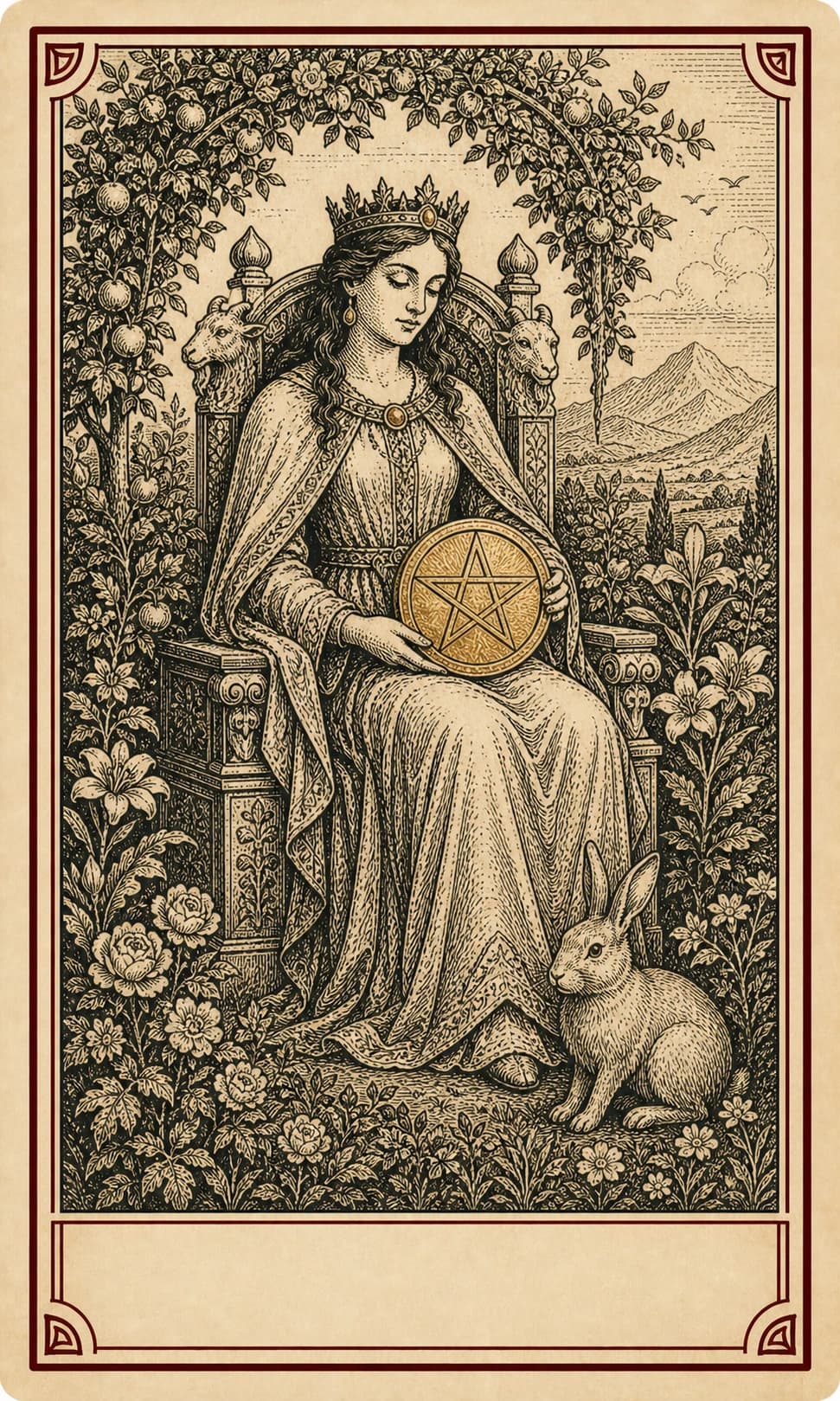
- The Queen of Pentacles creates security through attentive practical care, resourcefulness, and respect for embodied needs.
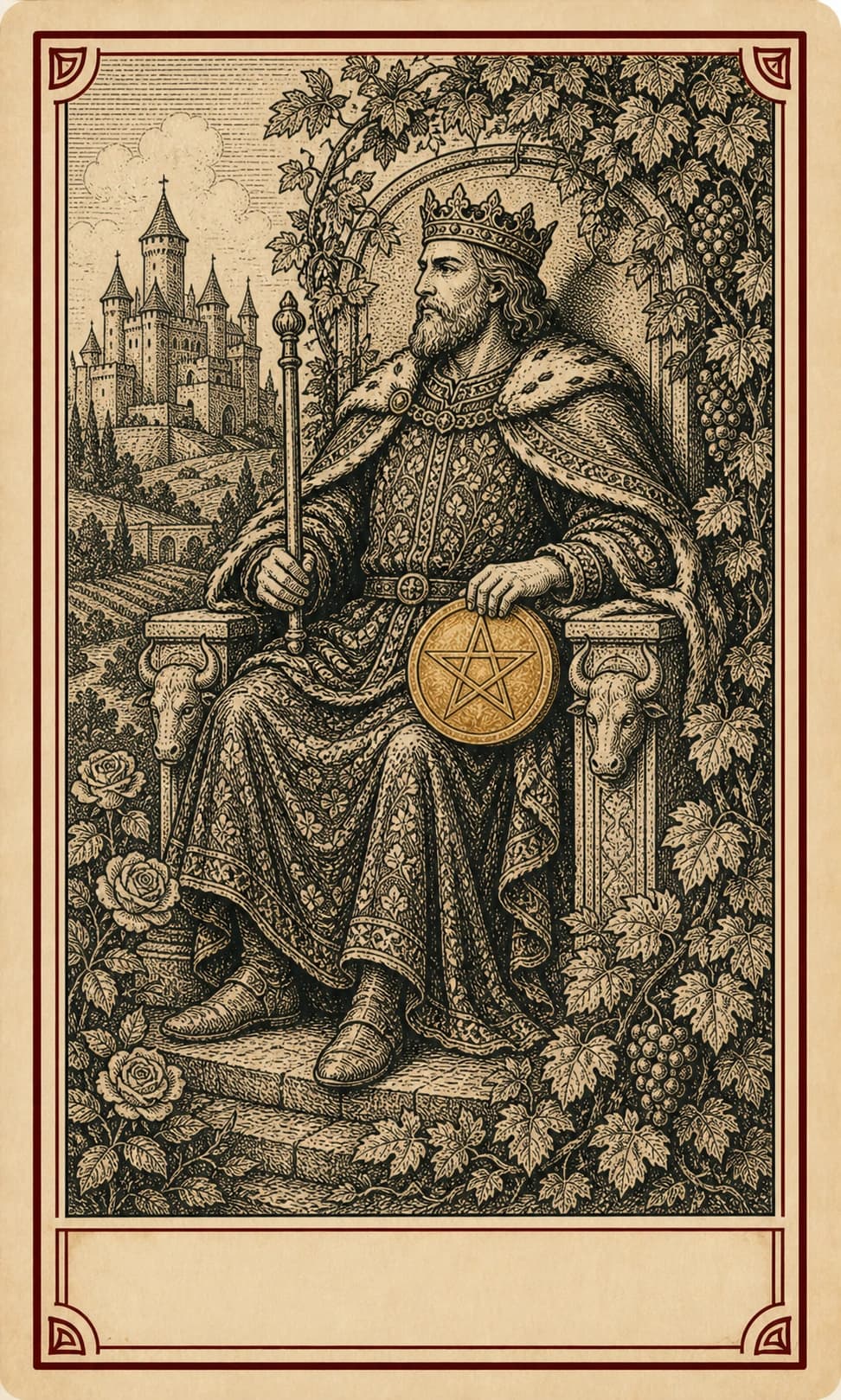
- The King of Pentacles manages resources for durable value through discipline, experience, and practical accountability.
Four suits
Wands commonly emphasize initiative and energy; Cups, emotion and relationship; Swords, thought and conflict; Pentacles, resources and material practice. Spread position and context refine these starting themes.
- Wands: effort, motivation, creativity, and momentum.
- Cups: feelings, connection, imagination, and receptivity.
- Swords: ideas, communication, decisions, and tension.
- Pentacles: work, the body, resources, care, and tangible results.
Numbers and court cards
Numbered cards develop a suit's themes through stages. Court cards can describe a role, approach, interpersonal pattern, or aspect of the reader rather than a literal person.
Browse every Minor Arcana card
Use the complete card reference to filter by suit and open upright and reversed meanings for every rank.