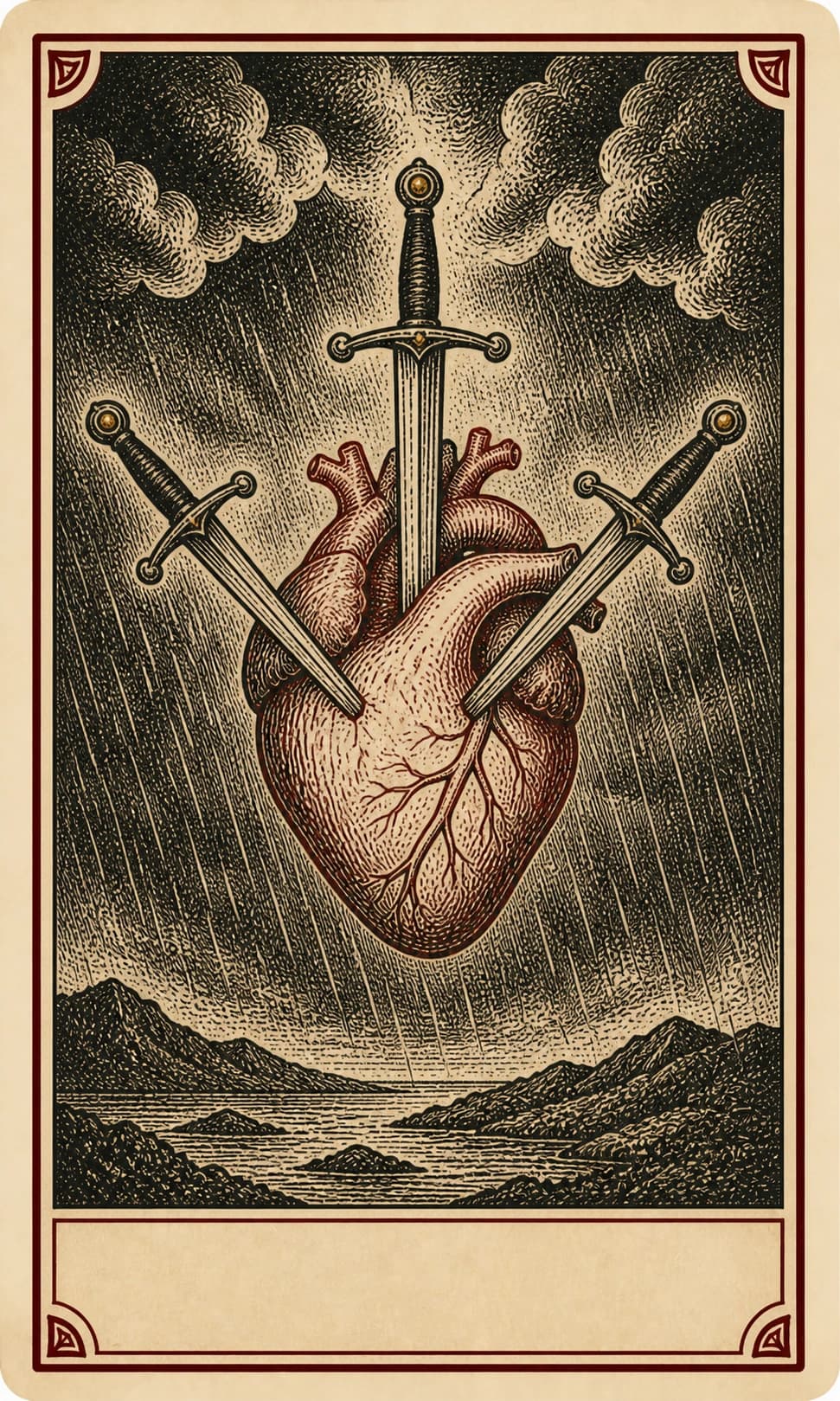
Three of Swords tarot card meaning
The Three of Swords names emotional pain, separation, or a truth that hurts precisely because it matters.
Arcana: minor; suit: swords; rank: Three.
heartbreak · grief · painful truth
The Three makes a painful distinction emotionally unavoidable. Words, separation or a recognised contradiction can hurt without being the whole future. The reading is most useful when it names the actual wound and the conversation or boundary it requires, rather than turning the image into a prediction of betrayal.
Upright meaning
The Three of Swords names emotional pain, separation, or a truth that hurts precisely because it matters.
Acknowledge the injury without turning it into a permanent identity; seek support and separate healing from immediate explanation.
Keywords: heartbreak, grief, painful truth
Reversed meaning
Reversed, the Three of Swords points to pain being processed, released in stages, or kept alive through rumination and avoidance.
Recovery may include grief, repair, distance, or forgiveness, but these are separate choices and none should be forced.
Keywords: recovery, forgiveness process, lingering pain
Put the card in position
Three of Swords in a reading
Love and relationships
Upright: Betrayal, rejection, or grief requires boundaries and honest facts; the card does not promise reconciliation or justify retaliation.
Reversed: Forgiveness does not require renewed access, and renewed contact is not evidence that trust has been rebuilt.
Use the relationship spreadCareer and work
Upright: Acknowledge the impact of a rejection, criticism or broken agreement before deciding what it means about your whole ability. Separate the useful information from unnecessarily hurtful delivery.
Reversed: An old disagreement may be shaping new conversations. State what remains unresolved and decide whether a repair, apology or firmer boundary is needed to stop repeating it.
Use the career spreadDecisions
Upright: Include the painful fact rather than choosing around it. Ask which response is honest and proportionate, and allow yourself time to feel the consequence without making pain the only criterion.
Reversed: Do not require complete emotional closure before a small practical repair. Conversely, forgiveness need not erase a boundary that the experience has shown to be necessary.
Use the decision spread