Ten of Pentacles tarot card meaning
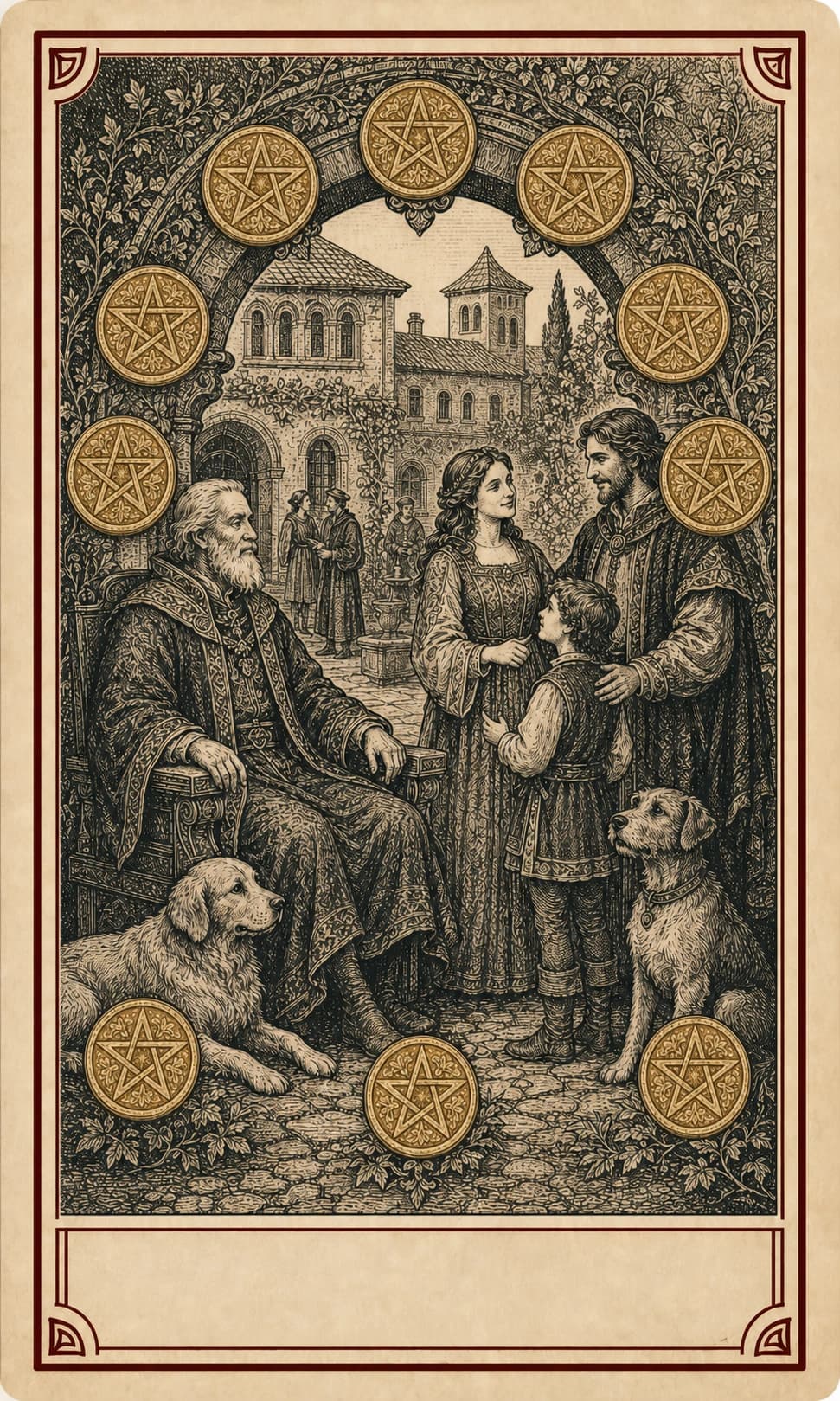
The Ten of Pentacles places present resources inside a longer structure of family, community, inheritance, and legacy.
Arcana: minor; suit: pentacles; rank: Ten.
legacy · long-term stability · shared resources
The Ten completes Pentacles with a structure that connects different people and generations. Resources become continuity through care, teaching, stewardship and shared arrangements. The card asks what is being passed on and who can participate, not merely whether a family or institution looks prosperous from outside.
Upright meaning
The Ten of Pentacles places present resources inside a longer structure of family, community, inheritance, and legacy.
Build systems that can outlast one person, make ownership and succession clear, and consider who is included or excluded.
Keywords: legacy, long-term stability, shared resources
Reversed meaning
Reversed, the Ten of Pentacles shows inherited structures becoming unstable, disputed, exclusionary, or too costly to preserve.
Separate the useful legacy from obligations maintained only by fear or appearance, and seek qualified advice for material decisions.
Keywords: unstable legacy, family conflict, resource loss
Put the card in position
Ten of Pentacles in a reading
Love and relationships
Upright: Shared stability can support commitment, but family expectations and money should not override the couple's consent or boundaries.
Reversed: Family or financial pressure can distort relationship choices; define whose values and consent govern the decision.
Use the relationship spreadCareer and work
Upright: Document the practice others will need after your part is complete. Share knowledge, clarify ongoing ownership and build a result that does not depend on one person's constant presence.
Reversed: An established system may preserve resources while excluding new contributors. Examine whose work sustains it, who receives the benefit and which assumption needs updating for continuity to remain useful.
Use the career spreadDecisions
Upright: Consider the choice's longer effects on the people and commitments connected to you. Ask what can be maintained and passed on, rather than judging only the immediate reward.
Reversed: Separate a meaningful tradition from pressure to repeat an arrangement that no longer fits. Keeping a core value may require changing the structure that previously carried it.
Use the decision spread