Tarot spreads explained
A tarot spread is a set of named positions. Each position asks a different question of its card, giving the reading a clear structure. Choose a general layout or a focused three-card spread for a decision or work situation.
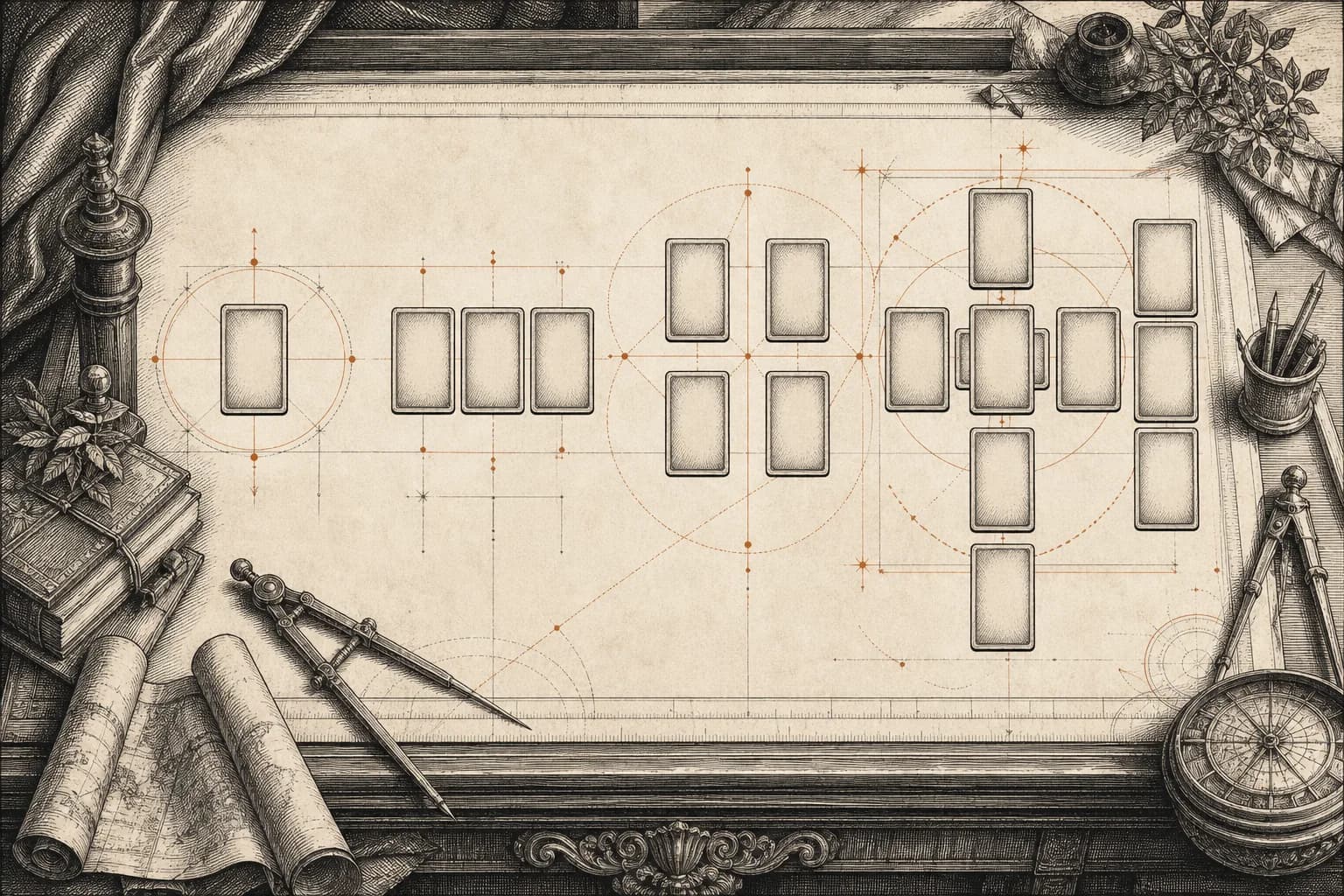



Seven-card and twelve-month layouts
The seven-card horseshoe separates the history of a situation from its obstacle, outside influences and advice. A year-ahead layout assigns twelve cards to named months and connects them through quarterly reviews. Each guide includes placement instructions and a worked interpretation.
Small spreads for clear questions
One- and three-card spreads are useful when a question is focused or time is limited. Their smaller structure makes it easier to compare an interpretation with concrete facts.
A relationship spread with boundaries
Four positions separate the current dynamic, your needs or perspective, a communication focus, and a constructive next step within your control.
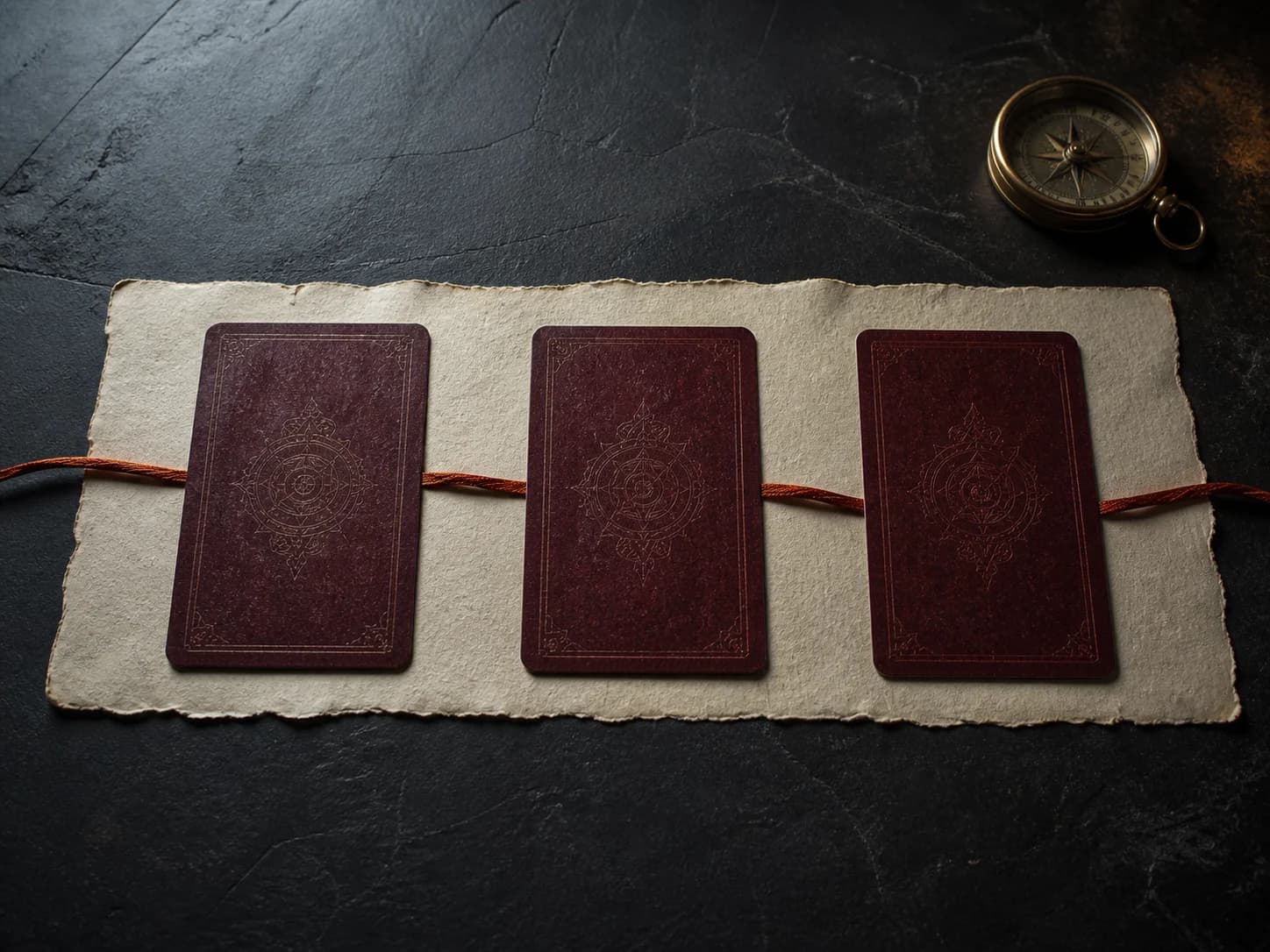
Focused three-card spreads for decisions and work
The decision spread assigns one card to what matters, one to a tradeoff or uncertainty, and one to a reversible next step. Together, the three cards turn a broad choice into a specific question and an action you can test.
The career spread examines a current work pattern, a skill or source of support to develop, and a practical next step. Both layouts move from context and priorities toward an action the reader can assess.
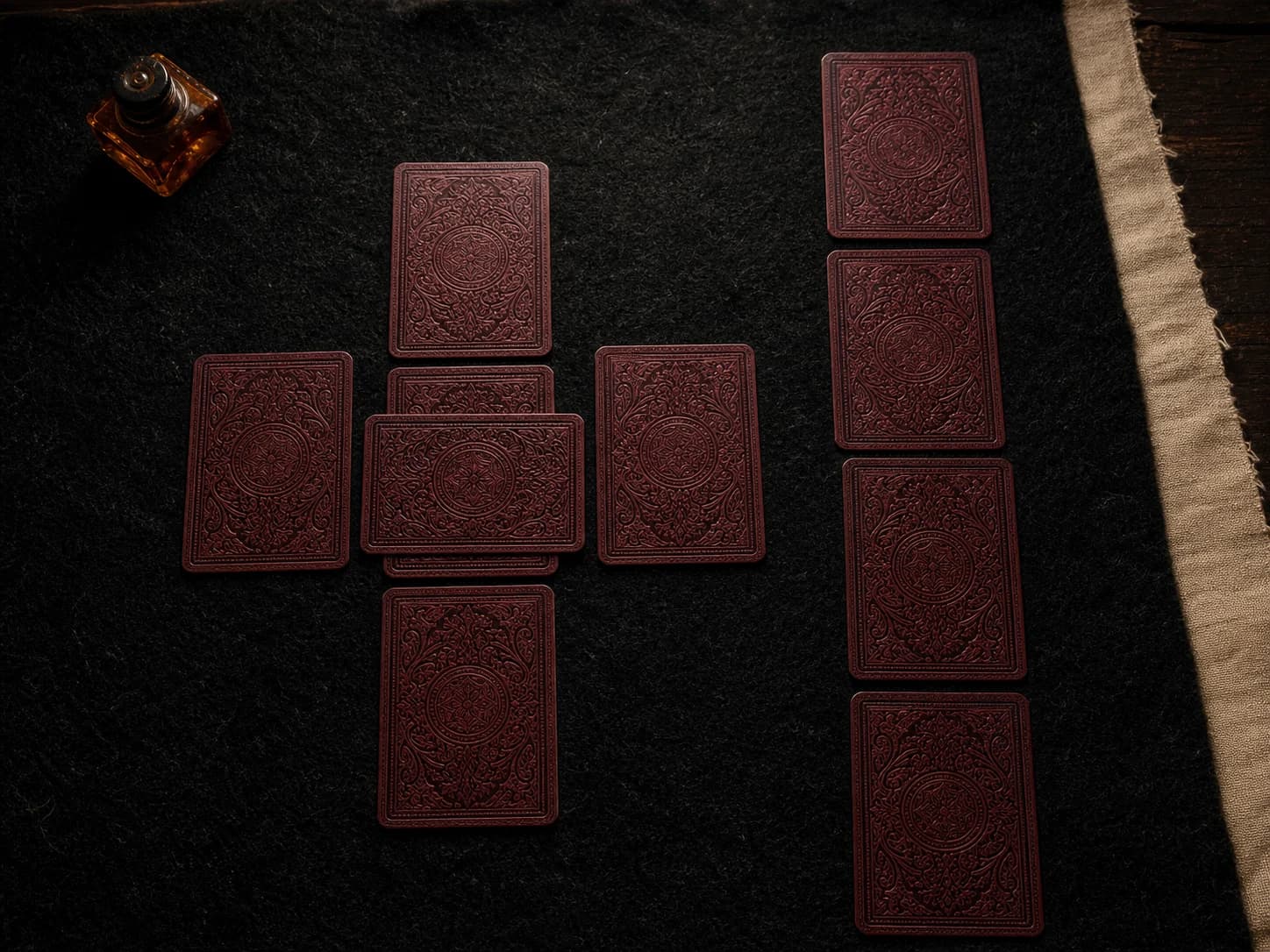
The ten-position Celtic Cross
The Celtic Cross provides a broad map of a complex situation. Because it contains ten cards, it works best after you have written one clear question and are ready to examine several interacting themes.