Your tarot card of the day
The daily card is one shared prompt for the entire UTC day. It is always shown upright so the practice stays simple and comparable from one day to the next.
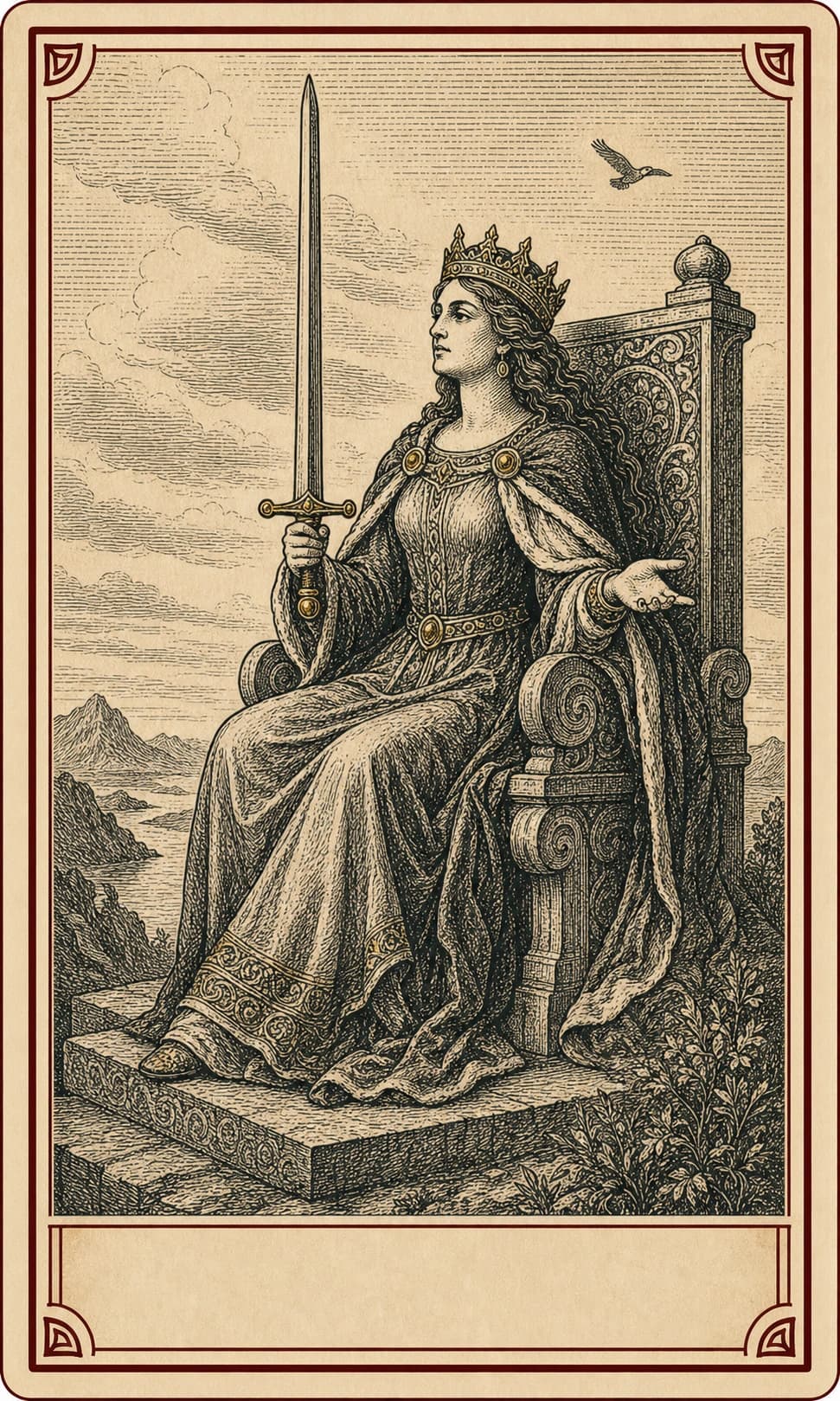
Queen of Swords
The same upright card appears for everyone throughout 2026-11-26 in UTC. Interactive readings use a separate draw for the spread you choose.
Today's upright reading
The Queen of Swords combines hard-won perception with the ability to state a clear boundary without unnecessary ornament.
Use experience to ask the right question, distinguish empathy from agreement, and communicate the decision plainly.
Keywords: discernment, clear boundary, independence
Reflection prompt: Which boundary needs a precise sentence?
The reversed lens
Reversed, the Queen of Swords shows pain hardened into suspicion, cutting speech, or judgement that leaves no room for new evidence.
Keep the boundary while reviewing whether contempt, projection, or old injury is shaping the conclusion.
Keywords: bitterness, harsh judgement, isolation
Use this lens if today's theme feels blocked, delayed, excessive, or directed inward rather than expressed openly.
One card for the day
Everyone sees the same upright card for a given UTC date. Return tomorrow for a new prompt, or use an interactive reading when you want a separate draw.
Use the prompt in three steps
Read the card summary, notice which detail attracts your attention, and answer one reflection question with a specific example from today. You do not need to force the card to fit.
- Name the first symbol or phrase that stands out.
- Connect it to one choice, feeling, or conversation in the present day.
- Choose one small action or question to carry forward.
Close the day with one sentence
At the end of the day, return to the prompt and name one moment that changed how you read it. Keep that note; do not redraw simply because the first card was uncomfortable.