Celtic Cross tarot spread
The Celtic Cross is a ten-position spread for examining a complex situation from several angles. Its final card describes a possible direction under current conditions and helps identify what could change it.
Position order
- Present situation: Identify the central issue or energy now.
- Crossing influence: Notice what supports, complicates, or challenges the situation.
- Foundation: Reflect on the underlying pattern or prior basis of the situation.
- Recent past: Consider an influence that is receding but still relevant.
- Conscious aim: Name the goal, expectation, or idea receiving conscious attention.
- Emerging direction: Explore a near-term possibility and the conditions shaping it.
- Your stance: Examine your current attitude, resources, or role.
- Environment: Consider observable external conditions and available support.
- Hopes and fears: Distinguish aspiration from anxiety and assumption.
- Possible direction: Use this position to synthesize the preceding cards.
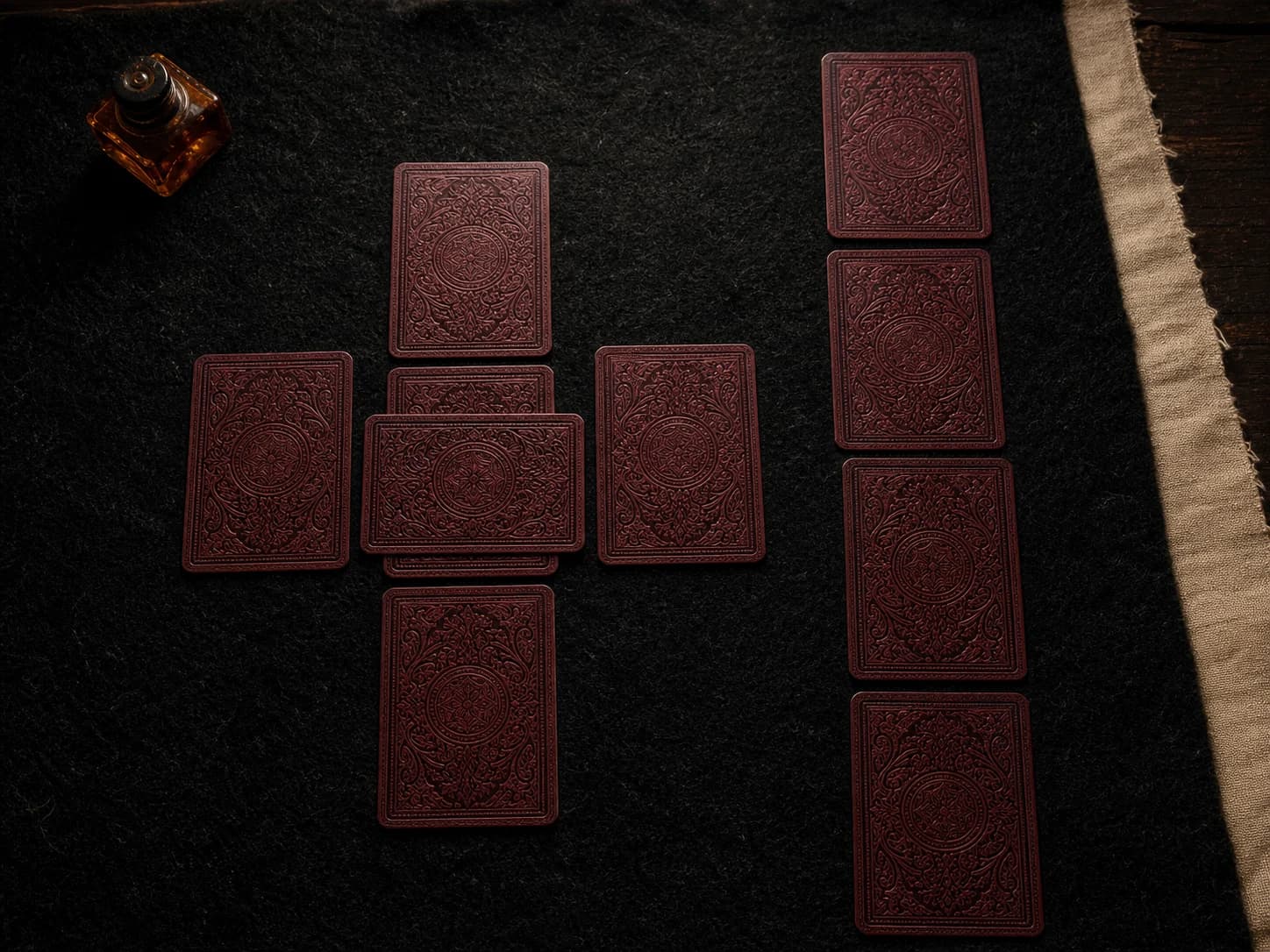
The central cross
The first six positions form the central cross. Read their labels and instructions as an interacting group, tracing how the situation, obstacles, influences, and possible direction connect.
The four-card staff
The remaining four positions form the staff. Read them as self-position, environment, hopes or fears, and possible direction, then connect them back to the central cross.
Pause before drawing again
Ten cards already provide many connections. Record the first reading, identify one useful question, and avoid repeatedly redrawing until a preferred answer appears.
Worked example: Celtic Cross
Example question: What should I consider before changing direction in a long-running project?
- Present situation — Two of Wands, upright.
Identify the central issue or energy now.
- Crossing influence — Four of Pentacles, upright.
Notice what supports, complicates, or challenges the situation.
- Foundation — Eight of Pentacles, upright.
Reflect on the underlying pattern or prior basis of the situation.
- Recent past — Six of Wands, upright.
Consider an influence that is receding but still relevant.
- Conscious aim — The Star, upright.
Name the goal, expectation, or idea receiving conscious attention.
- Emerging direction — Wheel of Fortune, upright.
Explore a near-term possibility and the conditions shaping it.
- Your stance — The Hermit, upright.
Examine your current attitude, resources, or role.
- Environment — Three of Pentacles, upright.
Consider observable external conditions and available support.
- Hopes and fears — The Moon, upright.
Distinguish aspiration from anxiety and assumption.
- Possible direction — Temperance, upright.
Use this position to synthesize the preceding cards.
Planning in the Two is crossed by the Four's wish to preserve what is already held. The Eight and Six explain why: effort and recognition are invested in the current path. The Star names the aim, while the Wheel introduces changing conditions. The Hermit and Three connect private judgement with collaborators; the Moon identifies uncertainty, and Temperance brings the reading toward a staged transition that can absorb feedback.