The Devil tarot card meaning
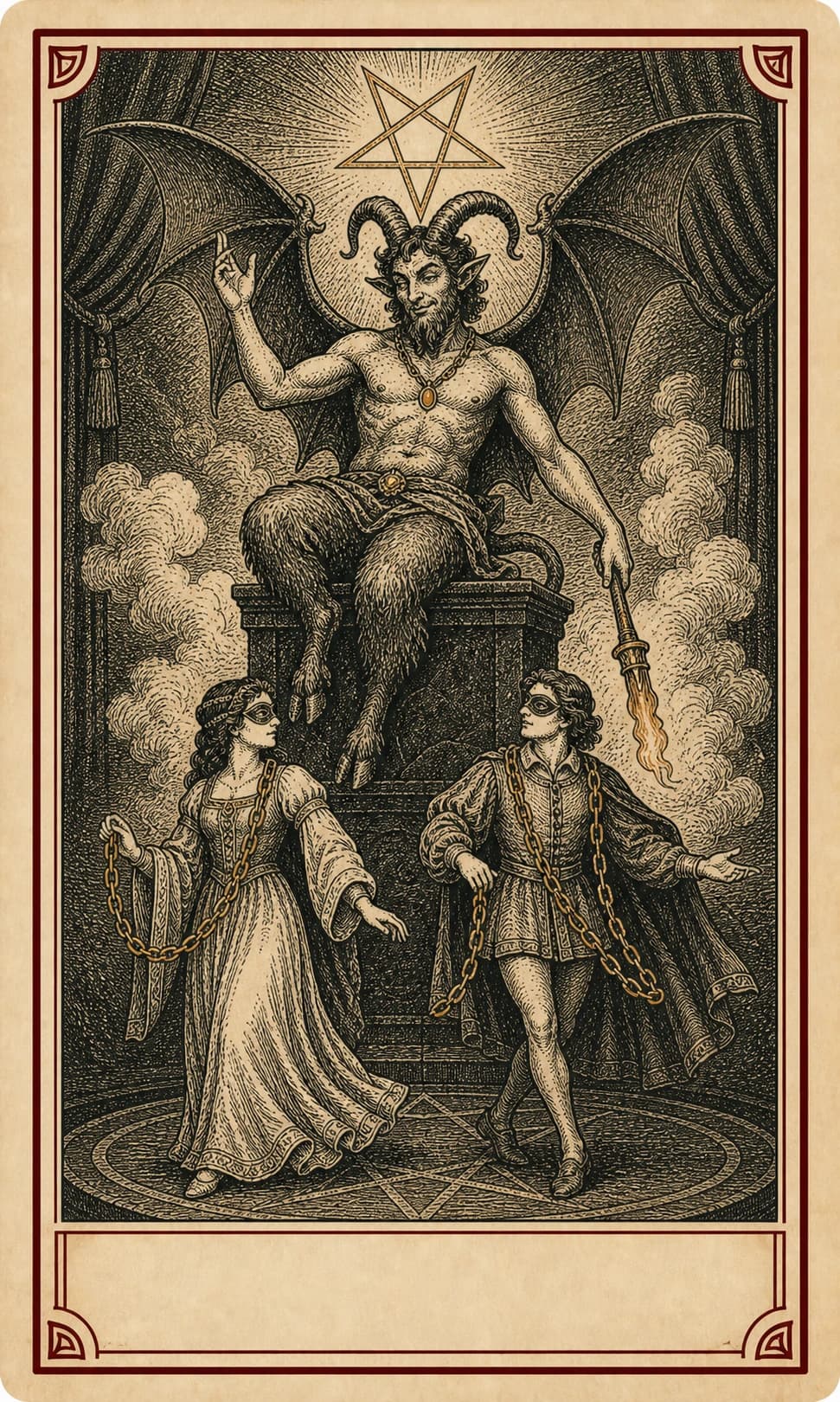
The Devil illuminates a binding pattern that is reinforced by fear, reward, shame, or the belief that no choice remains.
Arcana: major.
attachment · compulsion · constraining pattern
The Devil is XV, following Temperance's measured exchange and preceding The Tower's rupture. Something attractive has become binding: an appetite, bargain, status, or pattern of control. The card brings the attachment into view so its immediate reward can be compared with the freedom and resources it consumes.
Upright meaning
The Devil illuminates a binding pattern that is reinforced by fear, reward, shame, or the belief that no choice remains.
Describe the pattern without moral panic, identify what maintains it, and seek practical support where compulsion or harm is involved.
Keywords: attachment, compulsion, constraining pattern
Reversed meaning
Reversed, The Devil can mark recognition of a binding pattern and the first stages of loosening it.
Progress may involve relapse or discomfort; focus on concrete boundaries and support rather than declaring the pattern solved too early.
Keywords: recognition, release, breaking attachment
Put the card in position
The Devil in a reading
Love and relationships
Upright: Jealousy, coercion, dependency, or control should not be romanticized; safety and consent take priority over preserving a bond.
Reversed: Releasing control or dependency requires actions and accountability, not promises that the relationship alone will heal everything.
Use the relationship spreadCareer and work
Upright: Examine a reward that keeps an unhealthy arrangement in place: prestige, a promised promotion, access, or the fear of losing an investment. Name the actual terms of the bargain. A concrete boundary is easier to negotiate when the cost is visible rather than hidden inside obligation.
Reversed: A dependency may be loosening, but a new boundary needs practical support. Decide which access, habit, or commitment must change for the release to last. Avoid replacing one controlling arrangement with another simply because its language sounds more appealing.
Use the career spreadDecisions
Upright: Write down both the immediate attraction and the longer cost of the option. Ask which conditions you could refuse and what would happen if you did. A choice is clearer when pressure, appetite, and the wish to belong are named instead of presented as necessity.
Reversed: Look for a workable exit rather than a dramatic gesture that leaves the same dependency intact. Gather the information and support needed to change the arrangement, then test whether the next step increases your actual freedom to choose.
Use the decision spread