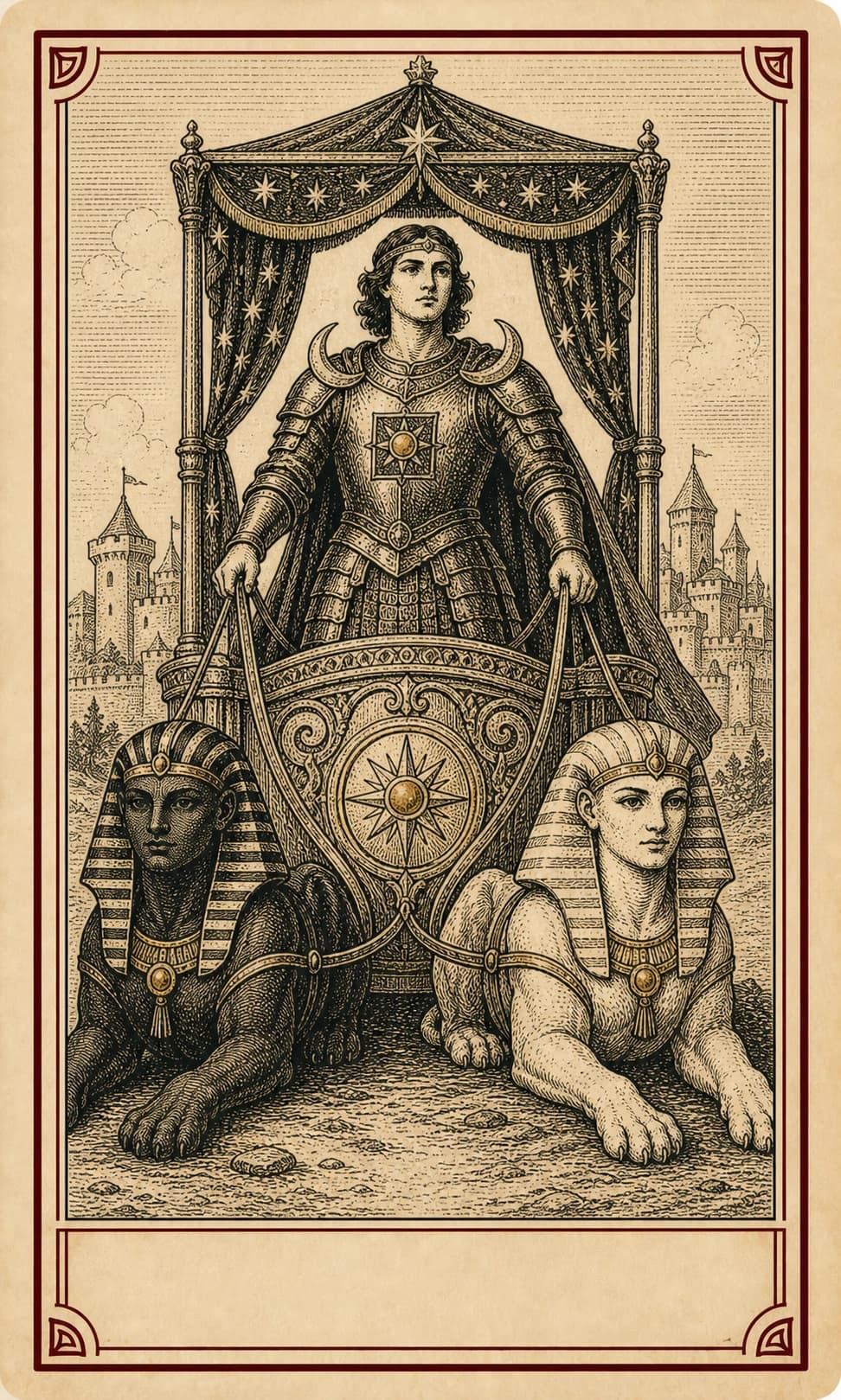
The Chariot tarot card meaning
The Chariot gathers competing forces under a chosen direction through discipline rather than brute force.
Arcana: major.
direction · discipline · integrated will
Major Arcana VII follows The Lovers and precedes Strength. The Lovers asks what deserves commitment; The Chariot tests whether that choice can become coordinated movement; Strength then turns command inward. Its victory is not speed or force alone, but competing drives accepting one accountable direction.
Upright meaning
The Chariot gathers competing forces under a chosen direction through discipline rather than brute force.
Progress depends on coordinating motives, setting a course, and correcting it as conditions change.
Keywords: direction, discipline, integrated will
Reversed meaning
Reversed, The Chariot signals movement without coordination, excessive force, or energy stalled by competing aims.
Stop accelerating long enough to identify the real destination and the cost of the current method.
Keywords: loss of direction, aggression, stalled momentum
Put the card in position
The Chariot in a reading
Love and relationships
Upright: Shared direction requires negotiation; determination is constructive only when it does not override another person's autonomy.
Reversed: Pursuit can become pressure; step back from winning and check whether both people still choose the same direction.
Use the relationship spreadCareer and work
Upright: Bring competing priorities, people, and resources behind one clearly stated outcome. Assign ownership, set milestones, and keep a review point for course correction. The Chariot supports disciplined execution and visible leadership when direction coordinates the team instead of overriding consent or capacity.
Reversed: Speed or pressure may be masking conflicting goals, unclear authority, or a team pulling in different directions. Pause the push, restate the destination, resolve ownership and constraints, and restart only when the course is workable, not merely forceful.
Use the career spreadDecisions
Upright: Choose the option that can hold your central value and competing obligations in one direction. Define the deciding criterion, commit to the next leg, and set a point to review the course. Movement is useful here when it is deliberate and correctable.
Reversed: Do not force a choice simply to end tension. Separate your own aim from fear, urgency, and outside pressure; identify which motives cannot travel together; then gather the missing fact or take one reversible step before accelerating.
Use the decision spread