Death tarot card meaning
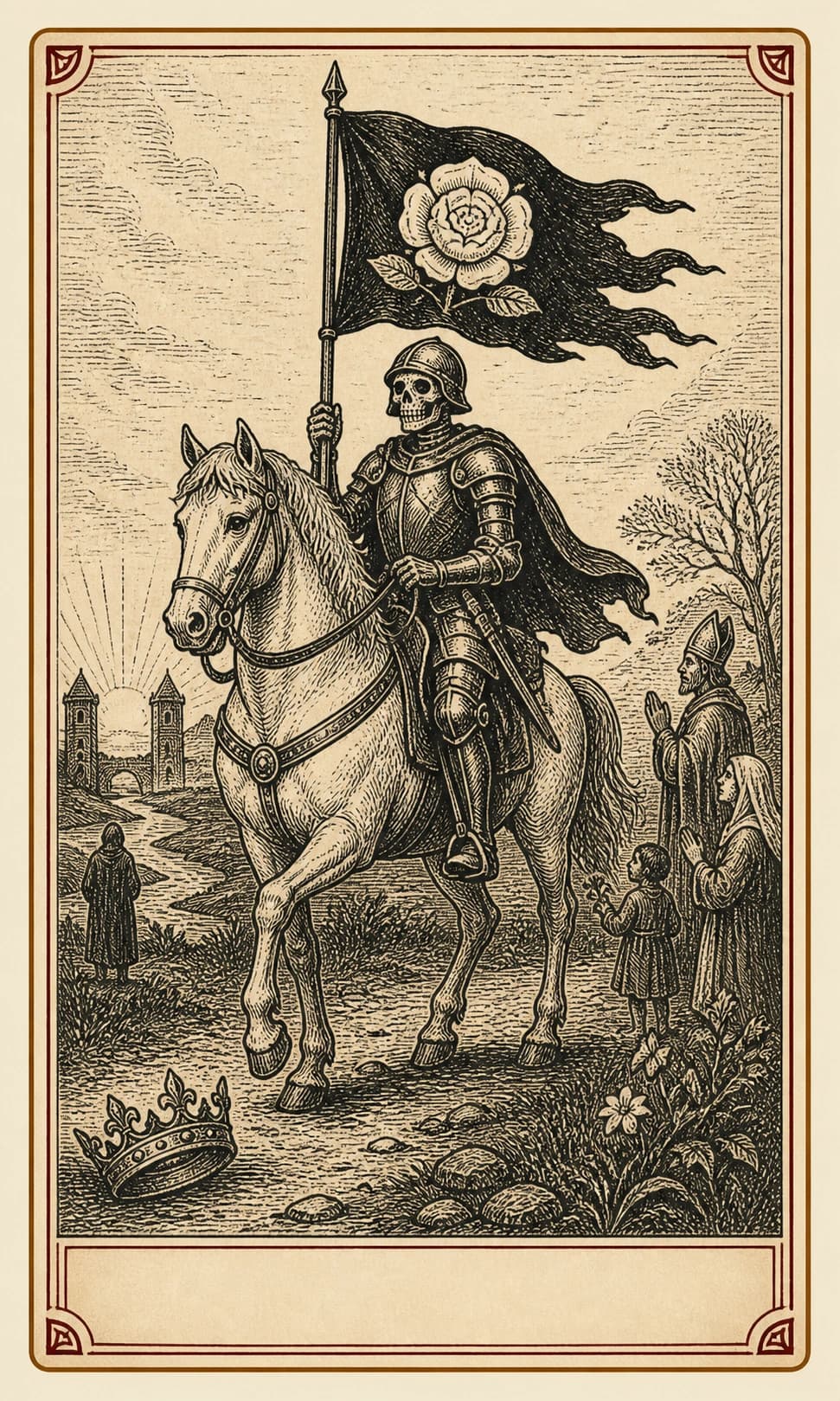
Death symbolizes an ending that changes the structure of what follows, not physical death.
Arcana: major.
ending · transition · release
Death is XIII, following the Hanged Man's suspension and preceding Temperance's reorganisation. A form, arrangement or phase has run its course. The reading concerns allowing that ending to become real enough for something different to develop; drawing this card is not evidence that someone will die.
Upright meaning
Death symbolizes an ending that changes the structure of what follows, not physical death.
Name what is complete, grieve or acknowledge it honestly, and release the expectation that the next phase must resemble the last.
Keywords: ending, transition, release
Reversed meaning
Reversed, Death points to attachment to a finished pattern or fear that makes transition harder to begin.
Identify the cost of preserving the old form and choose one concrete act of closure without forcing grief onto a schedule.
Keywords: clinging, delayed transition, fear of ending
Put the card in position
Death in a reading
Love and relationships
Upright: Focus on the relationship form or pattern that needs to end or change while leaving another person's decision to them.
Reversed: Fear of change can sustain unhealthy dynamics; seek support and prioritize safety rather than treating endurance as fate.
Use the relationship spreadCareer and work
Upright: Identify a project, procedure or role that has genuinely ended. Close its open commitments, transfer useful knowledge and stop spending effort pretending the old arrangement is still active. A clear ending gives the next phase a sounder starting point.
Reversed: A nominally finished task may still consume attention through unresolved handover or reluctance to let go. Distinguish necessary closure from repeated attempts to restore what no longer fits. Name the final action that would make the ending complete.
Use the career spreadDecisions
Upright: Ask what each option requires you to relinquish. If preserving everything is impossible, choose consciously which commitment or identity will change. Grief or discomfort can accompany a considered transition without invalidating it.
Reversed: Notice whether the cost of transition is being confused with proof that nothing should change. Give the loss a name, preserve what remains useful, and take one practical step toward closure rather than waiting for the ending to feel effortless.
Use the decision spread