Divination traditions in context
People have used cards, written tables, natural patterns, and ritual objects to create meaning across many cultures. This guide introduces selected traditions through their histories and practices.
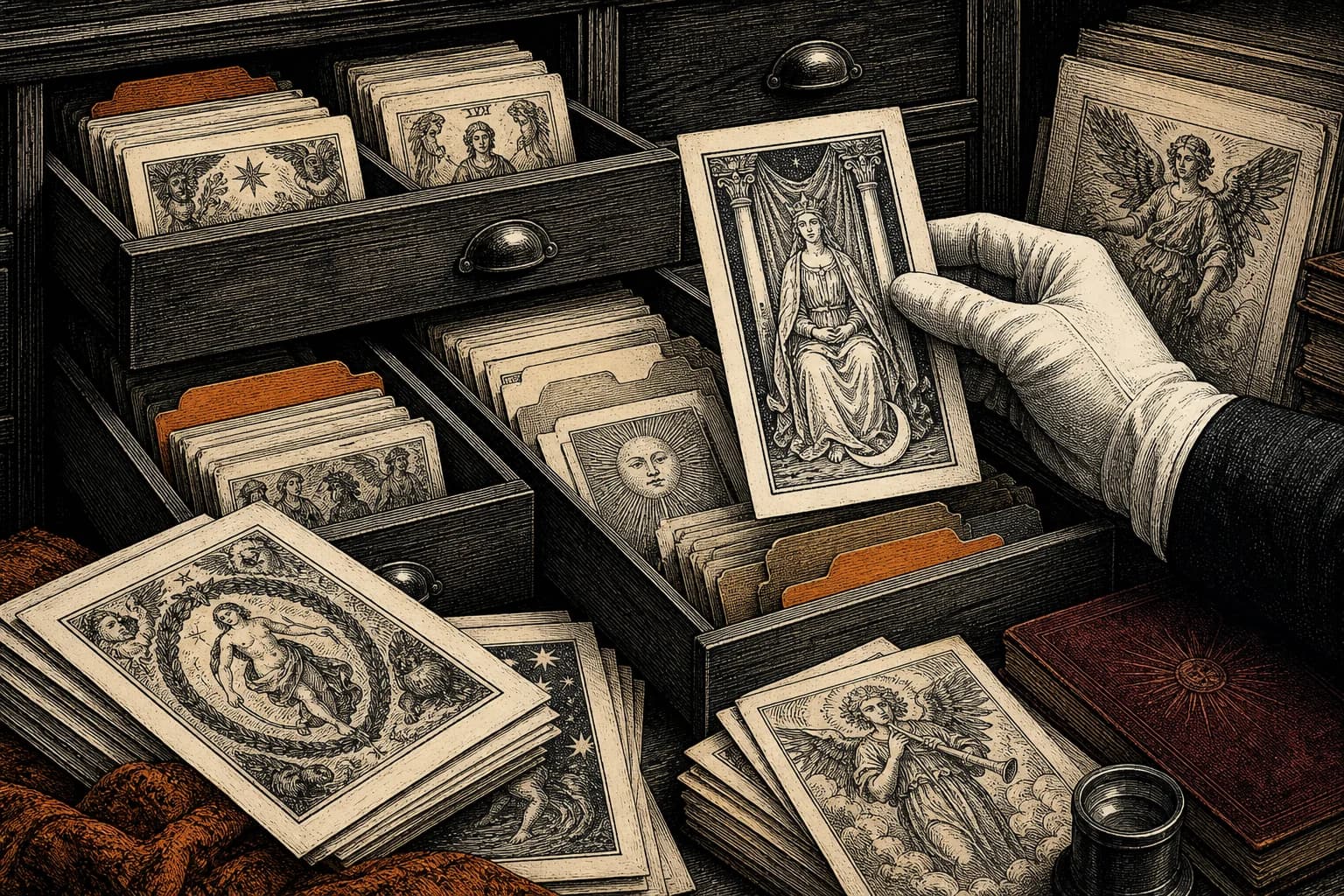
Tarot: from cards to symbolic reading
Tarot began as a card game in Europe. Divinatory and occult interpretations appeared later, producing several schools of card meanings and correspondence. Modern self-guided reading uses that symbolic vocabulary to frame reflection and conversation.
Coffee-ground reading
Coffee-ground reading, often called tasseography, interprets shapes left in a cup after drinking unfiltered coffee. Practices vary by household and region: a reader may consider the cup's zones, repeated forms, and the story created between them.
The shapes can open conversation, personal association, and imagination as the reader connects forms across the cup.
Water divination
Water has served as a reflective or ritual medium in many unrelated traditions. Practices grouped under labels such as hydromancy may involve observing movement, reflections, sound, or objects placed in water; there is no single universal procedure.
Visual impressions become prompts shaped by the observer's associations, setting, and the particular cultural practice.
Angel and oracle cards in context
“Oracle card” is a broad modern label for decks that do not follow tarot's standard seventy-eight-card structure. Angel cards are generally contemporary themed oracle decks: their card count, artwork, names, and instructions depend on the particular creator rather than one shared historical system or fixed set of meanings.
Angel imagery can draw from religious art, folklore, popular spirituality, and an author's own symbolic vocabulary. Meanings therefore depend on the specific deck and creator.
Read the card's prompt, notice your personal associations, and connect them with the question at hand.
Yıldızname
Yıldızname, literally associated with a “book of stars,” refers to a family of texts and practices found in Ottoman and Turkish cultural contexts. Across manuscripts and practices, material may combine calendars, letter-number calculations, astrological ideas, prayers, or divinatory tables; the label does not identify one standardized calculation.
Historical manuscripts, contemporary folk practice, and commercial uses can differ substantially in form and purpose.
Study traditions without flattening them
Distinguish historical texts from living practice, keep each tradition's own terms, and avoid treating broad cultures as one interchangeable system.